


Feijoada
Feijoada
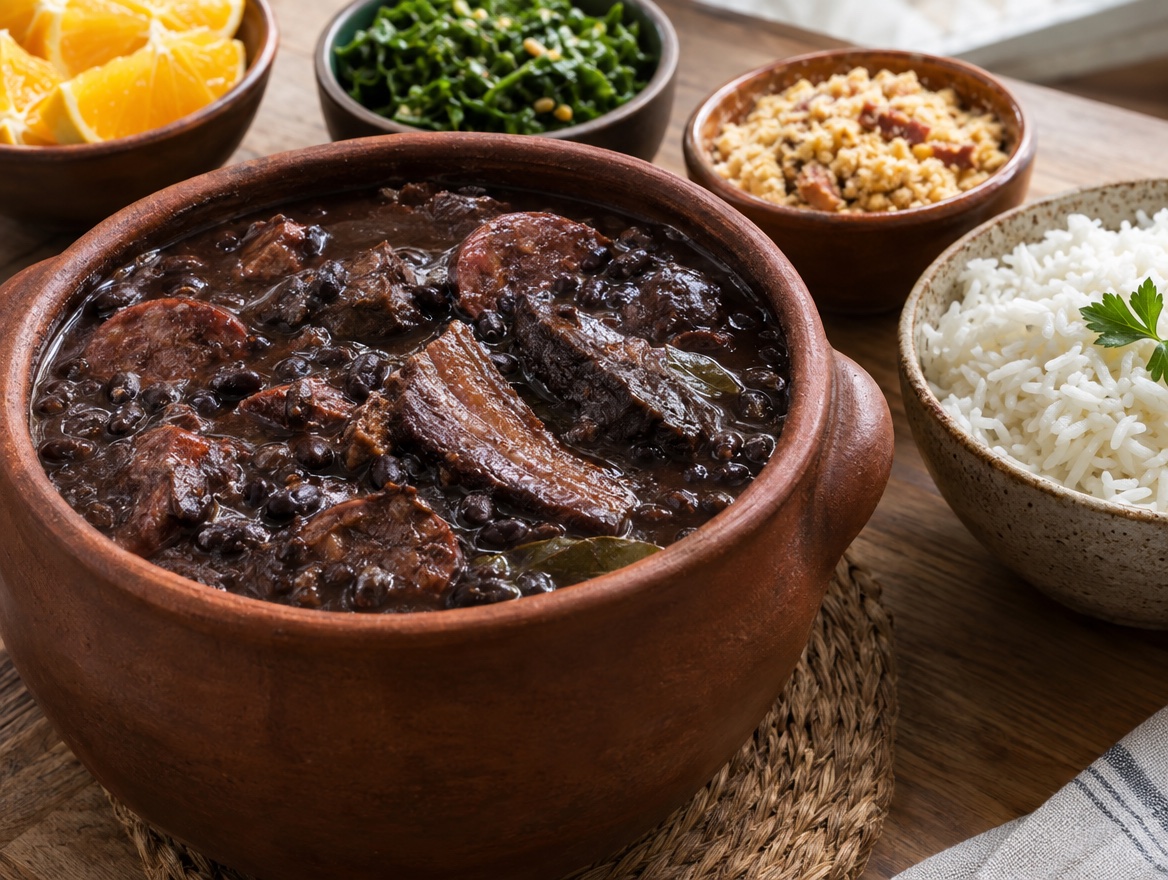
Black beans and mixed pork, cooked Saturday-slow — Brazil's famous pot, not the whole country on a plate.
Recipe by I Want Some Food · Reviewed by the editorial kitchen. Native name preserved: Feijoada.
0 people cooked this in the public kitchen yet. Kitchen-tested by I Want Some Food. Not a purchased rating.
- Prep
- 25 min
- Cook
- 3 hr
- Rest
- 8 hr
- Total
- 11 hr 25 min
- Difficulty
- Medium
- Spice
- No chilli
- Cost
- A bit special$16–28 USD · indicative, not a store price
About
Feijoada is black beans simmered with a mix of pork (and sometimes beef): ribs, sausage, smoked bits, the odd ear if you are traditional. You serve it with rice, farofa, orange slices and shredded greens. This home pot uses easy supermarket cuts. It should be inky, porky, and better the next day. It is a feast, not a Tuesday. Soak black beans, then simmer them with a mix of pork you can actually buy: smoked sausage, ribs, a hock, maybe some stewing beef. Start the meats in the pot so they flavour the liquor, and go low and slow until the beans are creamy and the broth is inky. Taste for salt late. Serve with rice, toasted farofa if you have cassava flour, orange slices, and shredded greens. It should taste porky, not of a spice jar. Leftovers are the point; the pot is better the next day. If you only have sausage and beans, say so and still eat. Do not rush the simmer. A thin, grey bean soup is a different lunch. Salt late. Rice, farofa, orange, and shredded greens are how you eat the fat, not garnish. Leftovers are the point. Saturday timing is honest even when your Saturday is a long Tuesday.
Ingredients
- Black beans, dried, soaked overnight500 g
- Pork, mix of ribs, smoked sausage, and shoulder1.2 kg
- Onion2 large
- Garlic6 clove
- Orange, one in the pot if you like, one sliced to serve2
- Rice, to serve400 g
- Collard greens, shredded, to serve300 g
- Salt9.9 ml
- Water2 l
Scaling multiplies the written quantities. Baking still prefers a scale.
Steps
Step 1
Cover soaked beans and the tougher pork with water, bay and a piece of orange peel. Simmer 90 minutes.
90 minStep 2
Brown sausage and any remaining pork. Soften onion and garlic, add to the pot. Simmer 60–90 minutes more until the beans are creamy and the meat yields. Salt late.
80 minStep 3
Skim excess fat if you must. Serve with rice, farofa, orange slices and quickly sautéed greens.
15 min
Adapt this recipe
The canonical recipe stays intact. Personal versions are labelled. Serving changes are maths, not AI.
Adaptations · 0 / 15 used. Resets 10 October.
Substitutions
Dried beans → Tinned black beans plus smoked sausage
A weeknight echo. Call it bean stew.
Tips
- A pressure cooker halves the time. The flavour still wants a rest.
- Oranges on the plate cut the pork. They are not decoration.
History & culture
Saturday lunch in Rio and beyond. Regional versions differ. Enslaved African cooks shaped the national palate under conditions that should not be a cute origin story on a menu. Saturday lunch in Rio and in many other Brazilian cities, with regional versions that argue about meats, beans, and whether the pot is lunch or an all-afternoon table. Farofa, orange, and greens are not garnish; they cut the fat. Enslaved African cooks shaped this palate under violence that should not be turned into a cute menu origin. Eat with people, slowly. Diaspora pots in Lisbon, Boston and Tokyo are still Saturday food when they can be. It is not a tapas. It is a heavy, social stew. Vegetarians make black-bean pots without the meats; they are related and should not pretend to be this feijoada. A cold drink is not optional. Naps are traditional whether you admit it or not.
Bean-and-pork pots exist across the Portuguese Atlantic. Brazilian feijoada as a national Saturday is 19th–20th-century identity as much as farm cooking. The internet still repeats a flattened story that it was 'slave food' made from scraps in a way that both exoticises and erases the skilled African and Afro-Brazilian cookery that shaped Brazilian taste. Be careful with that sentence on a menu. Portuguese stew logic, African techniques, and New World beans met in a colonial economy. Later, restaurants and radio helped make a Saturday plate a national symbol. Home pots use the cuts the shop sells. That is the honest line: Atlantic stew, Brazilian identity, and a long simmer. Radio, restaurants, and later television helped pin Saturday to the pot in Rio. Regional bean colours and meat lists still disagree, which is a living history, not a problem to be standardised on a food show. Atlantic bean-and-pork pots are older than the national Saturday. Enslaved African cooks shaped Brazilian taste under violence that should not become cute origin copy. Identity and a long simmer, both true.
Regional variation
Provenance: Editorial adaptation.
Questions about this recipe
Answers taken from this dish's times, amounts, swaps and tips — not a chatbot.
How long does Feijoada take?
11 hr 25 min all in — 25 min prep, 3 hr cook, 8 hr rest. Cook and rest follow the method. Leftover storage and optional extra waits are not included.
How many does it serve?
The recipe is written for 8 people. Scale the ingredient list on the page if you are cooking for a different number.
How hard is it?
Medium.
How spicy is it?
No chilli.
Does it fit a diet?
The published recipe is labelled Dairy-free, Gluten-free.
What does it cost to cook?
A bit special — about $16–28 USD, as a grocery budget for this recipe, not a restaurant price.
What equipment do I need?
Dutch oven.
How much salt do I put in?
The recipe lists Salt at 2 tsp.
What can I use instead?
Dried beans → Tinned black beans plus smoked sausage. A weeknight echo. Call it bean stew.
Any tips from this recipe?
A pressure cooker halves the time. The flavour still wants a rest. Oranges on the plate cut the pork. They are not decoration.
Can I use an air fryer?
This method is not written for an air fryer. The core technique on the page still applies.
Similar dishes
Checking your allergy settings…