Dairy
Cream cheese
Also called block cream cheese, Philadelphia-style
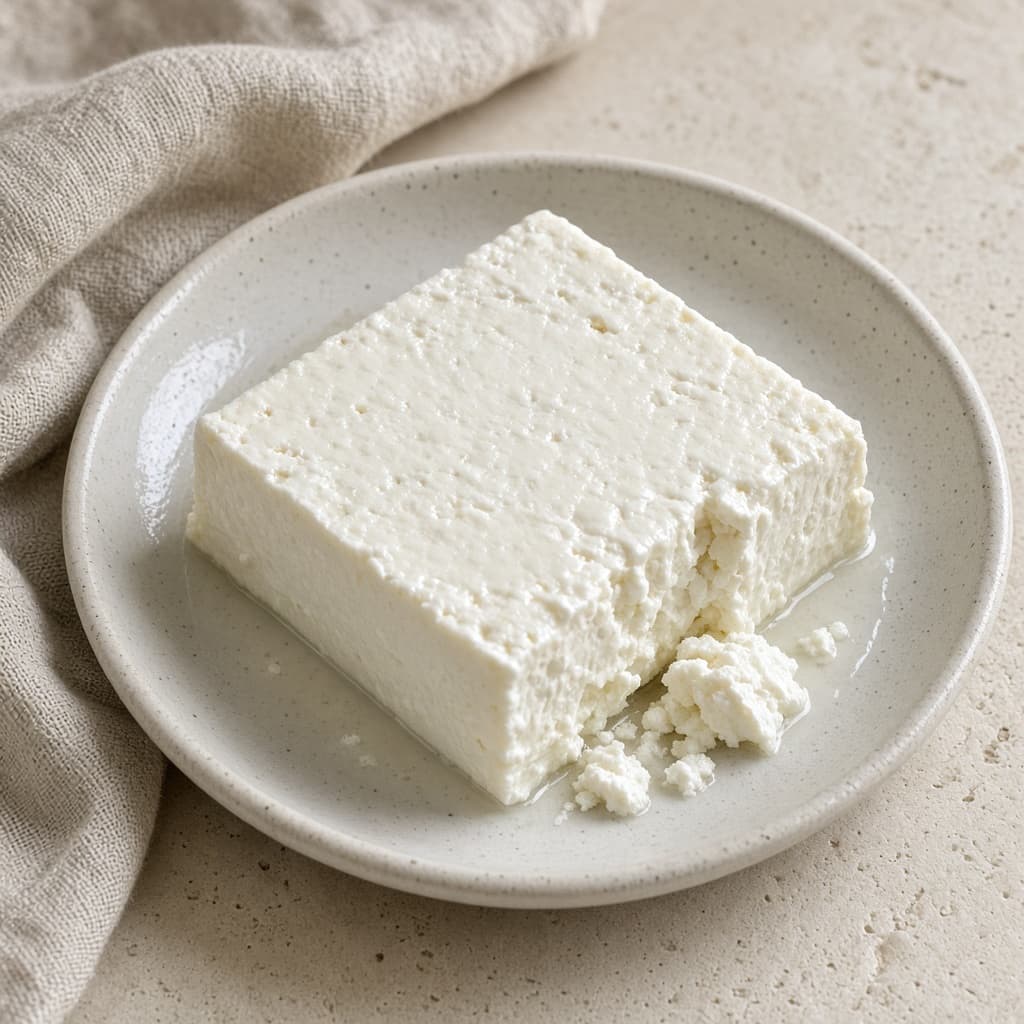
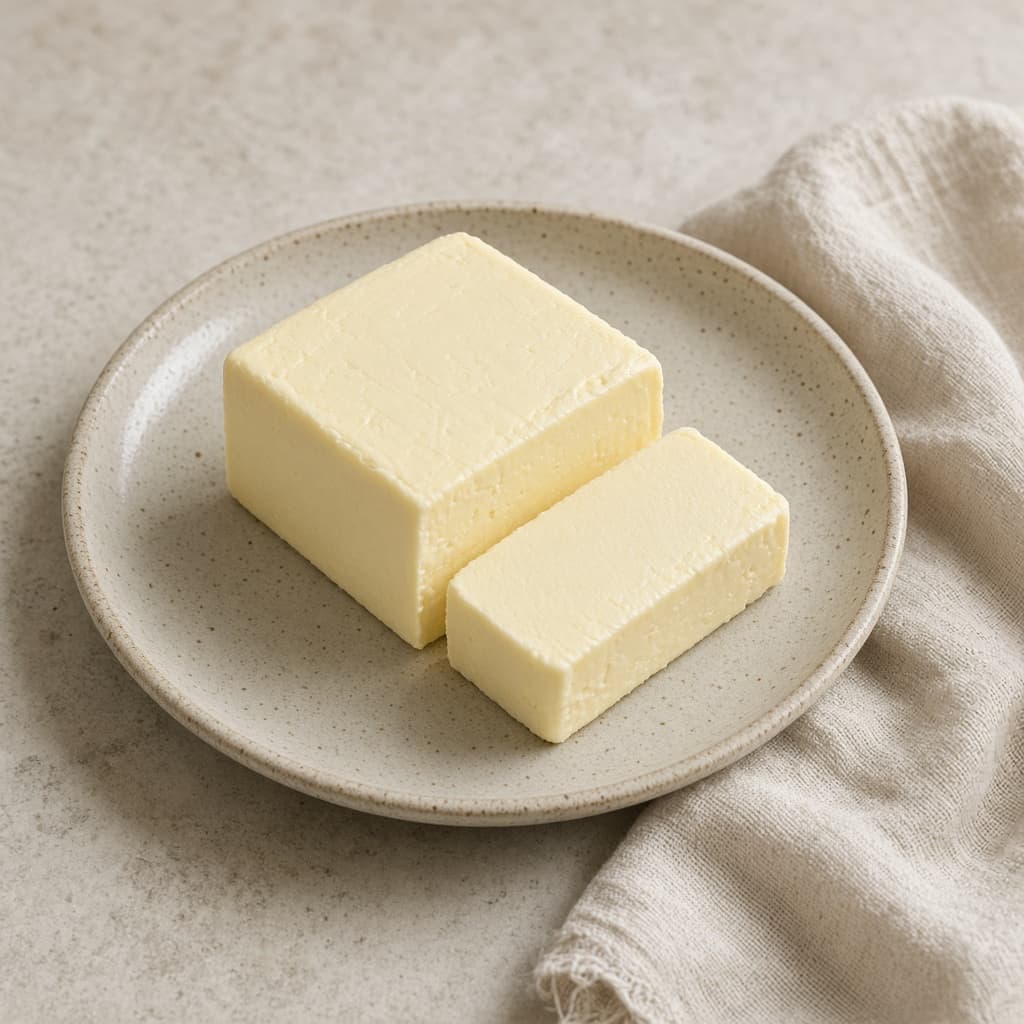
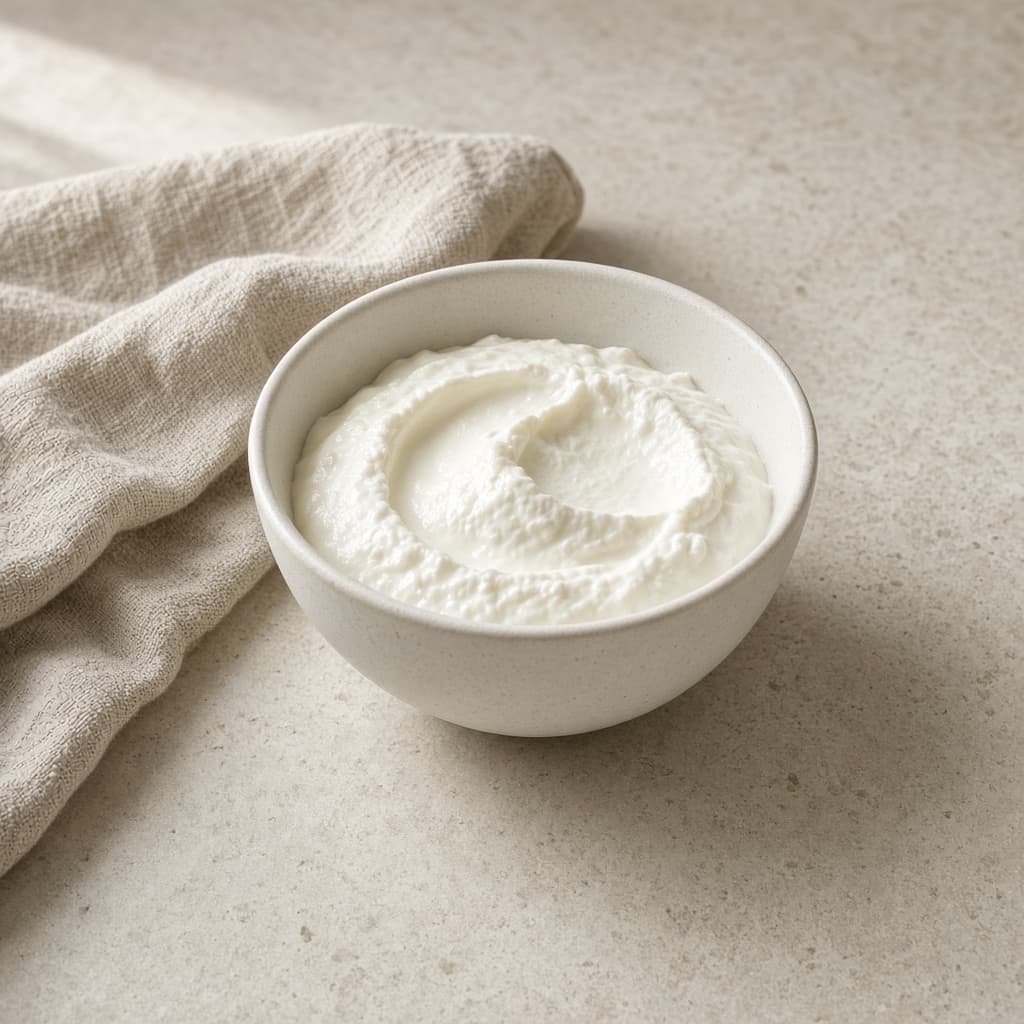
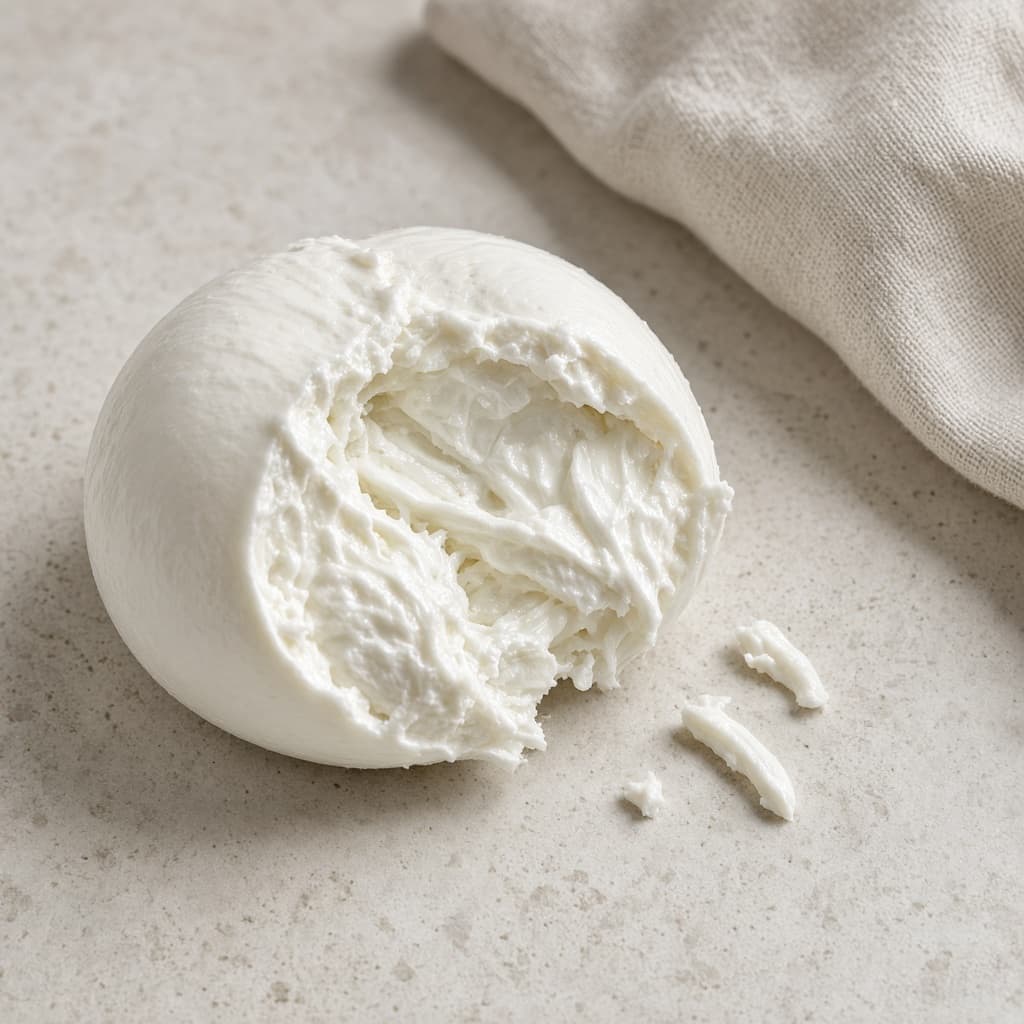
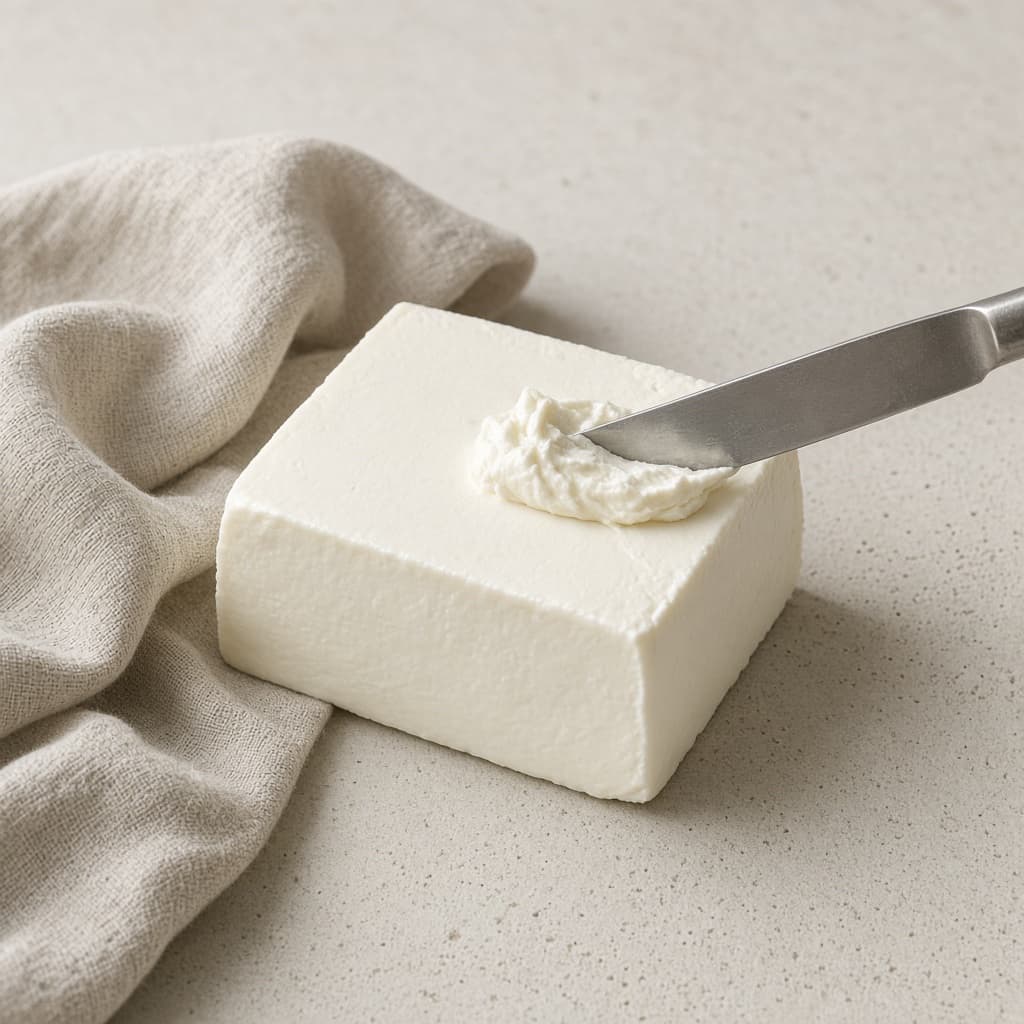
A fresh, acid-set cow's-milk cheese, spreadable and mild — the block behind Basque burnt cheesecake and pickle dip. Philadelphia-style is the reference texture: dense, not fluffy 'light' tubs full of air and gums. It is not mascarpone (sweeter, fatter, less tang) and not ricotta.
Origin
American industrial dairy of the late nineteenth century, related to older European fresh cheeses. The foil block is now a global baking ingredient more than a bagel-only food.
Flavour
Tangy, fatty, mild, slightly lactic. Cheap spreads taste of stabiliser. Light cream cheese weeps and will not set a cheesecake the same way.
How it is made
Cream-enriched milk is acidified and the curd is concentrated and homogenised into a smooth block. Salt is part of the flavour. Some tubs add gums so they survive a whip.
How to use it
Bring the block to room temperature before beating or you will have lumps that never vanish. For Basque cheesecake, full-fat is the structure; scrape the bowl. For pickle dip, cold cream cheese can stay a bit thicker — still soften it. Do not melt cream cheese into a hot soup and expect silk; it splits. Mascarpone will make a flatter, sweeter cheesecake. Whipped 'light' cheese is a bagel spread, not a bake.
Storage
Fridge, wrapped, and used by the date. Once opened, rewrap tightly; it grows mould on any exposed smear. Do not freeze if you care about texture — it turns grainy.
Recipes using it
Checking your allergy settings…