Dairy
Curd cheese
Also called skuta, tvorog, twaróg, farmer's cheese, brânză de vaci, sitni sir
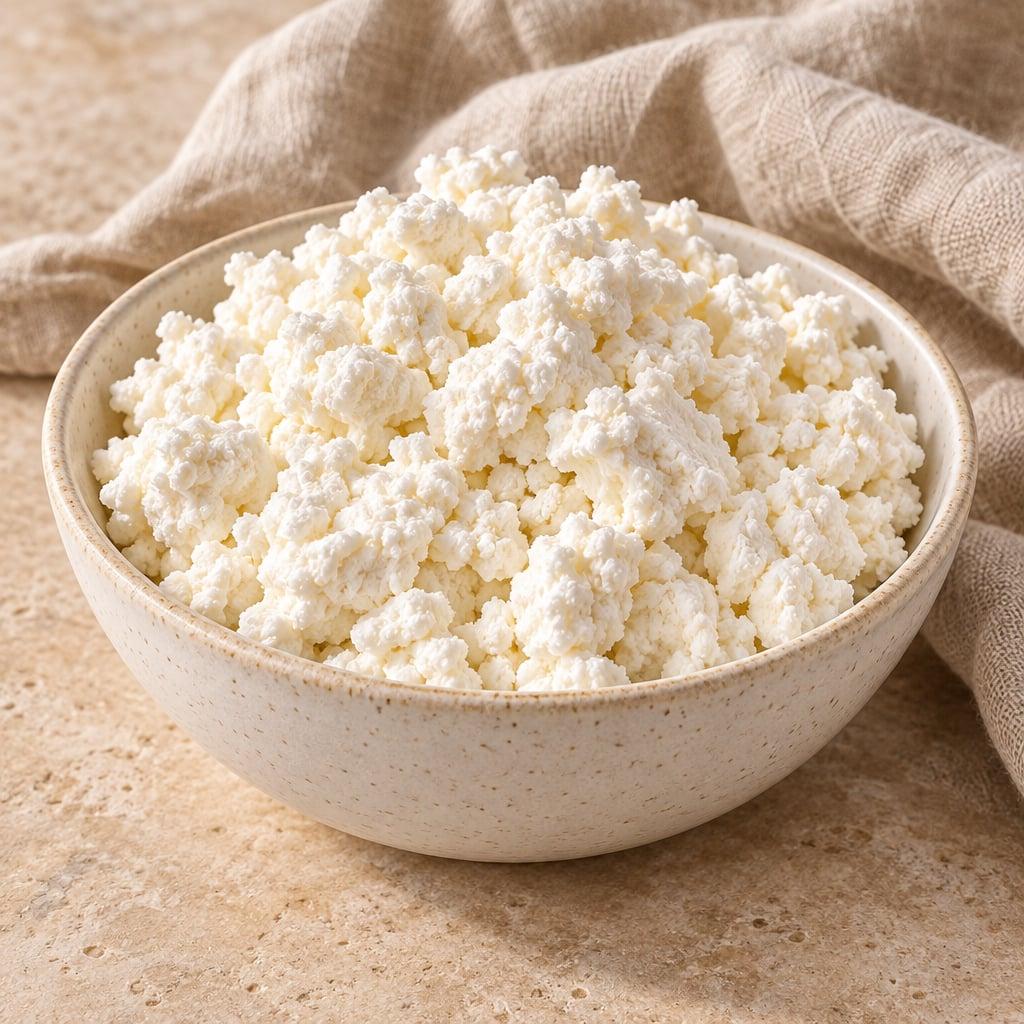
Fresh, unripened cow's milk cheese with a soft, slightly grainy curd and a clean sour edge. It is drier than cottage cheese and coarser than German quark, and it is not salted.
Origin
The everyday fresh cheese of Central and Eastern Europe, sold as skuta in Slovenia, sitni sir in Serbia, brânză de vaci in Moldova and Romania and tvorog further east. Polish and Russian shops sell it in blocks or tubs.
Flavour
Milky and mildly tart, with no salt of its own, so it goes sweet or savoury.
How it is made
Soured milk is warmed gently until the curd separates, then drained in cloth until it holds together.
How to use it
Mash it with egg for pie, dumpling and strudel fillings, sweeten it for cakes, or eat it with soured cream. If it is wet, drain it in a sieve for an hour before using.
Storage
Keeps about a week in the fridge unopened and three days once opened. It freezes acceptably for baking but the texture turns crumbly.
Recipes using it

Gibanica
Гибаница
Serbian cheese pie of crumpled filo soaked in eggs, white cheese, soured cream and sparkling water, baked until puffed and brown.
Easy

Štruklji
Slovenian rolled dumplings of hand-stretched dough and curd cheese, boiled in a cloth, sliced and served under buttered breadcrumbs.
Medium

Prekmurska gibanica
Slovenian layered cake with poppy seed, curd cheese, walnut and apple fillings, each used twice between sheets of thin pastry.
A bit of work

Plăcinte
Moldovan pan-fried pies of thin stretched dough folded around curd cheese, dill and spring onion.
Medium

Túrós csusza
Hungarian noodles tossed in bacon fat and topped with crumbled fresh curd cheese, crisp bacon and sour cream. A weeknight classic that takes 25 minutes.
Very easy

Syrnyky
Сирники
Thick, golden Ukrainian pancakes of dry curd cheese with a little egg and flour, fried until crisp outside and creamy within. Served with sour cream and jam.
Easy