Dairy
Kefir
kefyras
Also called kefyras, kefīrs, milk kefir, кефир
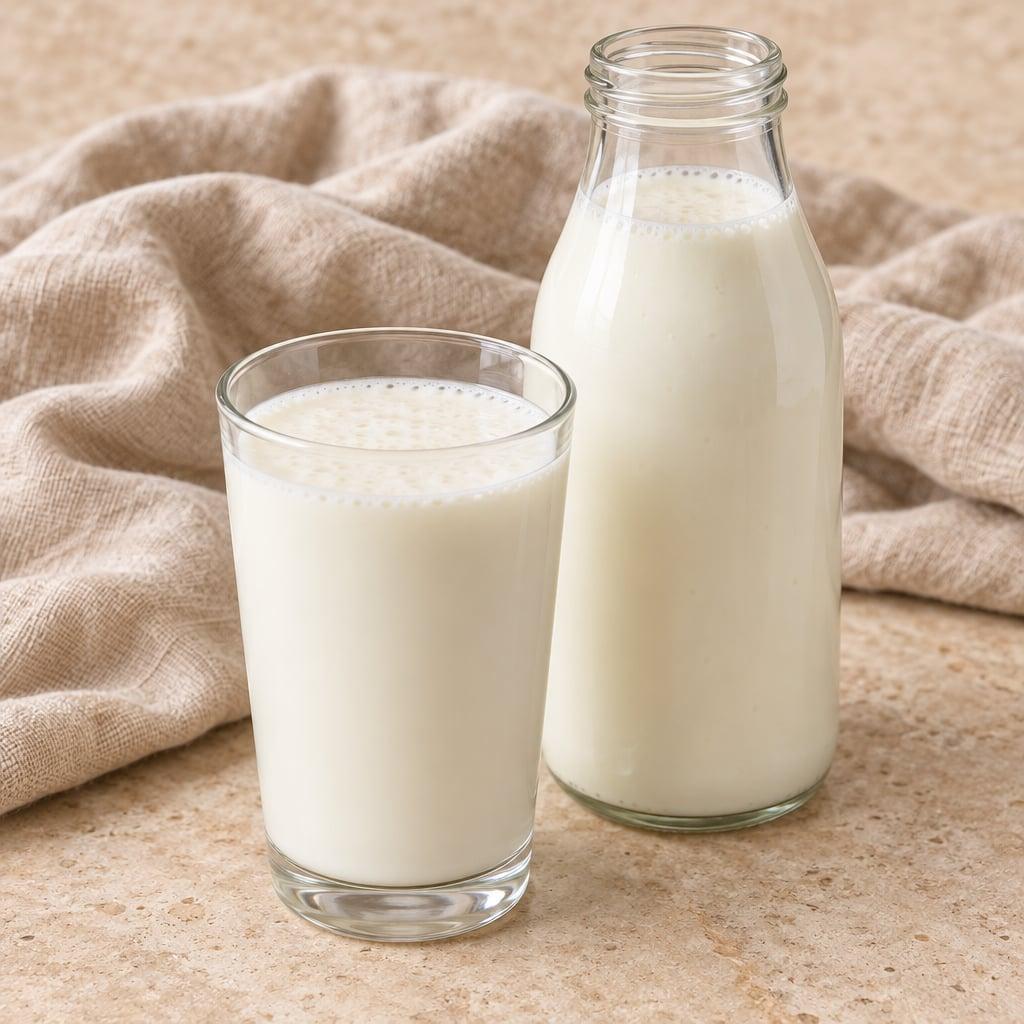
A thin, pourable fermented milk, sour like yoghurt but looser and very slightly fizzy. It is cultured with kefir grains, a mix of bacteria and yeasts, rather than with yoghurt cultures alone.
Origin
The Caucasus by tradition, and an everyday fridge staple across the Baltic states, Poland, Ukraine and Russia, where it is drunk plain and poured into cold soups and batters. It is now sold in most supermarkets elsewhere.
Flavour
Clean and tart with a faint yeasty edge. Full-fat kefir is rounder and less sharp than low-fat, and better for soup.
How it is made
Kefir grains are left in milk at room temperature for about a day, then strained out and used again. Commercial kefir is made with a starter culture that copies the grains.
How to use it
Drink it cold, use it as the base of chilled soups, or bake with it wherever a recipe asks for buttermilk. Do not boil it or it splits. Shake the bottle before pouring because it separates as it stands.
Storage
Keep it in the fridge and use it within a few days of opening. It carries on souring slowly, so an old bottle is sharper rather than spoiled.
Recipes using it

Šaltibarščiai
Lithuanian cold beetroot soup: kefir, grated beetroot, cucumber, dill and spring onion, bright pink, served with egg and a bowl of hot boiled potatoes.
Easy

Mulgipuder
Estonian porridge-mash of potatoes and barley with butter, served under fried bacon and onion. Plain, filling and eaten with kefir or sour milk.
Easy

Kama
Estonian roasted-grain flour stirred into cold kefir with sugar and strawberries: a thick, sour, nutty pudding that needs no cooking.
Very easy