Herb
Laksa leaf
Daun kesum
Also called daun kesum, Vietnamese coriander, Vietnamese mint, rau răm, Persicaria odorata
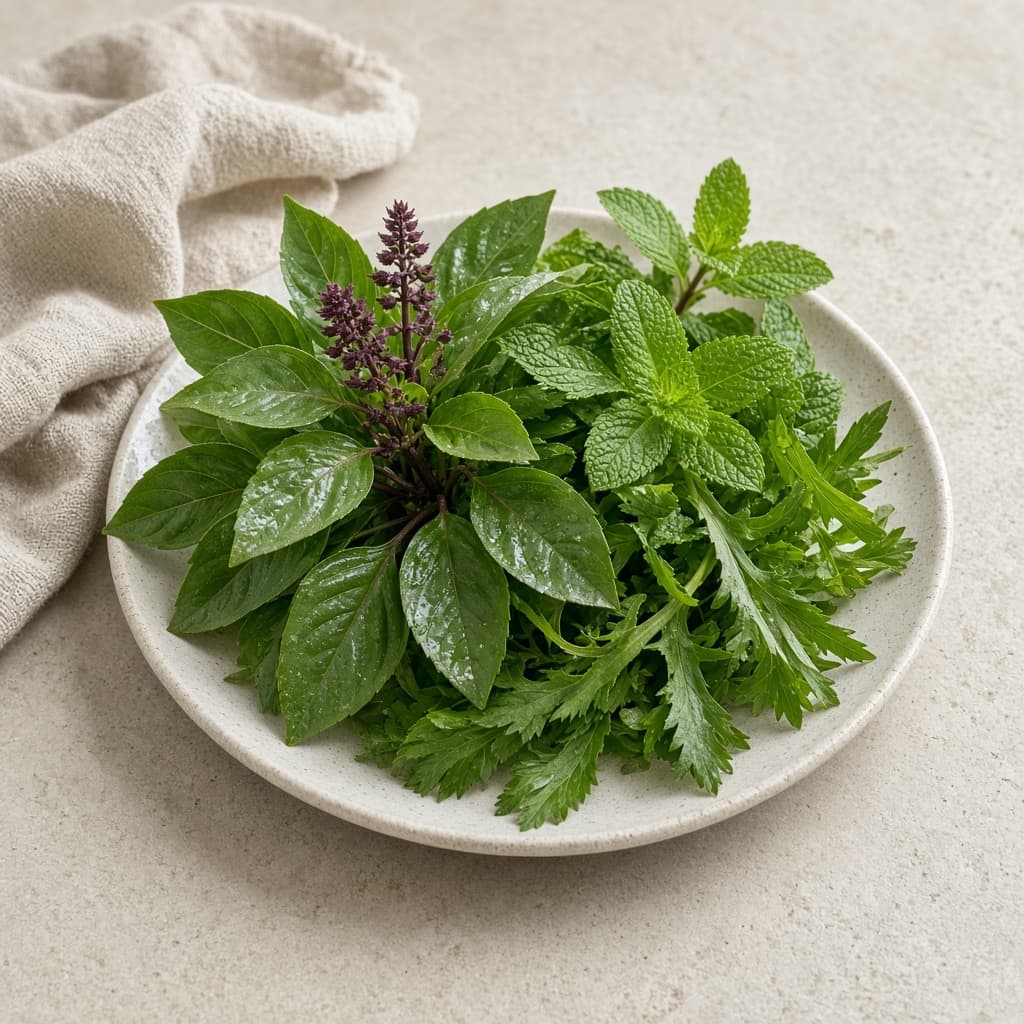
The narrow, pointed leaves of a creeping herb in the knotweed family, often with a dark mark across each leaf. Malaysians call it daun kesum and treat it as the defining herb of asam laksa; Vietnamese cooks call it rau răm and eat it raw with salads and eggs.
Origin
Southeast Asia, from Vietnam to Malaysia and Indonesia, where it grows wild in wet ground. It is sold in bunches in Asian grocers and roots easily in a glass of water.
Flavour
Peppery, sharp and lemony, somewhere between coriander and mint with a hot, slightly soapy finish. It is stronger than either and holds up to cooking better.
How to use it
Simmer the stems and some leaves in laksa broth and fish curries, then shred more leaves raw over the top. Chop it hair-thin into Malay herb rice and kerabu salads, or tear it into Vietnamese chicken salads.
Storage
Stand the bunch in a glass of water in the fridge with a bag over the top; it keeps about a week. It does not dry or freeze well.
Recipes using it
Asam laksa
Penang's sour fish noodle soup: flaked mackerel in a tamarind broth thick with chilli, lemongrass and torch ginger, over round rice noodles with pineapple, cucumber and mint.
MediumHot
Nasi kerabu
Kelantan's blue rice, coloured with butterfly pea flower, served with hair-thin raw herbs, toasted coconut kerisik, fried mackerel and a sharp fish sauce sambal.
MediumMedium heat