Herb
Bay leaf
Also called laurel, Bay Leaves
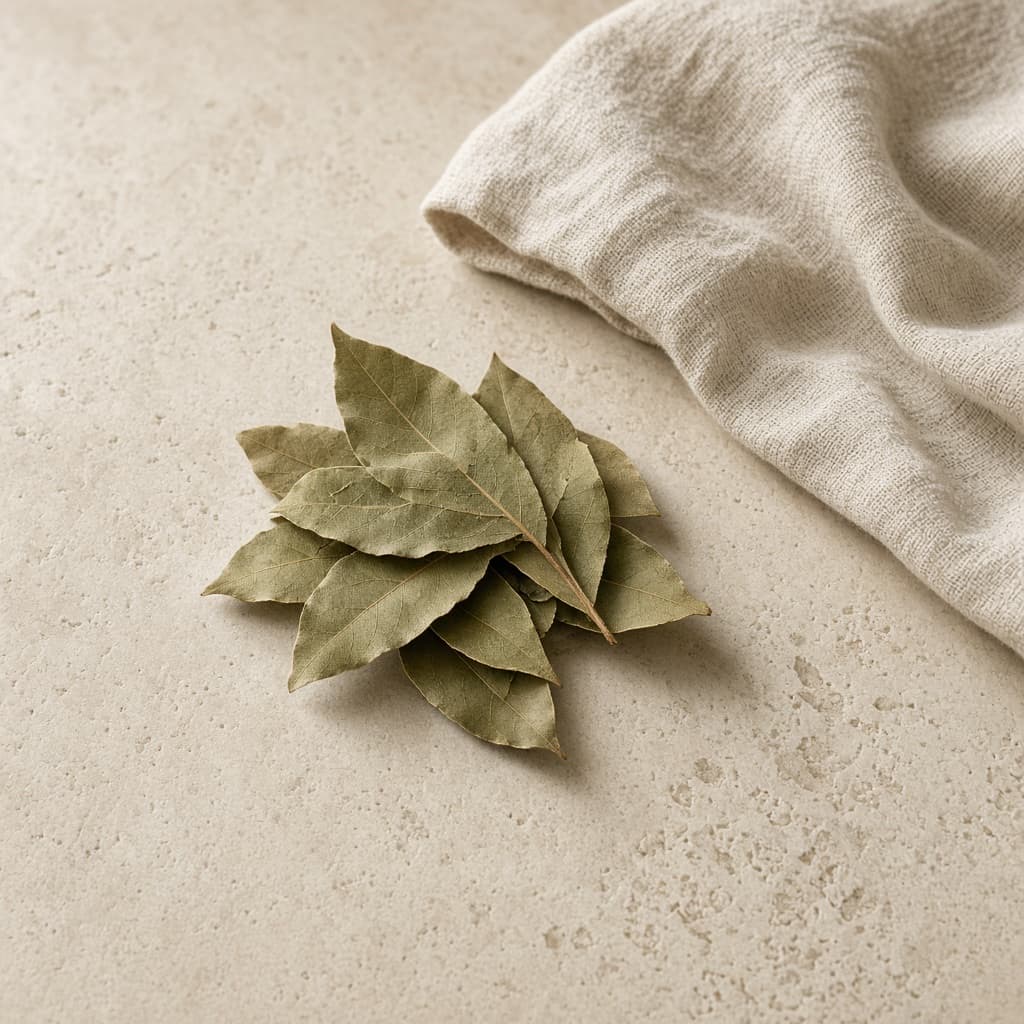
The dried leaf of the bay laurel, used in braises, beans and stocks as background perfume. Culinary bay is Mediterranean; some ornamental laurels are not for eating.
Origin
The tree is Mediterranean. Dried leaves travelled because they keep, which is why bay shows up in adobo, pot-au-feu and British stews.
Flavour
Herbal, slightly floral, a faint tea note, meant to sit behind meat and vinegar rather than announce itself. Too many leaves, or a long boil of old dusty ones, tastes medicinal.
How to use it
Add one or two dried leaves to adobo, a pot of beans or onion soup and let them simmer; fish them out before serving so nobody chokes on a leather leaf. Crush the leaf slightly as it goes in to wake the oils. Fresh bay can be used 1:1 but add it later if you want a greener note. Salt and acid are still the structure; bay is furniture.
Storage
Airtight, dark. Dried leaves fade to colourless paper. Fresh branches keep a few days in the fridge.
Recipes using it
Checking your allergy settings…