Meat
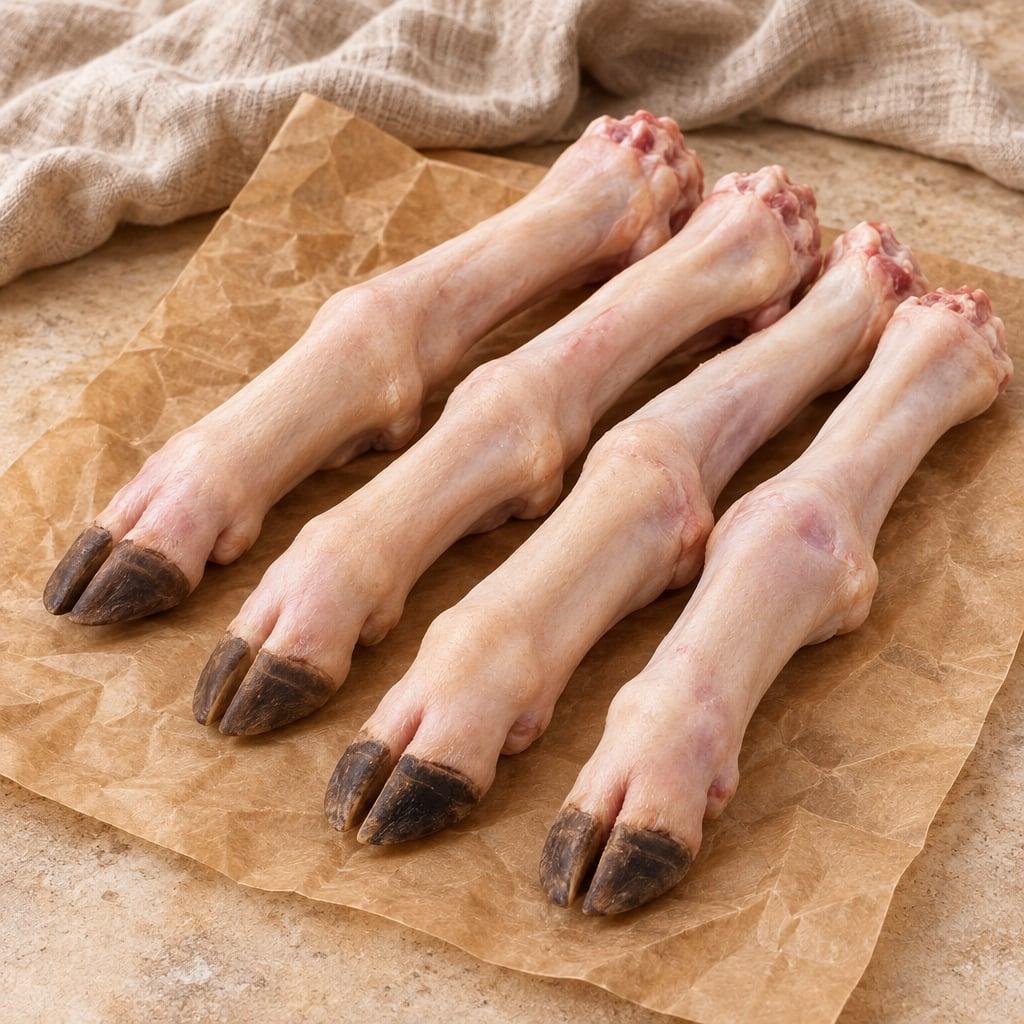
Lamb trotters
Also called sheep's trotters, goat trotters, lamb feet, paye, bakray ke paye
The lower legs and feet of lamb or goat, mostly bone, skin, tendon and gristle with very little meat. Cooked for hours, they release so much gelatine that the broth sets to a jelly when cold.
Origin
Sold by halal and Middle Eastern butchers everywhere sheep and goats are eaten, from Turkey and Iran to Pakistan and North Africa. Supermarkets rarely stock them; ask a butcher, who will often clean and split them for you.
Flavour
Rich, mild and meaty, with a sticky, lip-coating texture from the gelatine. The flavour sits mostly in the broth rather than in the trotters themselves.
How to use it
Singe off any hair over a flame, scrub, then blanch and discard the first water before the real cooking. Braise or pressure-cook with onion and spices for paya, or simmer for a clear, gelatinous broth.
Storage
Fresh trotters keep 2 days in the fridge. Frozen they keep 3 months; thaw them in the fridge overnight before cleaning.