Produce
Manioc
Also called cassava, yuca
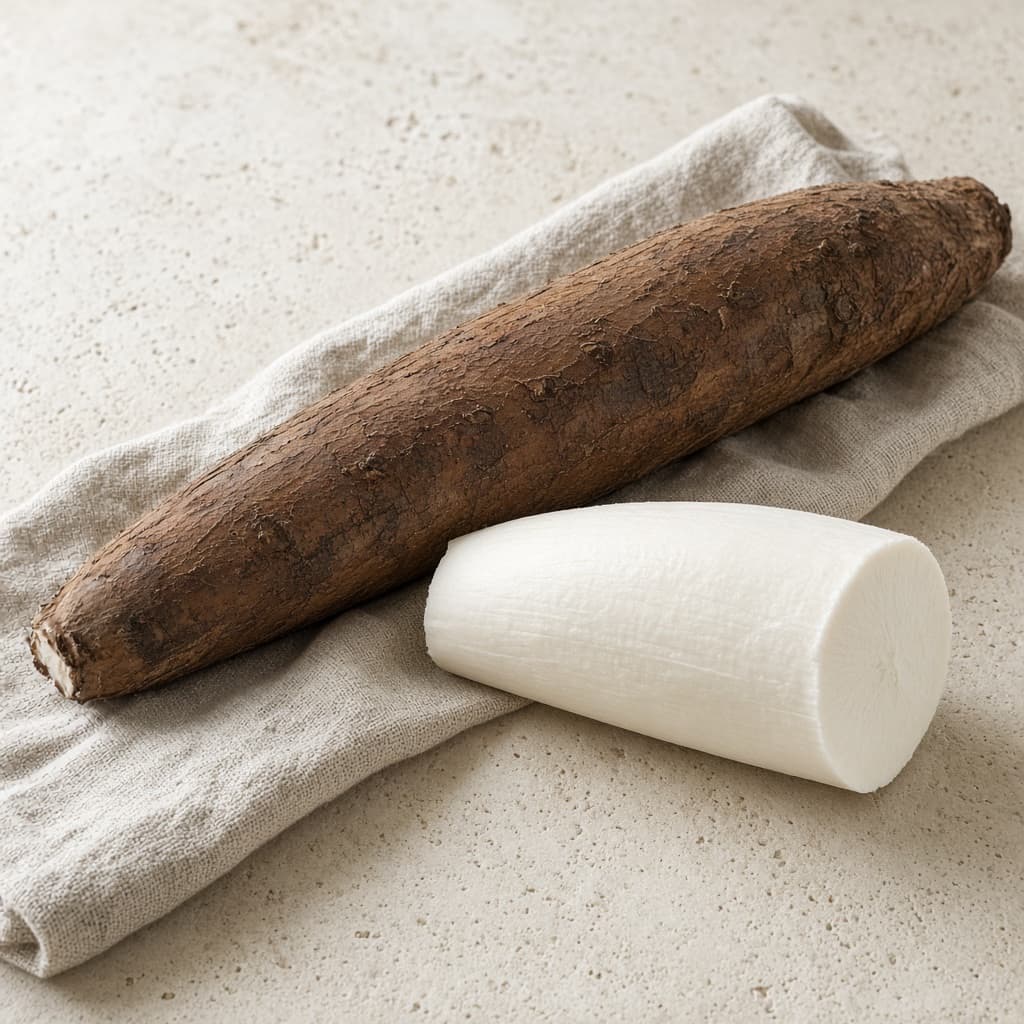
A tropical starchy root also called cassava or yuca. Sweet types are everyday food; bitter types contain more cyanogenic glycosides and must be processed. Farofa and pão de queijo use the flour, not the boiled root.
Origin
Amazonia, then a staple across Africa, the Caribbean and parts of Asia. Brazilian and West African kitchens made the flour traditions that travel now.
Flavour
Mild, slightly sweet, with a sticky dense crumb when boiled. The flour toasts nutty for farofa.
How to use it
Never eat bitter cassava raw, and do not treat fresh manioc as a potato you can nibble. Peel the thick waxed skin and the pink under-layer, then boil, fry or ferment until the centre is tender and the smell is clean. For pão de queijo, use manioc starch (polvilho), not wheat flour, and expect a chew. Farofa is the flour toasted in fat until dry and nutty — serve it as crunch beside stews. Frozen peeled yuca is a fair shortcut if you cook it thoroughly. If a piece stays hard and smells sharp after boiling, discard it.
Storage
Fresh roots spoil fast: keep cool and cook within a few days, or freeze peeled chunks. Flour and starch keep in a dry pantry.
Recipes using it
Checking your allergy settings…