


Pão de queijo
Pão de queijo
Chewy Minas cheese breads from tapioca starch — gluten-free by accident, not as a lifestyle brand.
Recipe by I Want Some Food · Reviewed by the editorial kitchen. Native name preserved: Pão de queijo.
0 people cooked this in the public kitchen yet. Kitchen-tested by I Want Some Food. Not a purchased rating.
- Prep
- 15 min
- Cook
- 25 min
- Rest
- None
- Total
- 40 min
- Difficulty
- Easy
- Spice
- No chilli
- Cost
- Cheap nightUnder $8 USD · indicative, not a store price
About
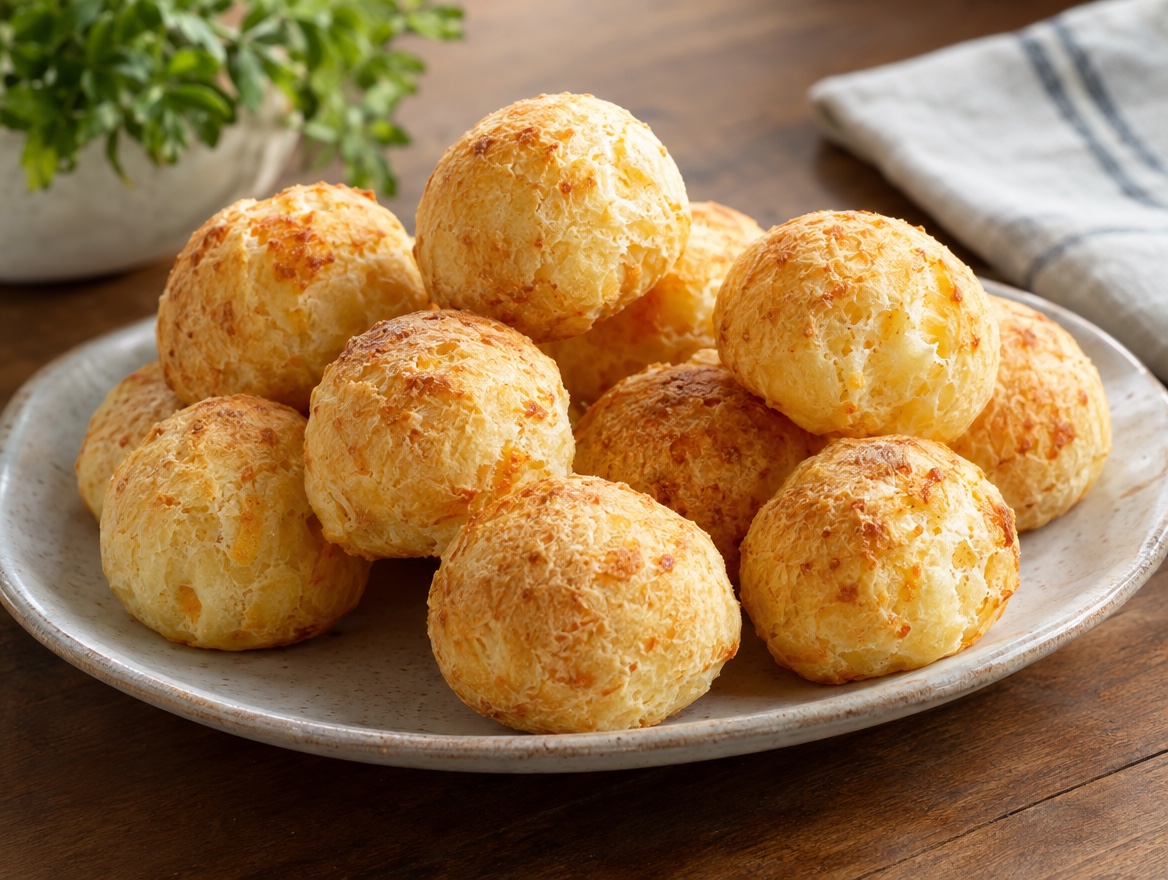
Pão de queijo is a hot little bread: tapioca (cassava) starch, milk, oil, egg and a salty cheese, baked until the outside blisters and the inside pulls like mozzarella. They collapse as they cool. Eat them immediately with coffee. Sour cassava starch (polvilho azedo) is the Minas tang; sweet starch still works. Heat milk, oil and salt, then beat in tapioca starch until you have a sticky dough. Cool slightly, beat in eggs and grated salty cheese until the mix is stretchy. Spoon or pipe small mounds onto a tray and bake until they blister and the insides pull. Eat them immediately with coffee; they collapse and toughen as they cool. Frozen unbaked balls are a legitimate home trick. Do not treat this as wheat bread. The chew is the point. If they do not puff, the oven was shy or the dough too slack. A mature cheese such as a Minas-style or a mix of Parmesan and a melting cheese is the usual compromise outside Brazil. Scald milk, oil and salt, beat in tapioca starch, then eggs and a salty cheese until the dough stretches. Spoon small mounds and bake until the skins blister and the insides pull. Eat with coffee while they are hot; they collapse as they cool. This is not wheat bread. The chew is the point.
Ingredients
- Manioc, tapioca starch / polvilho250 g
- Milk200 ml
- Neutral oil, or oil plus a little butter80 ml
- Egg2 large
- Melting cheese, grated Minas, Parmesan, or a mix150 g
- Salt4.9 ml
Scaling multiplies the written quantities. Baking still prefers a scale.
Steps
Step 1
Heat milk, oil and salt to a simmer. Pour over the starch and stir to a shaggy dough. Cool 5 minutes.
8 minStep 2
Beat in eggs one at a time, then the cheese, until sticky and pipeable.
5 minStep 3
Scoop walnut-sized balls onto a tray. Bake at 200°C 20–25 minutes until puffed and spotted. Eat hot.
25 min200°C
Adapt this recipe
The canonical recipe stays intact. Personal versions are labelled. Serving changes are maths, not AI.
Adaptations · 0 / 15 used. Resets 10 October.
Substitutions
Minas cheese → Pecorino plus mozzarella
Salt and stretch. Close enough for a home oven.
Tips
- The dough is wetter than wheat dough. Wet hands help.
- They deflate. That is not failure; that is tapioca.
History & culture
Breakfast and airport snack across Brazil. Minas Gerais claims the soul of it. Frozen supermarket balls exist because they are that loved. Office flasks, school bags, and bakeries by the dozen keep them in daily life. Frozen supermarket balls exist because people love them enough to outsource the mess. They are social: a basket on the table, coffee, conversation. Gluten-free by accident of starch, which health marketers later noticed; Brazilians were already eating them. Cheese quality changes the ball more than any 'secret'. At home they are a weekend bake or a freezer stash. Serve more than you think. One is a taste; six are breakfast. They are not a paleo blog prop. They are a Minas pantry that went national. Neighbourhood padarias pull trays all morning because people eat them on the way to the bus. Copy that pace at home by baking from frozen in a hot oven. Coffee is the partner, not a smoothie. A basket in the middle of the table is the serving dish.
Cassava starch plus cheese after dairy arrived. An Afro-Brazilian and Minas pantry, not a paleo blog. Cassava starch is Indigenous technology; cheese arrives with dairy after colonisation. Twentieth-century bakeries and later industrial freezing spread pão de queijo from regional kitchens to airports. Sour starch fermentation is a technical inheritance that home cooks outside Brazil often skip because they cannot buy it. That skip still makes a cheese puff; it does not make the same puff. There is no Portuguese convent legend required. There is cassava, cheese, and an oven. Migrant Brazilians carried the freezer bag abroad, which is how the balls turned up in Lisbon and Boston shops. That is the recent history: mobility, starch, and a national habit. Indigenous cassava starch met dairy after colonisation and became a Minas snack, then a national airport habit once bakeries and freezers industrialised the ball. The skip still makes a puff; it is not the same puff. No convent legend is required. Starch, cheese, and an oven are the plot.
Traditional
Provenance: Editorial adaptation.
Questions about this recipe
Answers taken from this dish's times, amounts, swaps and tips — not a chatbot.
How long does Pão de queijo take?
40 min all in — 15 min prep, 25 min cook. Cook and rest follow the method. Leftover storage and optional extra waits are not included.
How many does it serve?
The recipe is written for 20 balls. Scale the ingredient list on the page if you are cooking for a different number.
How hard is it?
Easy.
How spicy is it?
No chilli.
What allergens should I watch?
This recipe is labelled for Milk, Eggs. Labels are informational — check the packets in your kitchen. This is not medical advice.
Does it fit a diet?
The published recipe is labelled Vegetarian, Gluten-free.
What does it cost to cook?
Cheap night — about Under $8 USD, as a grocery budget for this recipe, not a restaurant price.
What equipment do I need?
Saucepan, Oven, Baking tray.
How much salt do I put in?
The recipe lists Salt at 1 tsp.
What can I use instead?
Minas cheese → Pecorino plus mozzarella. Salt and stretch. Close enough for a home oven.
Any tips from this recipe?
The dough is wetter than wheat dough. Wet hands help. They deflate. That is not failure; that is tapioca.
Can I use an air fryer?
This method is not written for an air fryer. The core technique on the page still applies.
Similar dishes
Checking your allergy settings…