Herb
Pandan
Also called screwpine, lá dứa
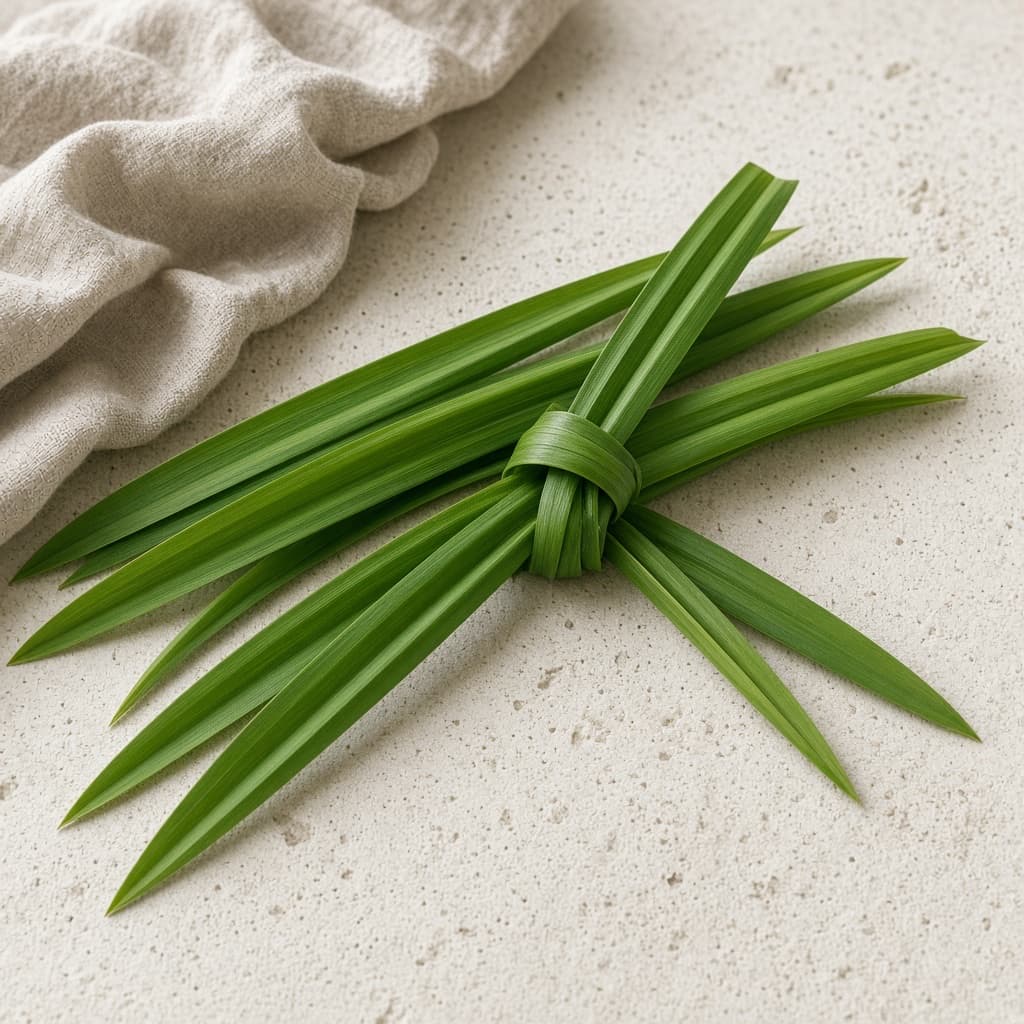
The long, fragrant leaf of Pandanus amaryllifolius — screwpine, lá dứa — tied in a knot and simmered in Southeast Asian pots and sweets. Chè, coconut rice and many Malay and Vietnamese puddings take their vanilla-grass note from it. The leaf is the ingredient; bottled extract is louder, greener and easier to overdose.
Origin
Southeast Asia, where the plant grows in damp gardens and the leaf is everyday, not exotic. There is no meaningful Western 'pandan tradition' beyond the bottles that followed migration.
Flavour
Vanilla, fresh-cut grass and coconut-adjacent sweetness, without the flower-soap of vanilla extract. Extract can taste of cologne if you pour. Toasted leaves smell nuttier.
How to use it
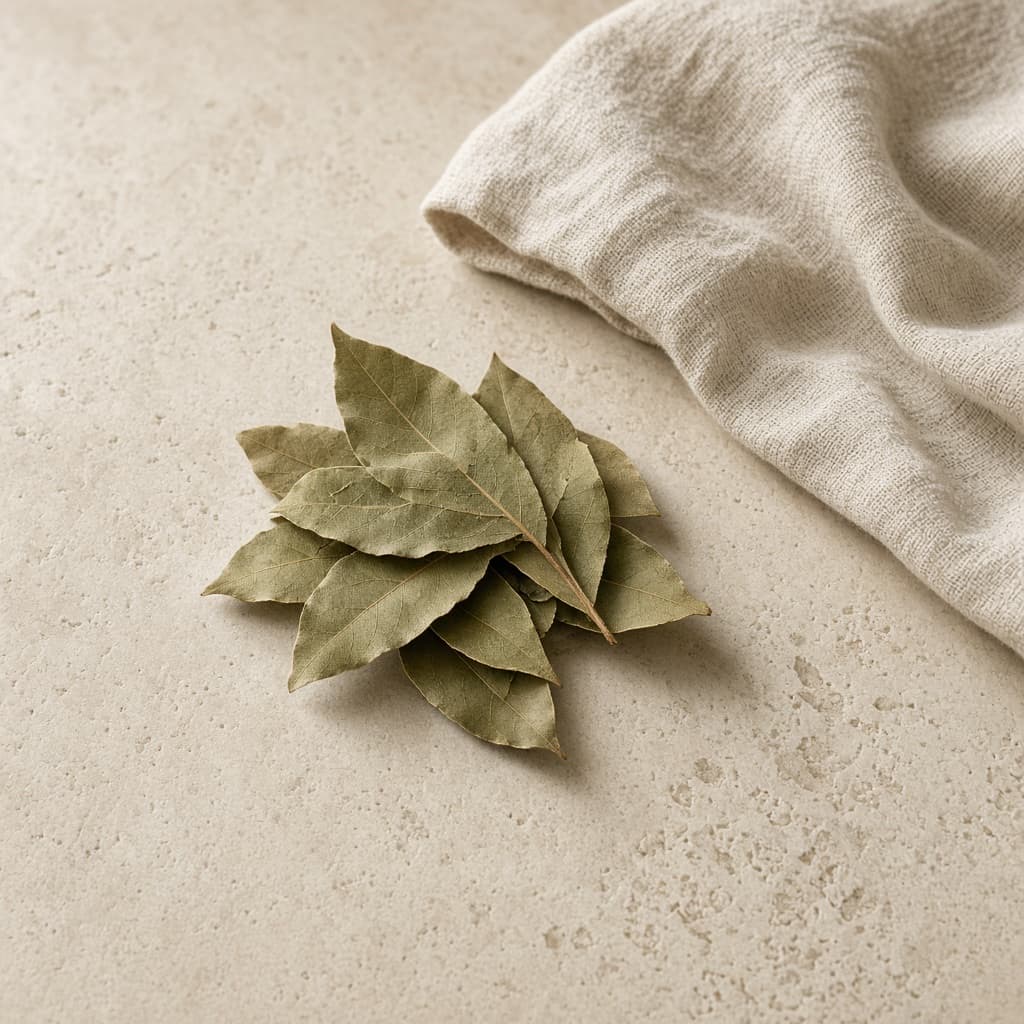
Rinse, tie two or three leaves into a knot so they are easy to fish out, and simmer in the liquid for chè or coconut milk, then discard. Bruise them with the back of a knife first to wake the oil. Do not eat the leaf. Extract goes in at the end, drop by drop, especially in pale custards — it stains lime-green. Frozen leaves are fine and often fresher than the sad chilled bunch. Bay or vanilla will not impersonate it; they are different perfumes. A blender splash of leaf and water makes a homemade extract that fades fast.
Storage
Fridge a few days, wrapped, or freezer in a bag for months — the usual home method. Dried pandan is a faint cousin. Extract in a dark cupboard, cap tight.
Recipes using it
Checking your allergy settings…