Dairy
Queijo fresco
Also called Portuguese fresh cheese, fresh curd cheese, queijinho fresco
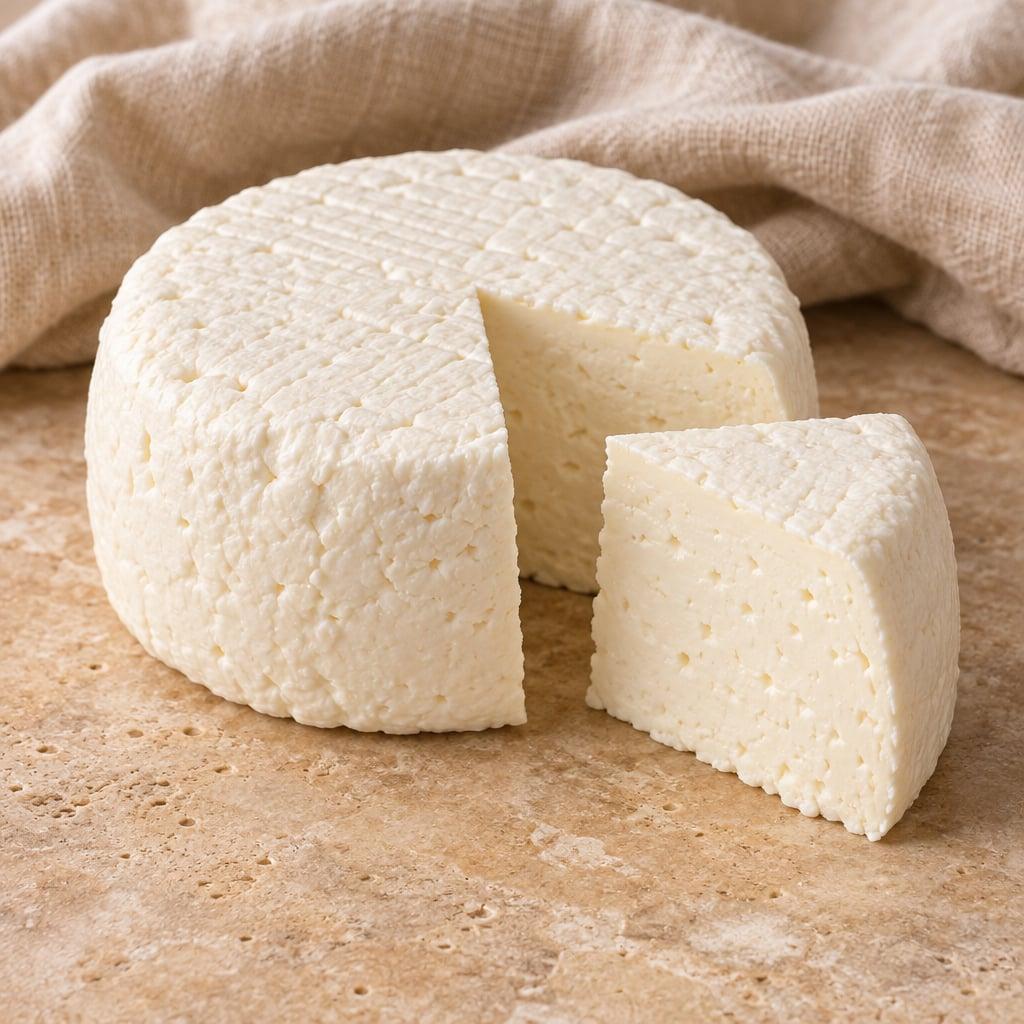
A soft, white, unripened cheese made by setting milk with rennet and draining the curd in small moulds. It is eaten within days, never aged, and is moist, mild and slightly springy, somewhere between a firm ricotta and a fresh farmer's cheese.
Origin
Portugal, where every supermarket sells it in small round tubs, made from cow's, sheep's or goat's milk. It is the cheese of queijadas and of a plain breakfast with bread. Outside Portugal look in Portuguese and Brazilian shops; Brazil's queijo minas frescal is a close relative.
Flavour
Milky, fresh and lightly salted, with a clean lactic tang. Sheep's and goat's milk versions are sharper.
How it is made
Milk is warmed and set with rennet, the curd is cut and ladled into perforated moulds, and it drains for a few hours before being lightly salted and packed.
How to use it
Slice it onto bread with tomato and olive oil, or eat it with honey or jam. For queijadas and other sweets, squeeze it in a cloth and push it through a sieve so the filling is even. Well-drained ricotta or farmer's cheese is the nearest substitute.
Storage
Keep it in the fridge in its tub and eat it within four or five days of opening. It does not freeze well; the texture turns crumbly and wet.