Herb
Summer savory
Bounekraut
Also called savory, Bohnenkraut, sarriette, chubritsa
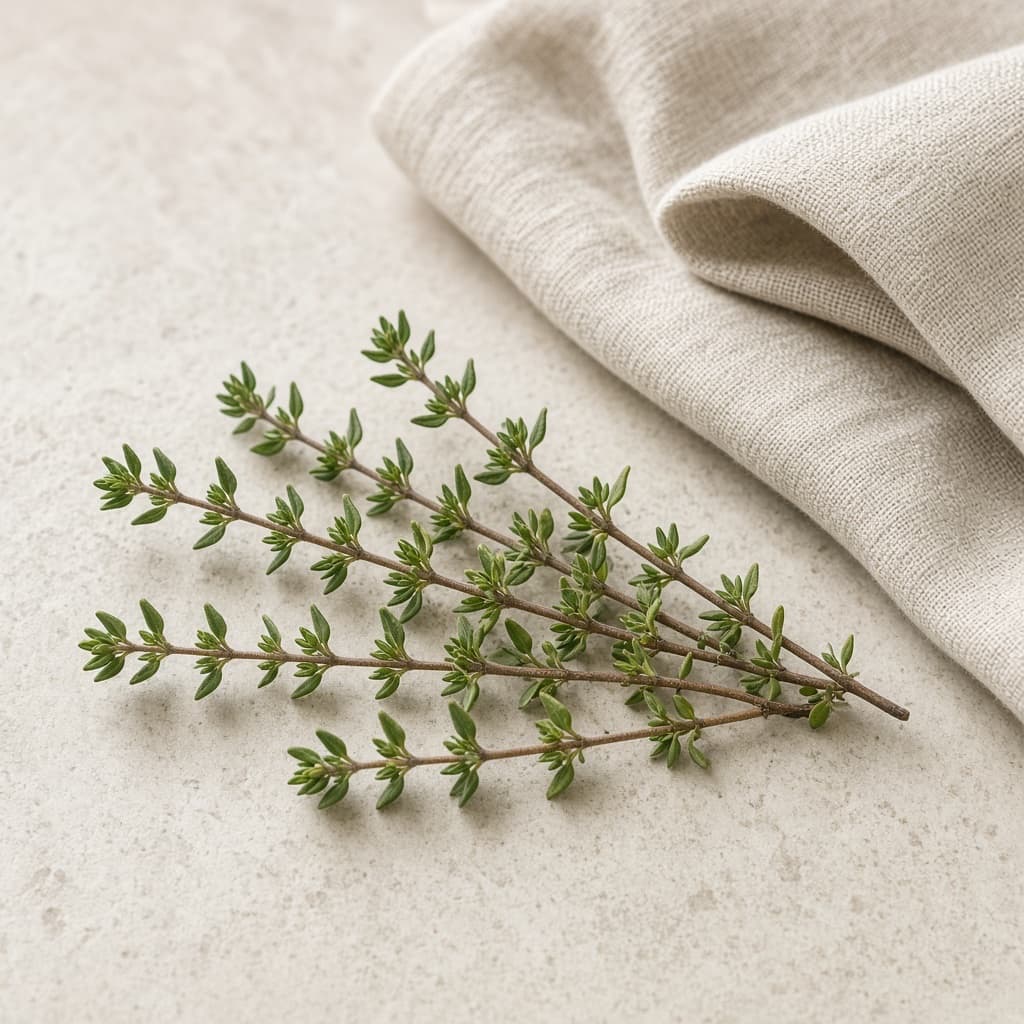
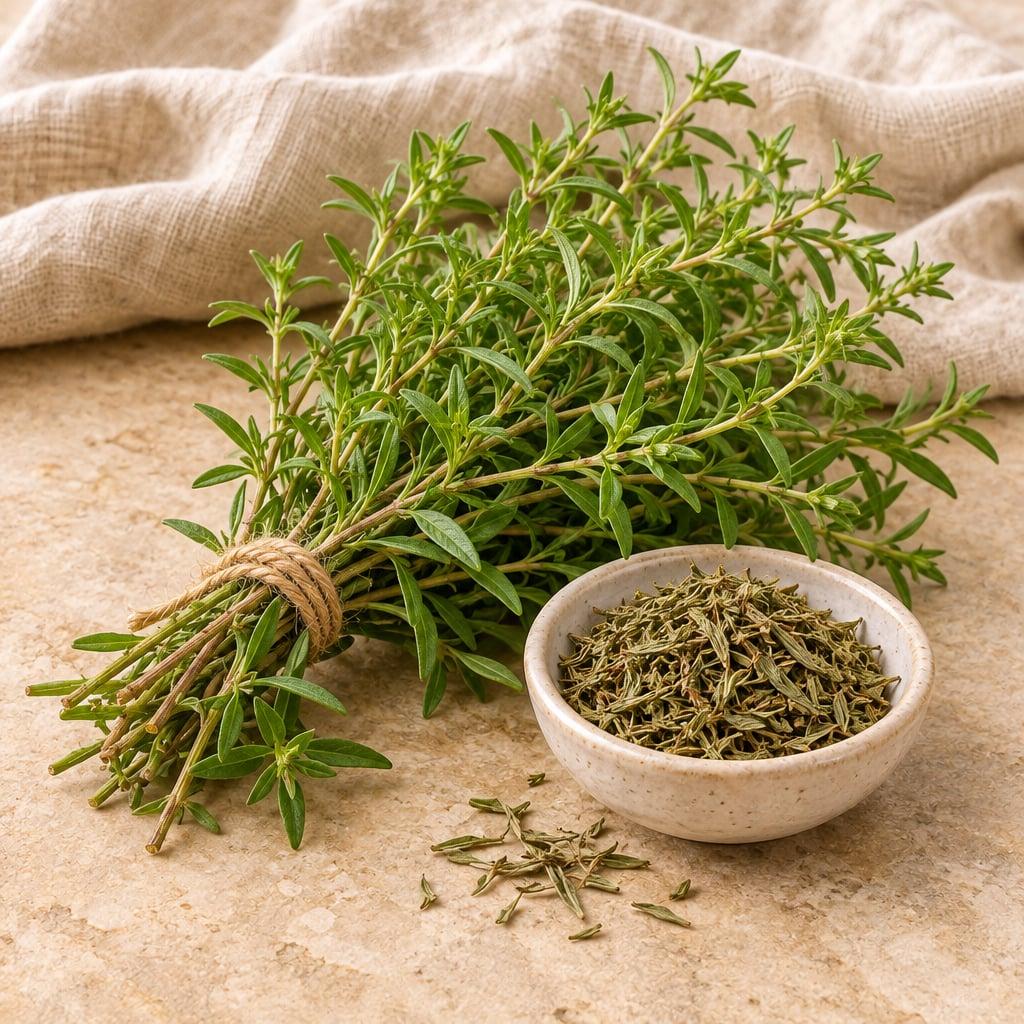
A small-leaved annual herb, used fresh or dried. In Luxembourg and Germany its name means bean herb, because it goes into nearly every pot of broad beans and green beans.
Origin
Native to the eastern Mediterranean and grown in kitchen gardens across central Europe. Dried savory is easy to find in German, Balkan and Eastern European shops, and in the spice rack of larger supermarkets. It is also part of most herbes de Provence blends.
Flavour
Peppery and warm, somewhere between thyme and marjoram with a slight bite. It is stronger dried than most soft herbs.
How to use it
Add a sprig or a teaspoon of dried leaves to beans while they cook, and a little more to the sauce at the end. It also suits lentils, pork and sausage meat. Go carefully; it turns bitter if overdone.
Storage
Fresh sprigs keep a week in the fridge wrapped in damp paper. Dried savory keeps a year in a closed jar away from light before it fades.
Recipes using it

Judd mat Gaardebounen
Luxembourg's national dish: smoked pork collar simmered with leek, carrot and cloves, sliced thick and served with broad beans in a savory cream sauce.
Medium

Bouneschlupp
Luxembourg green bean soup with potato, smoked bacon, onion and leek, lightly thickened with a roux and finished with sour cream. Served with sausage.
Easy

Kavarma
Кавърма
Bulgarian pork stew braised with onion, leek, peppers, mushrooms, tomato and red wine, seasoned with paprika and summer savory until thick and tender.
Easy

Patatnik
Пататник
Rhodope baked potato dish: coarsely grated potato and onion with white cheese, dried spearmint and summer savory, baked in a tin until crusty outside and soft within.
Easy