


Ezme
acılı ezme
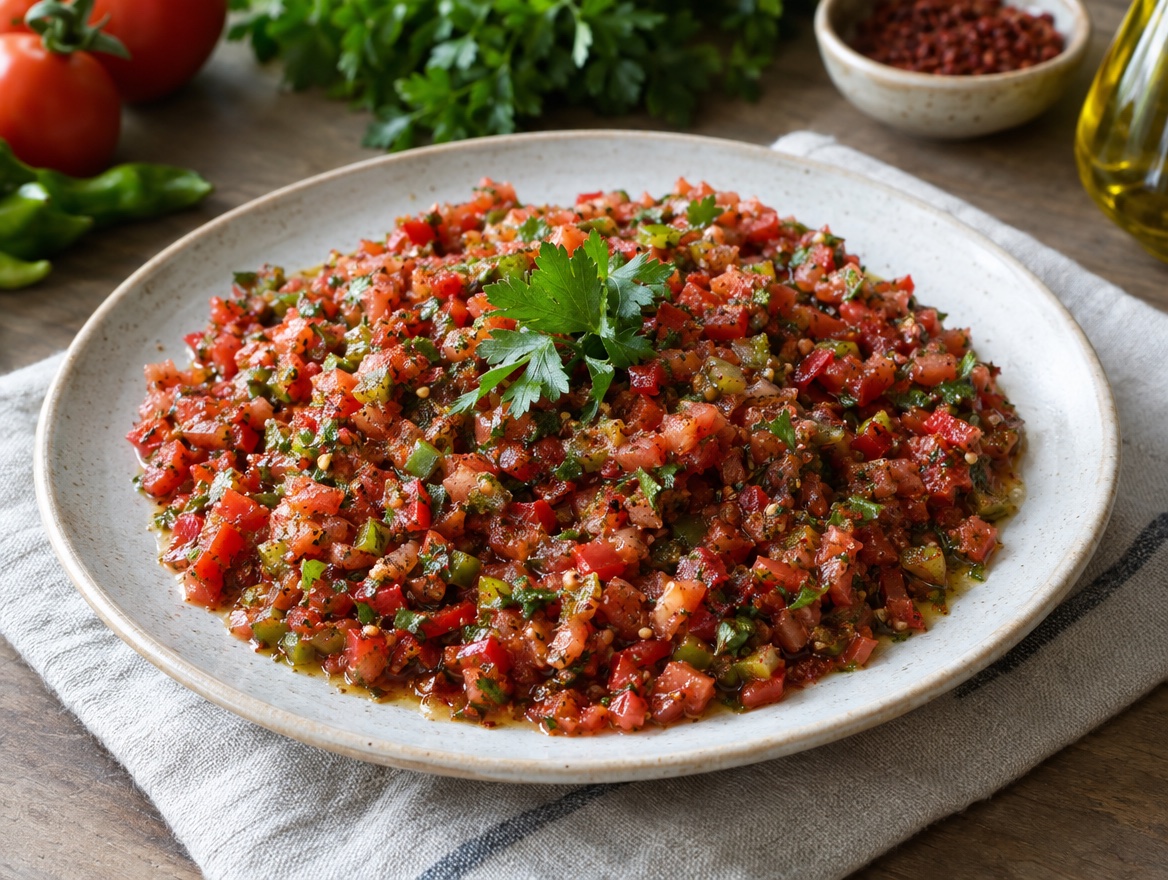
Hand-chopped tomato, pepper and onion salad, sour and chilli-hot — the kebab-house meze that should look rustic, not blended.
Recipe by I Want Some Food · Reviewed by the editorial kitchen. Native name preserved: acılı ezme.
0 people cooked this in the public kitchen yet. Kitchen-tested by I Want Some Food. Not a purchased rating.
- Prep
- 20 min
- Cook
- —
- Rest
- None
- Total
- 20 min
- Difficulty
- Easy
- Spice
- Hot
- Cost
- Cheap nightUnder $8 USD · indicative, not a store price
About
Ezme is a finely chopped (not puréed) salad of tomato, pepper, onion, parsley, chilli, pomegranate molasses or lemon, and olive oil. It should be juicy, sour and a little fiery. A food processor turns it into salsa. Use a knife. It sits next to bread and grilled meat. Chop tomato, sweet pepper, onion, parsley and chilli by hand into tiny dice; the knife is the method. Salt, then add lemon or pomegranate molasses, olive oil, and maybe a pinch of cumin or isot pepper. Drain only if the tomatoes are flooding the plate; a little liquor is for bread. Make it close to serving so the onion stays bright. A food processor will puree it into salsa; stop yourself. Taste after five minutes, because salt pulls juice and the seasoning changes. Serve with grilled meat or just with bread. It does not keep overnight with the same crunch. Isot or pul biber gives a slower heat than fresh chilli alone. If your tomatoes are pale, add an extra spoon of molasses rather than more salt. Stir with a spoon once, then stop; overmixing bruises the parsley into sludge. Bread is the correct utensil.
Ingredients
- Tomato, seeded, finely chopped400 g
- Bell pepper, finely chopped1
- Onion, minced½ small
- Parsley, chopped1 handful
- Pomegranate molasses15 ml
- Olive oil30 ml
- Sumac (optional)4.9 ml
- Salt3.7 ml
Scaling multiplies the written quantities. Baking still prefers a scale.
Steps
Step 1
Chop everything small by hand. The board should look wet and confetti-red.
15 minStep 2
Dress with molasses, oil, salt, chilli and sumac. Taste: sour, salty, hot.
3 minStep 3
Rest 10 minutes. Serve with bread. It gets juicier as it sits.
Adapt this recipe
The canonical recipe stays intact. Personal versions are labelled. Serving changes are maths, not AI.
Adaptations · 0 / 15 used. Resets 10 October.
Substitutions
Pomegranate molasses → Lemon juice plus a pinch of sugar
Brighter, less sticky.
Tips
- Lemon can stand in for pomegranate molasses. You lose the dark sour.
- Walnuts are a Gaziantep extra, not required.
History & culture
Southeast and city ocakbaşı tables. Acılı means spicy. Mild versions exist; they are less interesting. Ocakbaşı and kebab houses in the southeast and in Turkish cities put acılı ezme on the table as a default, next to bread that exists to scoop it. Mild versions appear for children and for tourists; they are less interesting. It is a salad and a relish at once. Home cooks make it when tomatoes are actually good; winter greenhouse fruit needs molasses and chilli to taste like anything. It is not muhammara (that is walnut and pepper paste) and not acılı ezme from a jar. Eat it with kebabs, with lahmacun, or with a spoon. Hands and bread are correct. A fork-only serving is a restaurant compromise. At a grill restaurant it arrives before you have ordered, which tells you it is considered part of the table, not a side you might skip. Home versions can be lunch with nothing but bread and white cheese. In winter, people still make it because kebab houses do, even when the tomatoes are sulking.
Pepper-tomato mezes followed New World crops. The kebab-house plate is 20th-century urban grill culture. Pomegranate molasses is an older souring habit that found a new partner in tomato. Food processors in home kitchens tempted people to blend it, which cooks still warn against. Restaurant standardisation made ezme a named meze rather than 'the chopped salad'. Diaspora Turkish restaurants export a milder, thicker version that travels. There is no Ottoman court recipe that this must match. What is historical is the chilli-tomato-onion triad after peppers arrived; what is modern is the ocakbaşı saucer. Chopped salads of onion and herb are older than tomato; tomato made them red and juicy in a new way. The ocakbaşı saucer is restaurant culture from the last century, riding that older chopping habit. Naming ezme keeps it from being filed under salsa, which is a different knife and a different pantry.
Traditional
Provenance: Editorial adaptation.
Questions about this recipe
Answers taken from this dish's times, amounts, swaps and tips — not a chatbot.
How long does Ezme take?
20 min all in — 20 min prep. Cook and rest follow the method. Leftover storage and optional extra waits are not included.
How many does it serve?
The recipe is written for 4 plates. Scale the ingredient list on the page if you are cooking for a different number.
How hard is it?
Easy.
How spicy is it?
Hot.
Does it fit a diet?
The published recipe is labelled Vegan, Gluten-free.
What does it cost to cook?
Cheap night — about Under $8 USD, as a grocery budget for this recipe, not a restaurant price.
What equipment do I need?
Chef's knife, Mixing bowl.
How much salt do I put in?
The recipe lists Salt at ¾ tsp.
What can I use instead?
Pomegranate molasses → Lemon juice plus a pinch of sugar. Brighter, less sticky.
Any tips from this recipe?
Lemon can stand in for pomegranate molasses. You lose the dark sour. Walnuts are a Gaziantep extra, not required.
Can I use an air fryer?
This method is not written for an air fryer. The core technique on the page still applies.
Similar dishes
Checking your allergy settings…