

Pantry
Salt
Also called sea salt, kosher salt
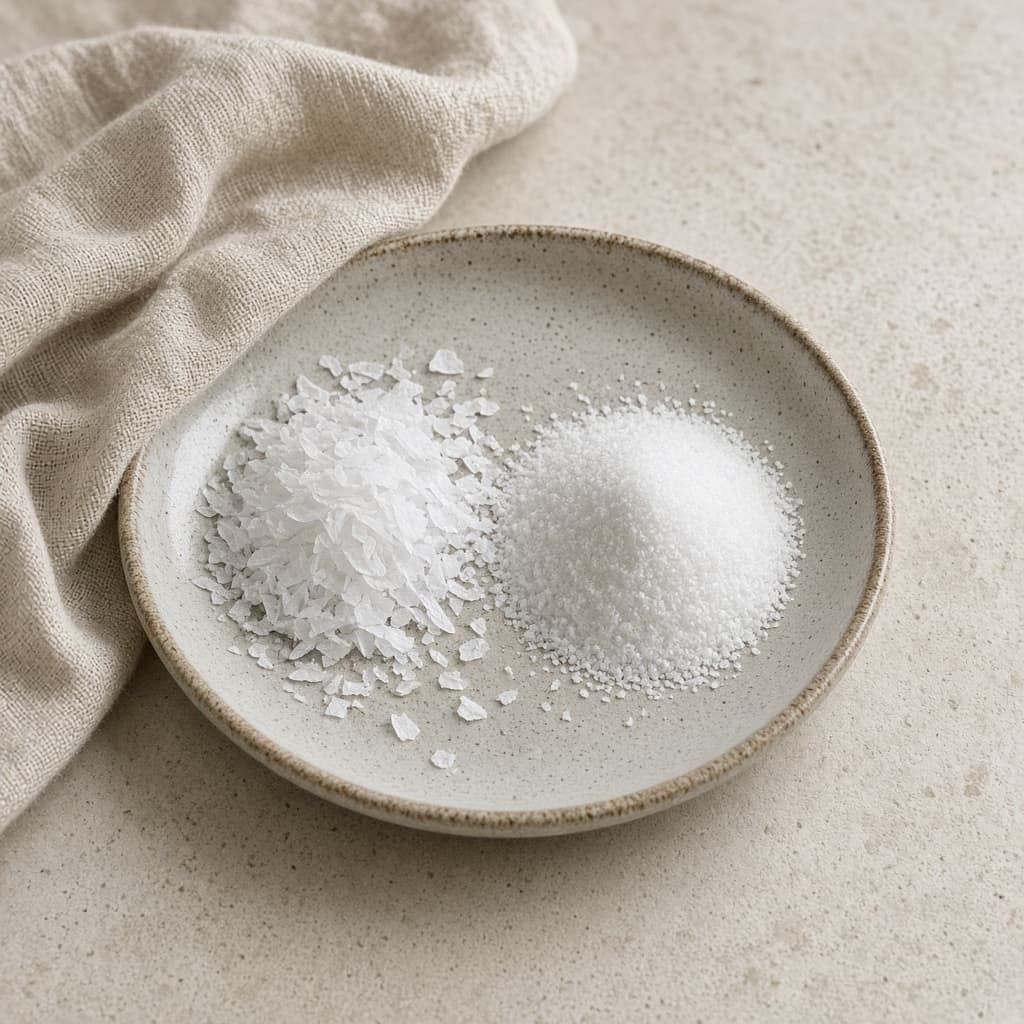
Sodium chloride in crystals of very different sizes. Fine table salt, flaky sea salt, coarse cooking salt and American kosher salt do not weigh the same per pinch, which is why a “teaspoon” can taste wildly different.
Origin
Harvested from seawater, salt lakes and underground deposits. Culinary traditions differ less in chemistry than in crystal shape and whether iodine was added.
Flavour
Clean and mineral. What you taste as “more flavour” is usually other ingredients becoming audible once sodium is there.
How it is made
Seawater is evaporated in pans, or rock salt is mined and crushed. Flaky salts form hollow pyramids; iodised table salt is the same crystal with iodine added.
How to use it
Season in layers: a little in boiling water, a little on meat before the pan, a little at the table. Weigh salt for bread, pastry and brines — volume lies when the crystal changes. Fine table salt packs about twice as much sodium into a teaspoon as many flaky salts. For meats, salt ahead so it dissolves inward; flakes at the end are for texture. Pasta water should taste pleasantly sea-like. Taste after reductions, because water leaves and salt stays.
Storage
A dry cupboard, lid on. Salt does not spoil, but it cakes in steam.
Recipes using it
Checking your allergy settings…
Showing 18 of 149. Search all recipes using salt