


French omelette
Omelette
Soft curds, pale outside, rolled — a two-minute test of heat and nerve, not a diner fold.
Recipe by I Want Some Food · Reviewed by the editorial kitchen. Native name preserved: Omelette.
0 people cooked this in the public kitchen yet. Kitchen-tested by I Want Some Food. Not a purchased rating.
- Prep
- 5 min
- Cook
- 3 min
- Rest
- None
- Total
- 8 min
- Difficulty
- Medium
- Spice
- No chilli
- Cost
- Cheap nightUnder $8 USD · indicative, not a store price
About
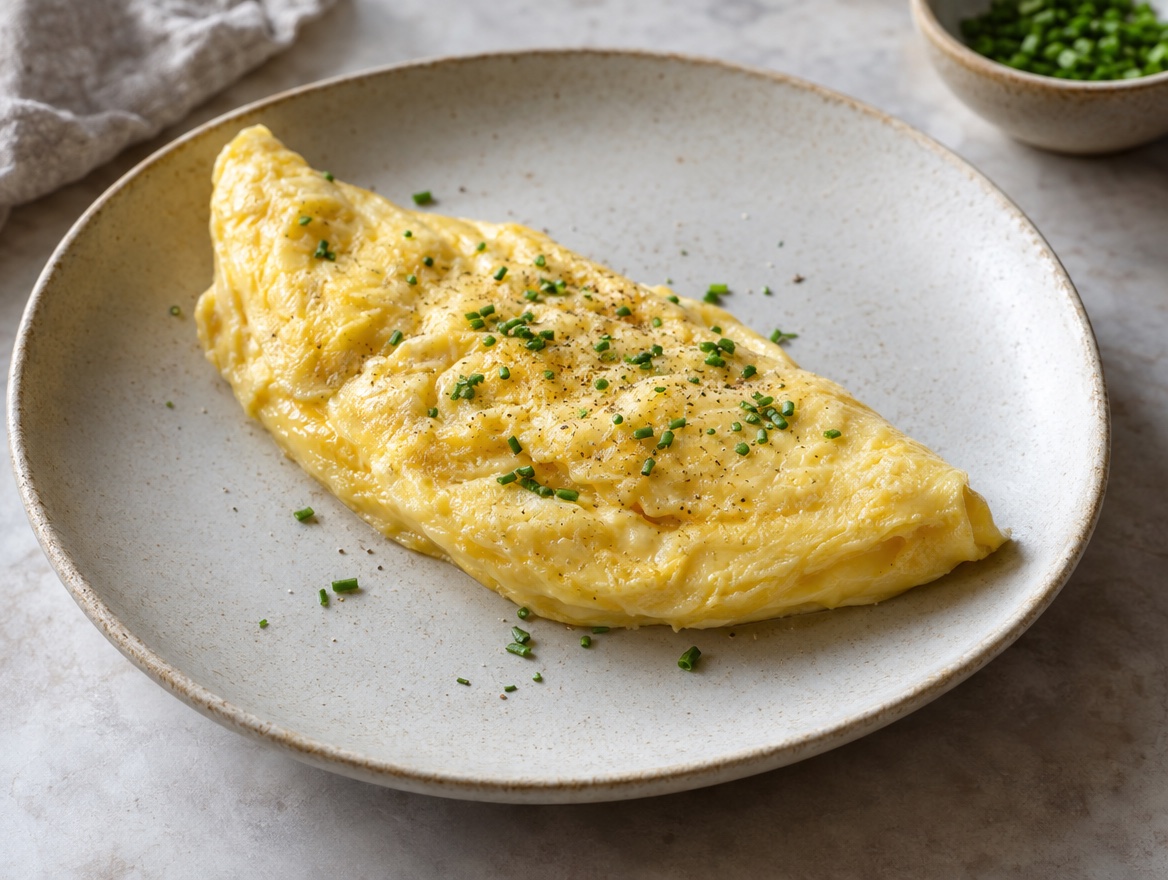
A French omelette is eggs stirred over medium heat until they are barely set custard, then rolled onto a plate pale, glossy and without brown spots. Butter is the fat. Filling is optional and should not be a fridge raid. This is practice food. The first one is for the cook. Use a small non-stick or well-seasoned pan and more butter than feels polite. Beat the eggs just until the whites disappear; you are not making meringue. Medium heat, constant motion with a fork or spatula, and a willingness to take it off the heat while it still looks wet. The outside should stay pale; brown is a different, diner omelette. Tilt and roll toward the plate so it sits like a plump cigar, seam down. A teaspoon of cream is a house extra, not a requirement. Herbs or a little cheese inside must be pre-cooked and modest or they tear the skin. Eat immediately. The second attempt is usually the one you serve. Wipe the pan between attempts if browned butter has collected, and keep the eggs at cool room temperature so they do not seize. A salad and bread turn practice into lunch without changing the technique at all.
Ingredients
- Egg3 large
- Butter15 g
- Salt1 pinch
- Mixed herbs, chives or parsley, optional15 ml
- Melting cheese (optional)20 g
Scaling multiplies the written quantities. Baking still prefers a scale.
Steps
Step 1
Beat eggs with salt just until the whites disappear. No milk.
2 minStep 2
Hot 20cm pan, butter foaming. Pour eggs. Stir constantly with a fork, shaking the pan, 30–45 seconds until small curds form and the base is still wet.
1 minStep 3
Stop stirring. Add herbs or cheese. Tilt and roll the omelette onto itself and out onto a warm plate. It should be pale and slightly runny inside.
1 minWatch: Brown is a different, valid omelette. Just do not call this one French.
Adapt this recipe
The canonical recipe stays intact. Personal versions are labelled. Serving changes are maths, not AI.
Adaptations · 0 / 15 used. Resets 10 October.
Substitutions
Butter → Olive oil
Different perfume. Still stir, still pale.
Tips
- A nonstick or well-seasoned pan is the whole technique.
- Practice with cheap eggs. Pride comes on omelette four.
History & culture
Bistro breakfast and a chef's interview trick. At home it is still just eggs, done with attention. Chefs still use a pale rolled omelette as a hiring test because it shows heat control in two minutes. At home it is breakfast, lunch, or the thing you cook when the fridge is otherwise empty. Fillings in bistros stay small — fines herbes, a spoon of mushrooms, grated cheese — because a stuffed fold is a different French cousin, the omelette garnie. Tourists expect brown spots and ketchup; that is not this plate. Some households keep a dedicated egg pan and never wash it with detergent. It is practice food: cheap enough to repeat, honest enough to show every mistake. Serve with a green salad and bread if you want a meal, not a hotel buffet. Hotel schools still film the roll as if it were sport, which is useful theatre and a slightly unkind standard for a Tuesday morning. If yours splits, fold it anyway and eat; the palaeontology of a perfect cigar is not the only edible outcome.
Egg pans are old. The pale rolled omelette is a 19th–20th-century French professional standard that home cooks can steal. People have cooked beaten eggs in pans for as long as they have had pans. The specific pale, rolled, unbrowned omelette became a French professional standard in the nineteenth and twentieth centuries, taught in hotel schools and written up by cooks who wanted to distinguish it from rustic country folds. Escoffier and later culinary manuals treated it as a test of fondue-like curds. Home cooks stole the method because butter and eggs were already in the kitchen. Non-stick pans in the late twentieth century made the trick easier and slightly less impressive. It remains a technique more than a recipe: three eggs, heat, nerve. There is no ancient peasant law that forbids colour; the pale finish is a restaurant aesthetic that home cooks can borrow.
Traditional
Provenance: Editorial adaptation.
Questions about this recipe
Answers taken from this dish's times, amounts, swaps and tips — not a chatbot.
How long does French omelette take?
8 min all in — 5 min prep, 3 min cook. Cook and rest follow the method. Leftover storage and optional extra waits are not included.
How many does it serve?
The recipe is written for 1 omelette. Scale the ingredient list on the page if you are cooking for a different number.
How hard is it?
Medium.
How spicy is it?
No chilli.
What allergens should I watch?
This recipe is labelled for Eggs, Milk. Labels are informational — check the packets in your kitchen. This is not medical advice.
Does it fit a diet?
The published recipe is labelled Vegetarian, Gluten-free.
What does it cost to cook?
Cheap night — about Under $8 USD, as a grocery budget for this recipe, not a restaurant price.
What equipment do I need?
Frying pan, Mixing bowl.
How much salt do I put in?
The recipe lists Salt at 1 pinch.
What can I use instead?
Butter → Olive oil. Different perfume. Still stir, still pale.
What should I watch for?
Brown is a different, valid omelette. Just do not call this one French.
Any tips from this recipe?
A nonstick or well-seasoned pan is the whole technique. Practice with cheap eggs. Pride comes on omelette four.
Can I use an air fryer?
This method is not written for an air fryer. The core technique on the page still applies.
Similar dishes
Checking your allergy settings…