


Ratatouille
Ratatouille niçoise
Provençal summer vegetables cooked until they agree — not a tray of raw cubes under cheese.
Recipe by I Want Some Food · Reviewed by the editorial kitchen. Native name preserved: Ratatouille niçoise.
0 people cooked this in the public kitchen yet. Kitchen-tested by I Want Some Food. Not a purchased rating.
- Prep
- 20 min
- Cook
- 50 min
- Rest
- None
- Total
- 1 hr 10 min
- Difficulty
- Easy
- Spice
- No chilli
- Cost
- Weeknight budget$8–16 USD · indicative, not a store price
About
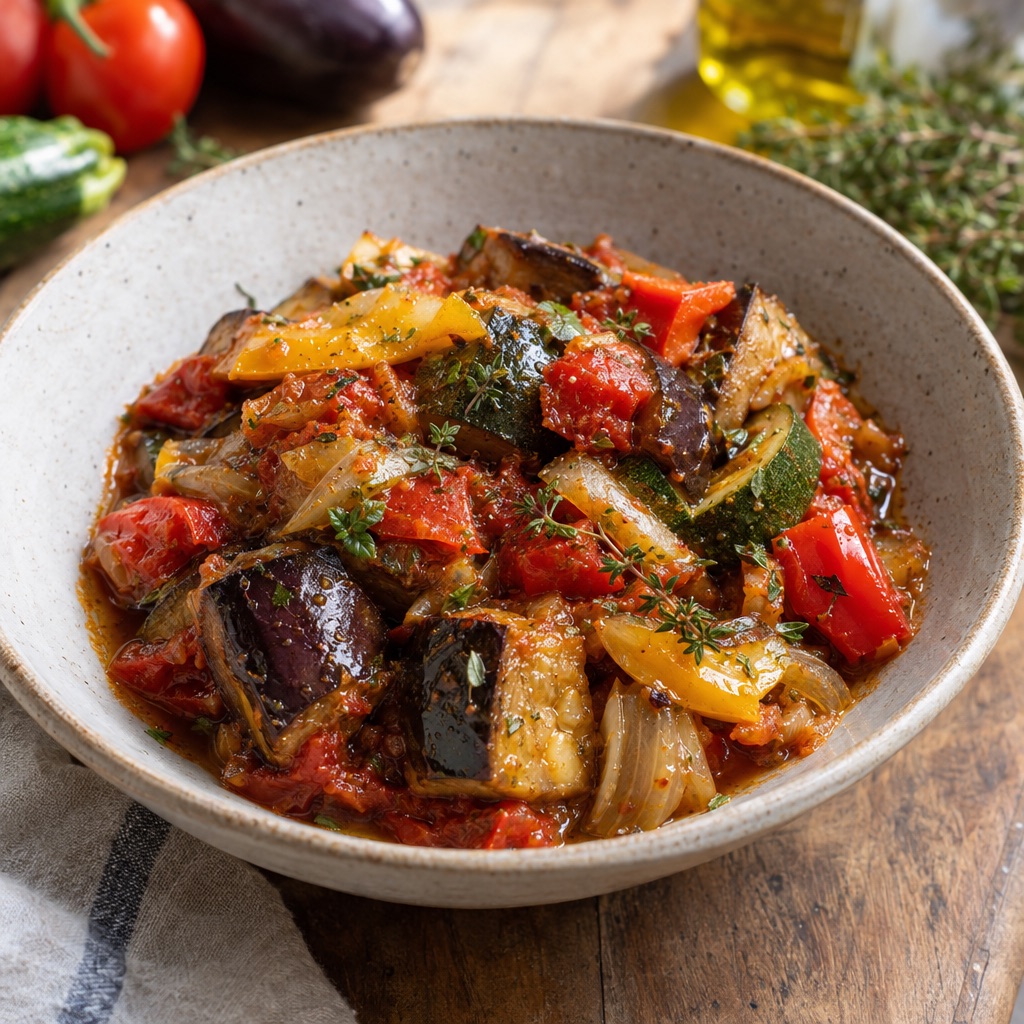
Ratatouille is eggplant, courgette, pepper and tomato, each given time in olive oil, then married. The cartoon version layers pretty slices; the pot version is how people ate it. This is the pot: vegetables cooked until sweet, oily and spoonable, better the next day, with bread or an egg. Salt the aubergine, pat it dry, and brown each vegetable in batches so you fry rather than stew from the first minute. Courgette gives off water; give it colour before it joins the tomato. Peppers should slump but not vanish. A generous pour of olive oil is the medium, not a garnish — this is a Provençal pot, not a steamed mixed-veg tray. Once everything is together, simmer gently until the oil turns orange and the pieces still keep their edges. Rest it; the flavour settles as it cools. Eat warm with bread, cold from the fridge, or with a fried egg. It is better on the second day. Do not bury it under mozzarella and call it a bake.
Ingredients
Scaling multiplies the written quantities. Baking still prefers a scale.
Steps
Step 1
Salt eggplant 15 minutes, pat dry. Brown eggplant, then courgette, then peppers in batches in oil. Set aside.
20 minStep 2
Soften onion, add garlic and tomato and thyme. Simmer 10 minutes.
12 minStep 3
Return vegetables. Stew gently 20 minutes until everything is tender and the oil looks orange. Do not stir into mush.
20 minStep 4
Rest 10 minutes. Taste for salt. Bread, rice, or a fried egg.
Adapt this recipe
The canonical recipe stays intact. Personal versions are labelled. Serving changes are maths, not AI.
Adaptations · 0 / 15 used. Resets 10 October.
Substitutions
Thyme → A bay leaf and parsley at the end
Still Provençal-adjacent.
Tips
- Cook in batches so you fry, not steam.
- It is better overnight. The fridge is part of the recipe.
History & culture
Niçoise and Provençal home food. A summer surplus dish. Served hot or cold. Not a side of steamed mixed veg with a French sticker. Around Nice and inland Provence, ratatouille is surplus cooking: August glut turned into lunch for several days. Households argue about whether to cook vegetables separately (the purist line) or dump them in one pan (the Tuesday line). Served at room temperature with bread, it is a main; next to roast lamb it is a side that still tastes of olive oil and thyme. The film made a layered, pretty confit byaldi famous, which is a chef's plating of related ideas, not how most families ate it. Tinned tomatoes in winter are a compromise; pale greenhouse fruit needs a pinch of sugar and more time. It is not ratatouille if the vegetables remain raw in the middle or swim in watery juice without oil.
Named in the 19th century; the vegetable mix is older peasant cooking once tomatoes and peppers were local. The name is nineteenth-century; the habit of stewing New World tomatoes, peppers and aubergines with older Mediterranean courgettes and olive oil is older peasant cookery once those crops naturalised in the south. Before tomatoes, similar oil-stews used other summer vegetables. Restaurant niçoise cooking in the twentieth century plated it as a named garnish beside fish or lamb. Food writers later fought about whether true ratatouille requires separate pans — a professional standard more than a farm rule. Tinned tomatoes and supermarket aubergines made it a year-round dish far from Provence. The Pixar plate is a twenty-first-century image laid over a nineteenth-century name. Home pots remain closer to the farm than to the cartoon. Written recipes from the late nineteenth century already treat it as ordinary southern cooking rather than a chef's invention. Keep that farm register when you cook it: oil, time, and vegetables that were actually in season.
Traditional
Provenance: Editorial adaptation.
Questions about this recipe
Answers taken from this dish's times, amounts, swaps and tips — not a chatbot.
How long does Ratatouille take?
1 hr 10 min all in — 20 min prep, 50 min cook. Cook and rest follow the method. Leftover storage and optional extra waits are not included.
How many does it serve?
The recipe is written for 4 people. Scale the ingredient list on the page if you are cooking for a different number.
How hard is it?
Easy.
How spicy is it?
No chilli.
Does it fit a diet?
The published recipe is labelled Vegan, Gluten-free.
What does it cost to cook?
Weeknight budget — about $8–16 USD, as a grocery budget for this recipe, not a restaurant price.
What equipment do I need?
Frying pan, Dutch oven.
How much salt do I put in?
The recipe lists Salt at 1½ tsp.
What can I use instead?
Thyme → A bay leaf and parsley at the end. Still Provençal-adjacent.
Any tips from this recipe?
Cook in batches so you fry, not steam. It is better overnight. The fridge is part of the recipe.
Can I prepare this ahead?
It is better overnight. The fridge is part of the recipe.
Can I use an air fryer?
This method is not written for an air fryer. The core technique on the page still applies.
Similar dishes
Checking your allergy settings…