
 Taste Fiji
Viti
A Pacific archipelago with two kitchens under one roof: indigenous iTaukei cooking of root crops, fish and coconut, and Indo-Fijian curries and roti.
iTaukei cooking centres on root crops, cassava, taro and yams, boiled or baked in the lovo, an earth oven, with fish, pork or chicken and greens such as taro leaves cooked in coconut milk, called lolo. Kokoda, raw fish cured in citrus and dressed with coconut, is the best-known cold dish. Indo-Fijian cooking brings curries, dhal, roti, chutneys and a thin fish or chicken curry called suruwa, made with a local masala and often with coconut milk. The two overlap constantly. Fresh chilli, lemon and coconut run through both, and many households cook from both traditions in the same week.
3 recipes · 1 cuisine
All dishes 3
- 3 hr 25 min

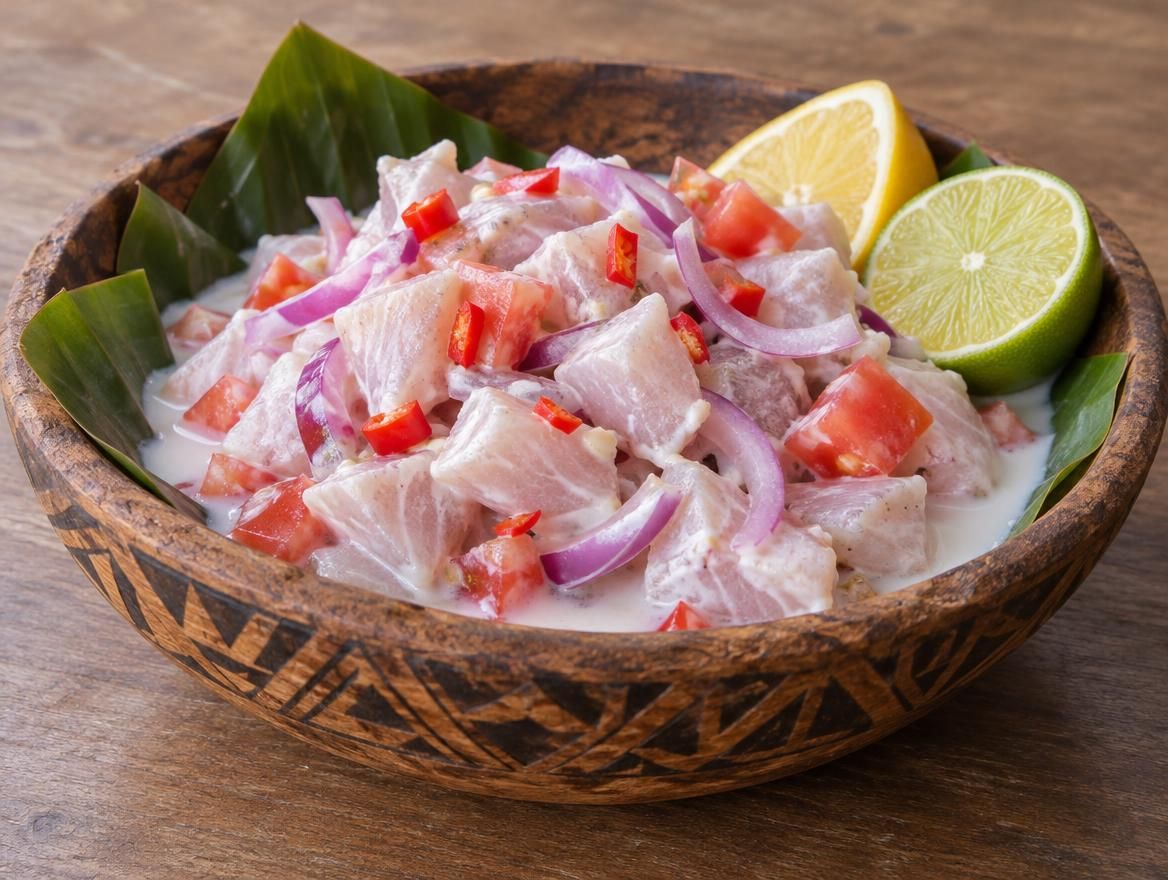
Kokoda
Fijian raw fish cured in lime and lemon juice, drained, then dressed with coconut milk, onion, tomato and chilli. Served cold.
Easy
- 40 min

Fish suruwa
Machhri ke suruwa
Indo-Fijian fish curry: fish poached in a thin, tangy gravy of mustard seeds, curry leaves, masala, tomato and coconut milk.
EasyMedium heat
- 2 hr 10 min

Vakalolo
A Fijian steamed pudding of grated cassava, coconut, sugar and ginger, wrapped in banana leaves. Dense, sticky and sweet.
Medium
Regional cuisines
Think you know Fiji food?
3 quiz dishes. Optional — Passport stamps still come from cooking.
Take the Fiji food quizFood history
Fiji was settled around three thousand years ago by seafarers who brought taro, yams, coconuts, pigs and chickens, and the earth oven, with them. Close ties with Tonga and Samoa shaped chiefly feasting. Britain made Fiji a colony in 1874 and brought indentured workers from India to grow sugar cane; their descendants built Indo-Fijian cooking from memory and island produce. Cassava, introduced from the Americas, became a staple. Chinese shopkeepers, tinned fish and corned beef added further layers.
Common ingredients
Techniques
- lovo earth-oven baking
- curing fish in citrus
- simmering in coconut milk
- tempering whole spices
- leaf-wrapped steaming