

 Taste Germany
Deutschland
A federation of regional kitchens held together by bread, sausage, potatoes and an unembarrassed love of cabbage.
German food changes every hundred kilometres. Bavaria and Swabia eat dumplings, spätzle, roast pork and pretzels; the Rhineland braises beef in vinegar; the north eats fish, kale and smoked meats; Berlin eats currywurst standing up. What holds it together is bread of real quality, hundreds of sausages, potatoes in every form, fermented and braised cabbage, mustard and beer. Lunch was once the main hot meal and dinner was bread and cold cuts, and in many households it still is. Cake and coffee at four is not optional.
8 recipes · 1 cuisine
All dishes 8
- 75 hr 30 min

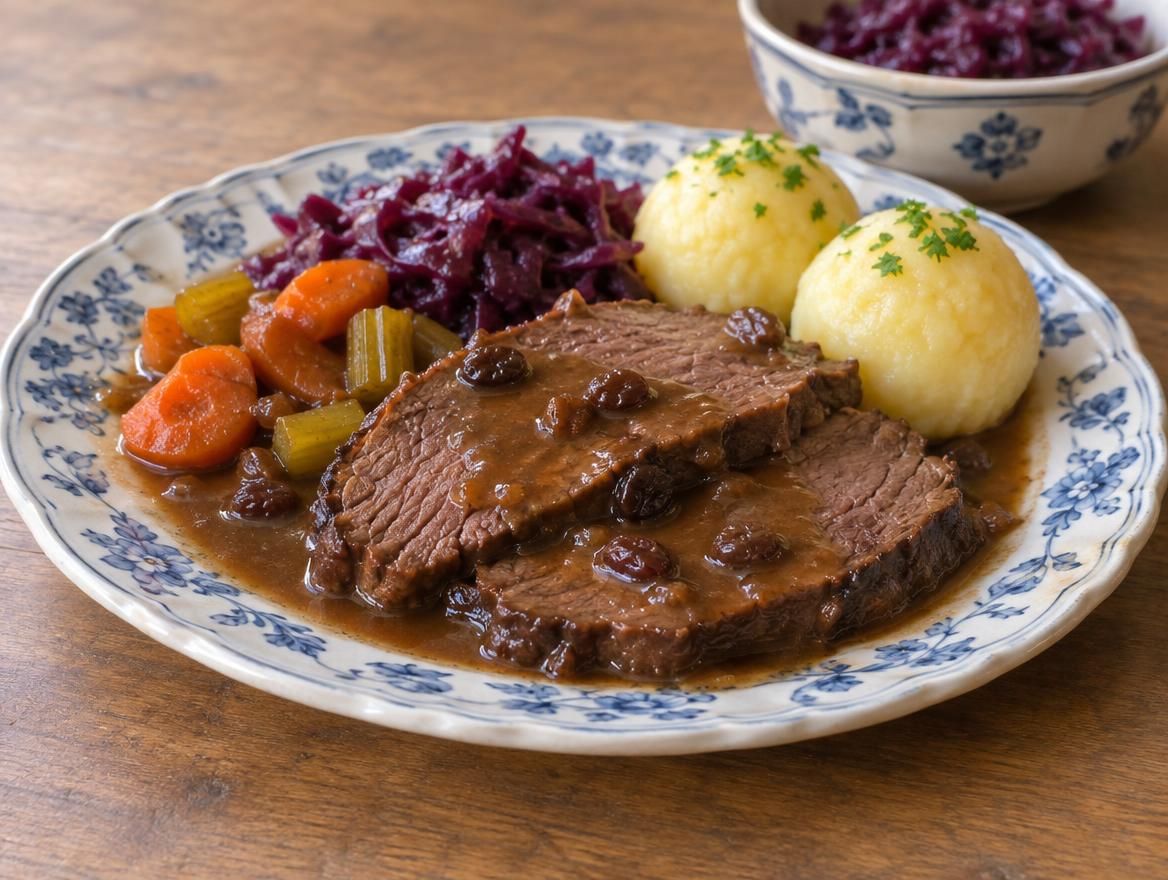
Sauerbraten
German pot roast marinated for three days in vinegar, wine and spice, braised slow, with a sweet-sour raisin gravy.
Medium
- 2 hr 10 min

Rinderrouladen
German beef rolls filled with mustard, bacon, onion and gherkin, braised until the meat gives and the pot makes its own gravy.
Medium
- 55 min

Käsespätzle
Swabian egg noodles layered hot with Emmentaler and mountain cheese and buried under slow-fried onions.
Easy
- 35 min

Currywurst
Berlin snack-stand sausage sliced into coins under a cooked curry-ketchup sauce and a dusting of curry powder.
Very easy
- 55 min

Bratwurst with sauerkraut
Bratwurst mit Sauerkraut
Slow-fried German sausages on sauerkraut braised with onion, apple, juniper, caraway and a splash of white wine.
Easy
- 1 hr 10 min

German potato salad
Schwäbischer Kartoffelsalat
Swabian potato salad: warm waxy potato slices dressed with hot stock, vinegar and mustard, then oil and chives. No mayonnaise.
Easy
- 2 hr 38 min

Laugenbrezel
Soft German pretzels: a firm butter dough twisted, dipped in an alkaline bath and baked dark, with coarse salt on the belly.
Medium
- 5 hr 35 min

Black Forest gateau
Schwarzwälder Kirschtorte
Chocolate sponge soaked in kirsch, layered with whipped cream and sour cherries, finished with chocolate shavings and more cherries.
A bit of work
Regional cuisines
Think you know Germany food?
8 quiz dishes. Optional — Passport stamps still come from cooking.
Take the Germany food quizFood history
Medieval Germany preserved everything: fermented cabbage, smoked and cured pork, pickled vegetables and dense rye loaves got people through long winters. The potato arrived in the 18th century, pushed hard by Frederick the Great, and reorganised the plate. Industrialisation created the Imbiss stand and the sausage-in-a-roll; postwar occupation produced currywurst from British curry powder and American ketchup. Turkish guest workers brought the döner, now as German as anything else. Regional pride survived unification and food is where it shows.
Common ingredients
Techniques
- braising
- slow-frying sausages
- lye-dipped baking
- fermenting cabbage
- pressing spätzle
- marinating in vinegar