

 Taste Morocco
المغرب
Spice, slow pots and a hospitality culture that treats bread as part of the furniture. Cumin and preserved lemon do more work than any tourist spice pyramid.
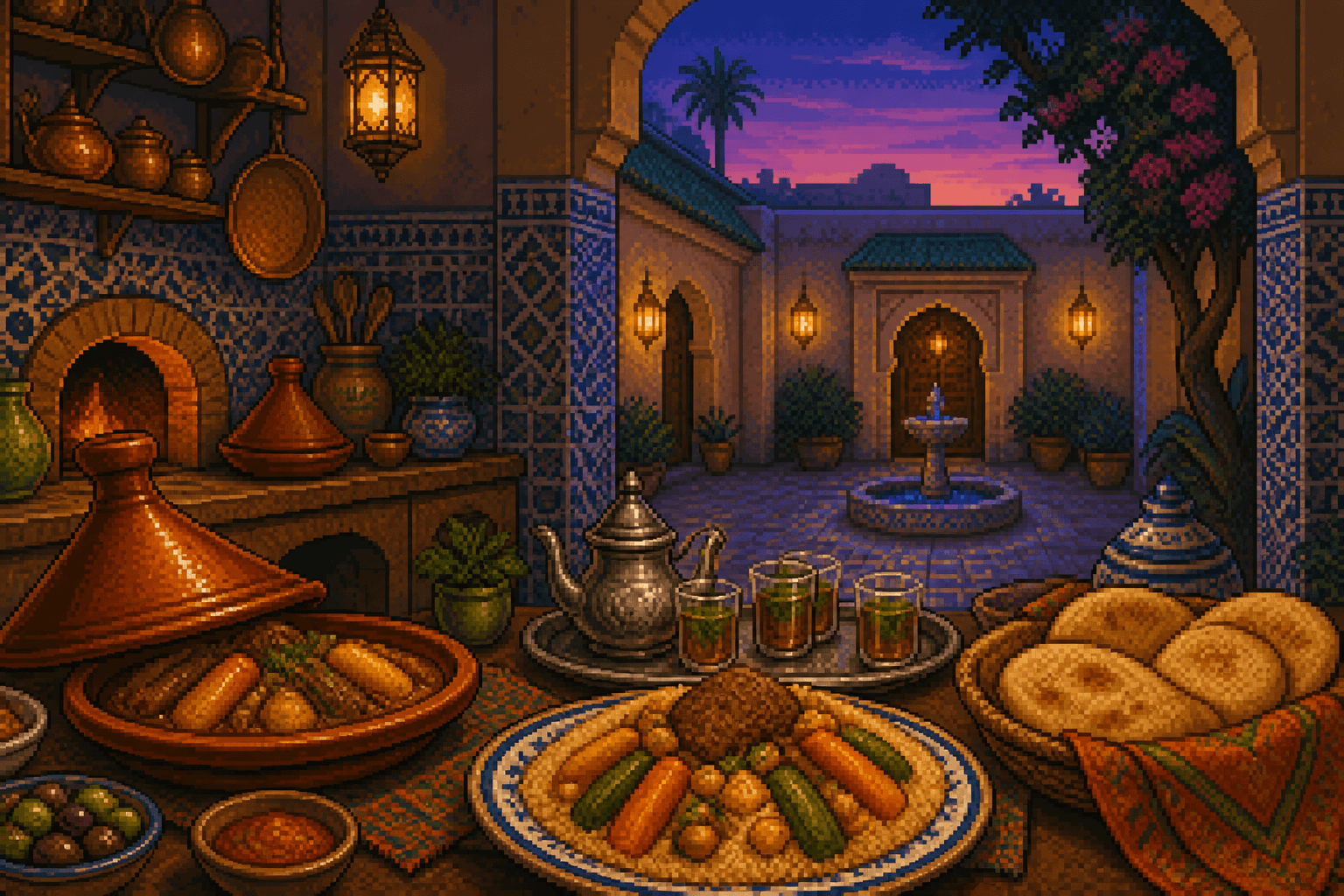
Tagines, couscous, mint tea, street snail soup, and Atlantic fish: Amazigh, Arab, Andalusian and Jewish kitchens talking across centuries. Lamb tagine with preserved lemon and olives is a slow pot, not a stew dumped into a pointed lid for photographs. Chicken couscous is steamed grains and a broth you pour with intent. Rfissa is a festival bowl of msemen or trid with chicken, lentils and fenugreek. Msemen is a laminated griddle bread, flaky and square. Shakshuka as a tomato-egg skillet is more Maghrebi-Levantine than exclusively Moroccan — which is exactly why food maps should be honest. The Atlas, the Rif, Fez, Marrakech and the Atlantic coast do not cook identically.
14 recipes · 1 cuisine
Essential dishes
Checking your allergy settings…
More dishes
Further Morocco listings, including shorter editorial recipes and imported methods.
Checking your allergy settings…
Regional cuisines
Think you know Morocco food?
11 quiz dishes. Optional — Passport stamps still come from cooking.
Take the Morocco food quizFood history
Trans-Saharan spice routes, Andalusian refugees, Ottoman-adjacent tomato dishes, and French colonial markets all left traces. Egg-and-tomato skillets appear across the Maghreb and eastern Mediterranean under several names. Couscous steaming is older than any restaurant tasting menu. Jewish Moroccan kitchens kept their own Shabbat pots and pastry habits. We treat shakshuka as a Maghrebi-Levantine family, not a single-nation trademark, and tagine as a pot and a method, not a souvenir.