
 Taste Nicaragua
Nicaragua
The largest country in Central America, with a Pacific side built on maize and a Caribbean side built on coconut.
Nicaraguan cooking leans on corn, heavily and at every meal. Corn becomes tortillas, nacatamales, thick stews like indio viejo, and a long list of drinks made from toasted maize and cacao. Gallo pinto, rice fried with red beans, is on the table morning and night. Fritangas, the street grills, sell charred beef and pork with fried plantain, fried cheese and cabbage salad. Fresh cheese and cream come from the cattle country of the centre. The Caribbean coast is a different kitchen, with rondón, coconut bread and seafood cooked by Creole, Miskito and Garífuna communities.
3 recipes · 1 cuisine
All dishes 3
- 2 hr 25 min

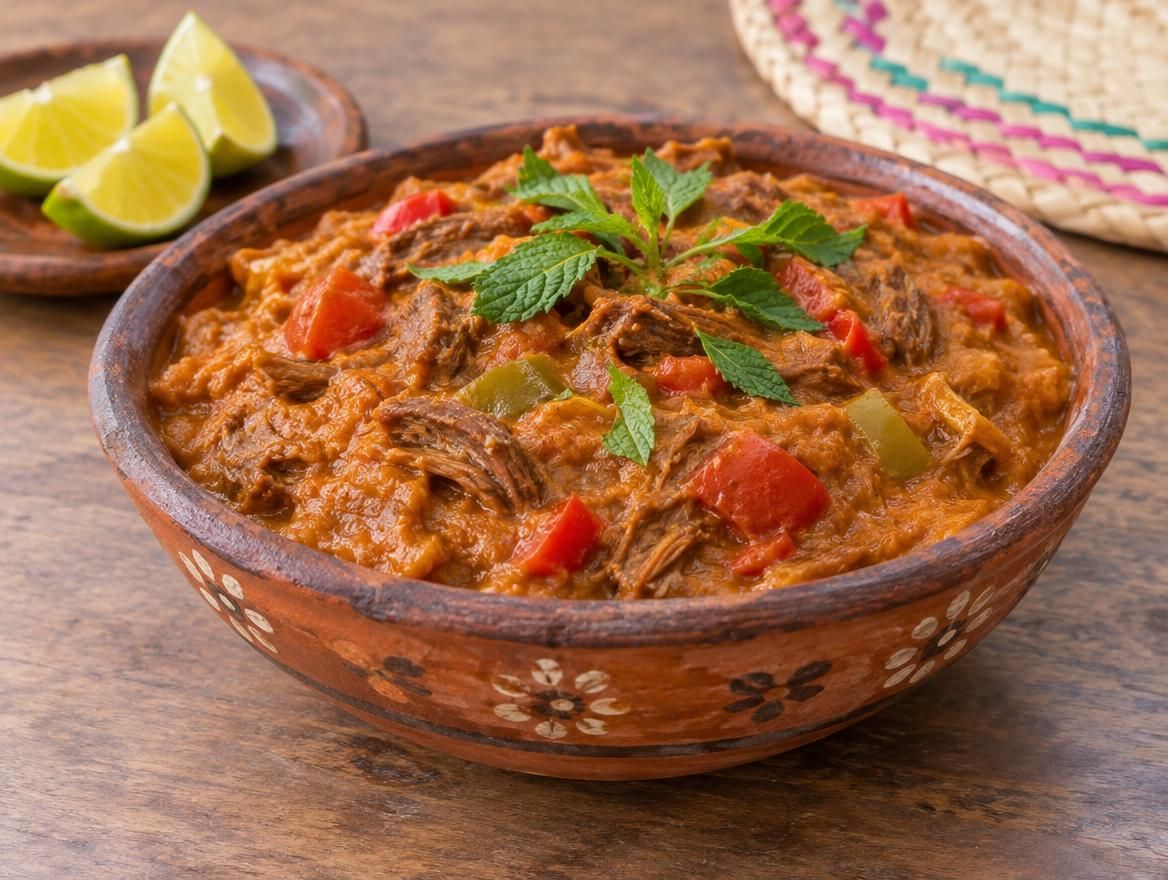
Indio viejo
Nicaraguan shredded beef stew thickened with corn masa, coloured with achiote and finished with sour orange and mint.
Medium
- 1 hr 23 min

Quesillo nicaragüense
Quesillo
A warm corn tortilla rolled around soft stretchy cheese, topped with vinegar-pickled onion and thin salted cream. Nicaraguan roadside food.
Very easy
- 22 min

Gallo pinto
Gallo pinto from Costa Rica.
Medium
Regional cuisines
Think you know Nicaragua food?
3 quiz dishes. Optional — Passport stamps still come from cooking.
Take the Nicaragua food quizFood history
Chorotega and Nicarao peoples farmed maize, beans and cacao on the Pacific plain, and their cooking supplied the base and many of the names. Spanish settlers founded Granada and León in the sixteenth century and brought beef, pork, dairy, rice, citrus and sugar. The Caribbean coast went another way, under British influence for much of the colonial period, with African, Miskito and later Jamaican cooks. The two halves were joined politically in the 1890s, and the food still shows the seam.
Common ingredients
Techniques
- thickening stews with masa
- grilling at fritangas
- wrapping in banana leaf
- pickling onions in vinegar
- toasting and grinding maize for drinks