
 Taste Palestine
فلسطين
A small territory on the eastern Mediterranean whose cooking is built on olive oil, wheat, wild herbs and the habit of feeding guests more than they can eat.
Palestinian cooking divides roughly three ways. The hill villages of the West Bank cook with olive oil, taboon bread, lamb, yoghurt and sumac, and produce musakhan, maqluba and stuffed vegetables. Palestinian cooks in the Galilee lean towards bulgur, kibbeh and raw greens, close to the Lebanese table. Gaza, on the coast, cooks fish and uses more chilli, dill and garlic than anywhere else in the Levant. Everywhere there is za'atar with oil for breakfast, freekeh, lentils with rice, and a long list of dishes shared with neighbouring kitchens across the region.
3 recipes · 1 cuisine
All dishes 3
- 1 hr 55 min

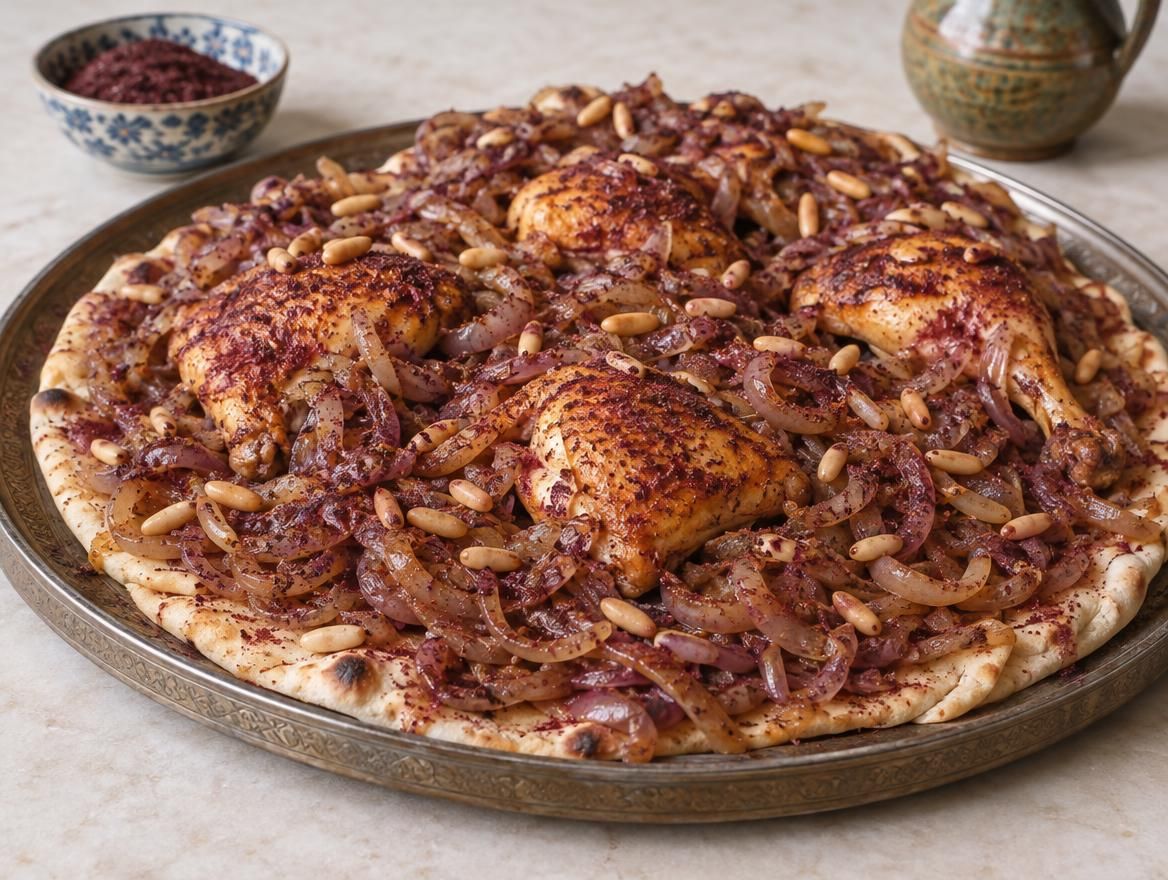
Musakhan
مسخّن
Roast chicken on flatbread under a deep layer of onions cooked soft in olive oil and sumac, finished with pine nuts.
Medium
- 2 hr 30 min

Maqluba
مقلوبة
Chicken, fried aubergine, cauliflower and spiced rice cooked in layers in one pot, then turned out upside down like a cake.
Medium
- 2 hr 30 min

Qidreh
قدرة
Lamb, rice, chickpeas and whole garlic cloves baked together in a sealed pot with turmeric, allspice and ghee. The festive rice of Hebron.
Medium
Regional cuisines
Think you know Palestine food?
3 quiz dishes. Optional — Passport stamps still come from cooking.
Take the Palestine food quizFood history
This is old farming country. Wheat, olives, grapes, figs and pulses have been grown on its terraces for thousands of years, and the seasonal calendar still shapes the cooking, from spring greens to the autumn oil press. Centuries inside larger empires, the Ottoman among them, brought rice, stuffed vegetables and sweets made with syrup and cheese; Nablus became known for knafeh and Hebron for qidreh. A large diaspora now cooks these dishes far from the villages they are named for, and has written many of them down for the first time.