

 Taste Poland
Dumplings, sour rye and a respect for cabbage that is not a joke. Polish cooking is Central European, with Lithuanian, Ukrainian and Jewish neighbours in the pot.
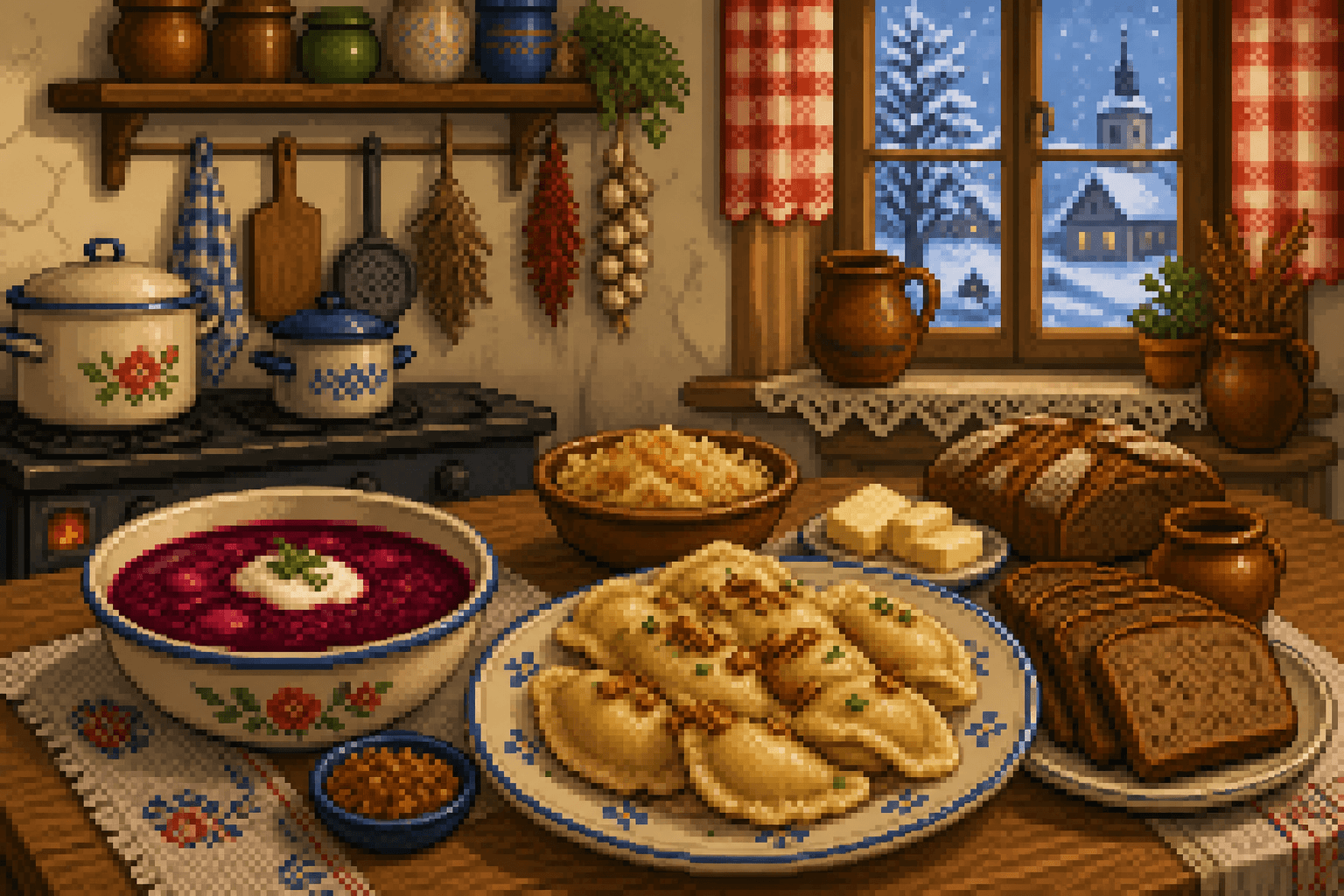
Pierogi are stuffed dumplings — potato and cheese, sauerkraut and mushroom, meat — boiled then often fried in butter with onion. They are a Friday plate, a Christmas plate, a frozen-food plate, and still worth making by hand if you have the table space. Żurek is sour rye soup with sausage and egg; bigos is hunter's stew of cabbage and meat that improves overnight. Baltic herring, mountain oscypek, and Warsaw restaurant cooking do not taste the same. Dill, sour cream and marjoram season more quietly than paprika next door. Pierogi ruskie are potato-cheese, not 'Russian' in the way the name suggests to English speakers.
27 recipes · 1 cuisine
Essential dishes
Checking your allergy settings…
More dishes
Further Poland listings, including shorter editorial recipes and imported methods.
Checking your allergy settings…
Regional cuisines
Think you know Poland food?
27 quiz dishes. Optional — Passport stamps still come from cooking.
Take the Poland food quizFood history
Grain farming, forest mushrooms, and a Commonwealth that mixed Polish, Lithuanian, Ruthenian and Jewish kitchens. Partitions and twentieth-century borders moved people and recipes; so did the loss of Jewish restaurant culture in the Holocaust. Tomato and potato are New World, now fully domestic. Communist-era canteens standardised some dumplings and cutlets; home kitchens kept the Christmas eve (Wigilia) fish and mushroom dishes. Pierogi are older than any of those governments. Honesty means naming Jewish, Ukrainian and Kashubian cooking as part of the landscape, not extras.