

 Taste Tunisia
Harissa as a cooking fat's companion, not a trendy condiment. Tunisian food is Maghreb cooking with a sharper chilli and a Mediterranean fish market.
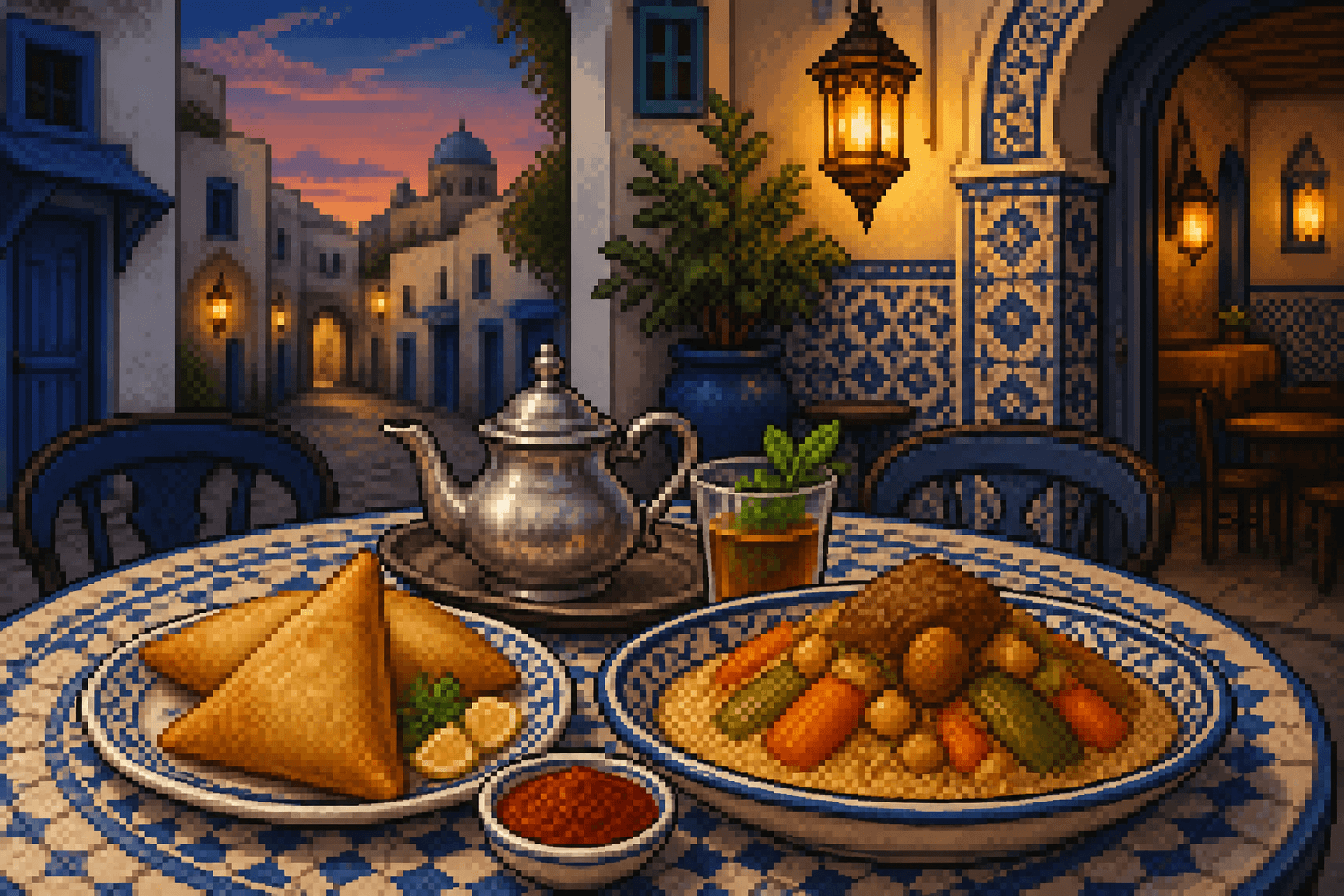
Brik is a thin pastry envelope, usually malsouka, folded around tuna, potato, parsley and a raw egg that should finish set-but-runny in the fryer. It is street food and iftar food, eaten immediately so the pastry stays shatter-crisp. Couscous here can be spicy and fish-based on the coast, lamb inland. Lablabi is chickpea soup poured over bread. Ojja is eggs in a tomato-pepper sauce related to, and not identical with, shakshuka. Sfax, Djerba, Tunis and the interior do not share one heat level. Olive oil is the fat; lemon finishes the fry.
9 recipes · 1 cuisine
Essential dishes
Checking your allergy settings…
More dishes
Further Tunisia listings, including shorter editorial recipes and imported methods.
Checking your allergy settings…
Regional cuisines
Think you know Tunisia food?
9 quiz dishes. Optional — Passport stamps still come from cooking.
Take the Tunisia food quizFood history
Amazigh, Arab, Ottoman and Italian-Sicilian traces on a thin coastal strip and a much larger interior. Harissa — chilli, garlic, caraway, coriander seed — is a Tunisian habit the rest of the Maghreb borrowed and renamed. Jewish Djerban kitchens kept their own brik and stew calendar. French colonial markets added baguettes that people still use to mop sauces. Tomato and chilli are New World; the egg-in-pastry idea is older than the tourist menu. Brik's Jewish and Muslim versions both exist. Honesty is Maghreb kinship without collapsing Tunisia into a generic 'North African tagine'.