

 Taste Ukraine
Beet broth, dill and a wheat belt that feeds more than one empire's nostalgia. Ukrainian cooking is its own kitchen, not a regional footnote.
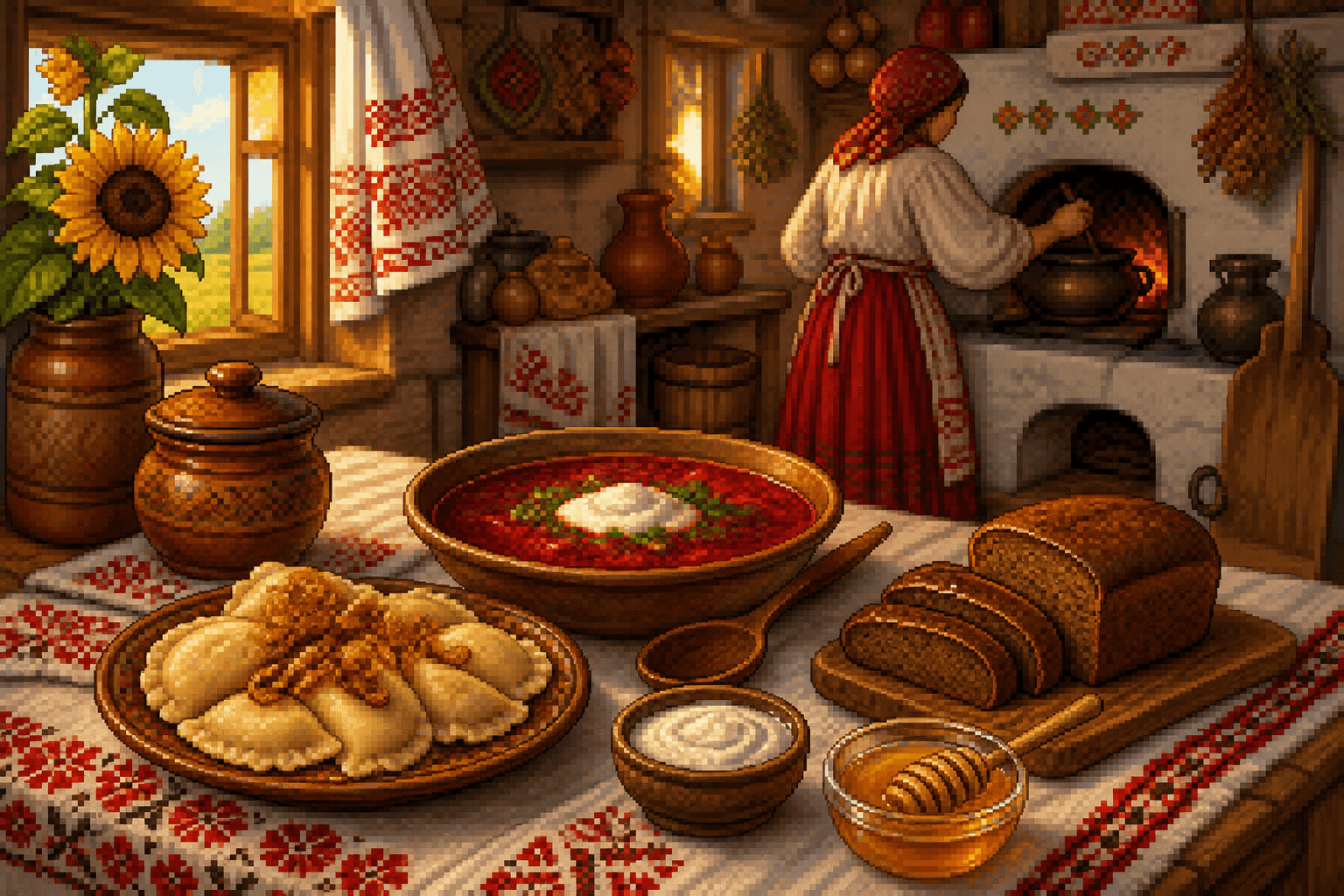
Borscht is a beet soup that can be meaty or lean, hot or cold, with sour cream, dill and garlic pampushky on the side. The point is a deep broth and a sour edge, not a neon garnish. Varenyky are dumplings cousin to pierogi; holubtsi are stuffed cabbage; salo is cured fat eaten with bread and garlic. Black Sea fish, Carpathian mushrooms and steppe grains do not cook the same. Chicken Kyiv is a restaurant cutlet that travelled; borscht is the pot people argue about correctly. Bread is rye or wheat, serious, and not a basket afterthought.
6 recipes · 1 cuisine
Essential dishes
Checking your allergy settings…
More dishes
Further Ukraine listings, including shorter editorial recipes and imported methods.
Checking your allergy settings…
Regional cuisines
Think you know Ukraine food?
6 quiz dishes. Optional — Passport stamps still come from cooking.
Take the Ukraine food quizFood history
Peasant grain and beet cooking, Cossack meat habits, Crimean Tatar, Polish, Jewish and Russian imperial layers — the last of which has often tried to claim the soup. UNESCO listing of Ukrainian borscht culture is a modern legal fact sitting on a much older pot. Potato arrived from the Americas and stayed. Soviet canteens standardised some cutlets; home kitchens kept Christmas kutia and Easter paska. War and displacement have made naming the kitchen political as well as culinary. The honest plate still starts with broth, dill and bread.