

Bolivian
Cocina boliviana
Big Andean plates of potato, beef and peanut, with a mid-morning pastry culture and a fresh locoto salsa on every table.
Aymara and Quechua farming gave Bolivia its potatoes, chuño and quinoa; the peanut is native to its lowlands. Potosí's silver made it a colonial hub that imported wheat, beef and Iberian pastry habits. The salteña arrived with Argentine exiles in the nineteenth century and became Bolivian in the oven. Cochabamba, the valley breadbasket, turned into the country's restaurant kitchen in the twentieth century, producing silpancho, pique macho and the modern form of sopa de maní. Lowland Santa Cruz cooks a separate, tropical repertoire.
Soup first, always. Potatoes appear two or three ways on one plate; rice and chips often sit side by side. Beef is pounded thin or cut in strips and fried hard. Heat comes from llajua, a ground locoto and tomato salsa, rather than from the pot. Pastries are baked, juicy and slightly sweet. Peanuts go into savoury soups. Portions are generous to the point of being a point of honour.
Countries and regions
Altiplano (La Paz, Oruro, Potosí) · Valleys (Cochabamba, Sucre, Tarija) · Eastern lowlands (Santa Cruz)
Dishes 4
- 10 hr 30 min

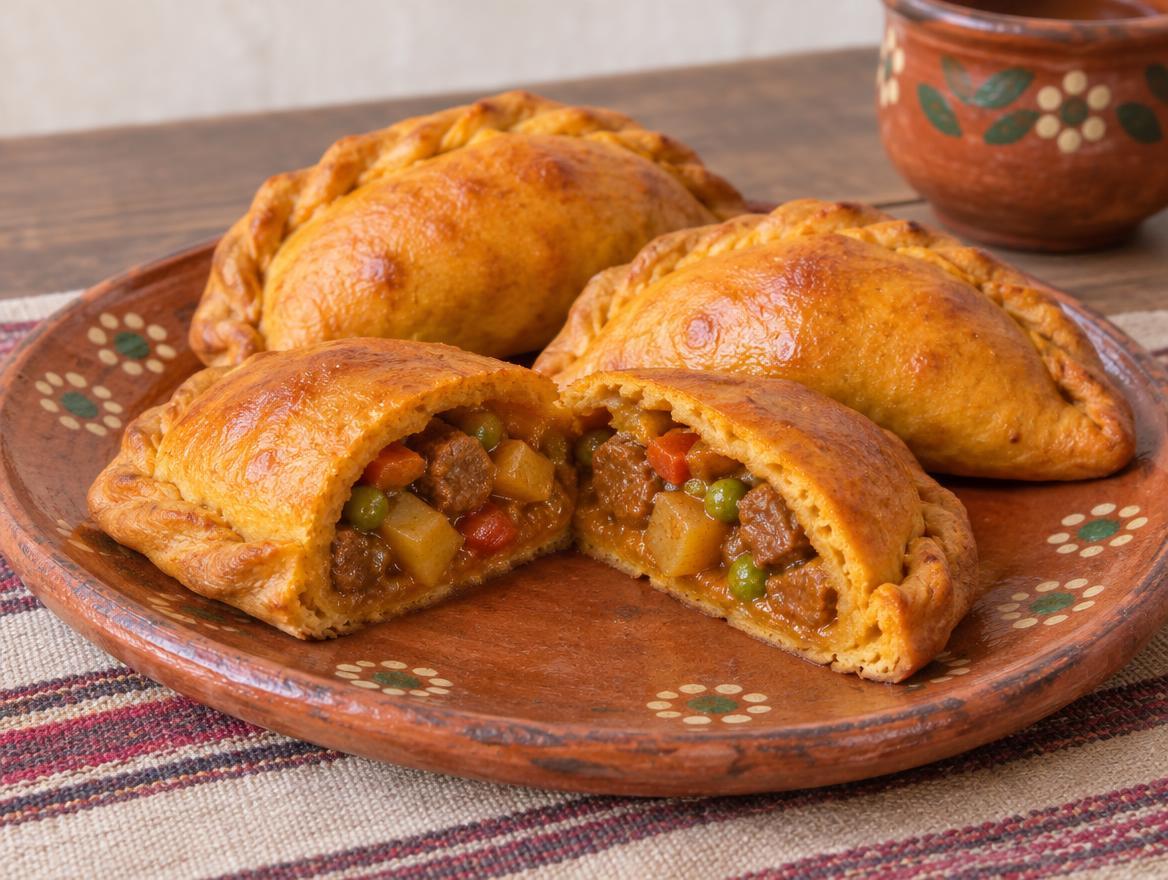
Salteñas
Bolivia's baked, juicy mid-morning pastry: sweet achiote dough around a gelatin-set beef stew that melts into soup in the oven.
BoliviaA bit of work
- 55 min

Pique macho
Cochabamba's late-night shared platter: beef, sausage and chips tossed with onion, tomato, chilli and boiled egg under ketchup and mustard.
BoliviaEasyMedium heat
- 1 hr 5 min

Silpancho
Cochabamba's plate-sized breaded beef cutlet over rice and sliced potatoes, with a fried egg and a raw tomato and locoto salsa.
BoliviaEasyMedium heat
- 1 hr 55 min

Sopa de maní
Bolivian peanut soup: raw peanuts blended into a beef and vegetable broth, finished with a handful of crisp chips on top.
BoliviaEasy