

 Taste Bolivia
Bolivia
High-altitude Andean cooking of potatoes, peanuts and beef, with a lowland tropical kitchen most visitors never see.
Bolivian meals are big and start with soup. The altiplano and valleys eat hundreds of potato varieties, freeze-dried chuño, quinoa and broad beans, with beef, llama and pork, and locoto chilli in the salsa called llajua. Mid-morning belongs to the salteña. Cochabamba is the eating capital: silpancho, pique macho and sopa de maní all come from there. Santa Cruz and the eastern lowlands cook with yuca, plantain, rice and cheese, closer to Brazil and Paraguay than to La Paz. Street food is cheap and portions are not small.
4 recipes · 1 cuisine
All dishes 4
- 10 hr 30 min

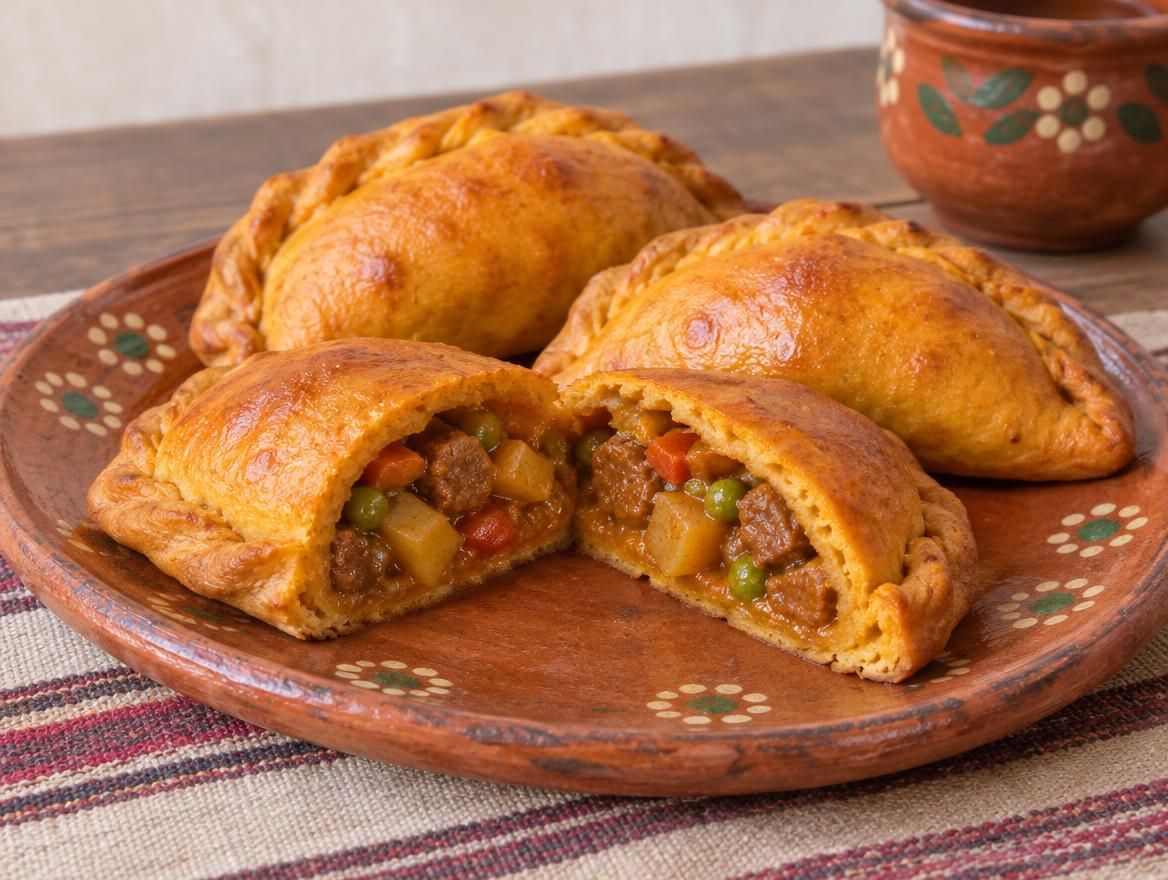
Salteñas
Bolivia's baked, juicy mid-morning pastry: sweet achiote dough around a gelatin-set beef stew that melts into soup in the oven.
A bit of work
- 55 min

Pique macho
Cochabamba's late-night shared platter: beef, sausage and chips tossed with onion, tomato, chilli and boiled egg under ketchup and mustard.
EasyMedium heat
- 1 hr 5 min

Silpancho
Cochabamba's plate-sized breaded beef cutlet over rice and sliced potatoes, with a fried egg and a raw tomato and locoto salsa.
EasyMedium heat
- 1 hr 55 min

Sopa de maní
Bolivian peanut soup: raw peanuts blended into a beef and vegetable broth, finished with a handful of crisp chips on top.
Easy
Regional cuisines
Think you know Bolivia food?
4 quiz dishes. Optional — Passport stamps still come from cooking.
Take the Bolivia food quizFood history
The Tiwanaku and Aymara peoples domesticated potatoes and learned to freeze-dry them; the peanut was first cultivated in the lowlands near Paraguay. Spanish silver mining at Potosí made the city one of the largest on earth in the 1600s and pulled in wheat, beef, wine and sugar. Empanada culture from Argentina gave Bolivia the salteña in the nineteenth century. Cochabamba's twentieth-century restaurants invented or codified the dishes now treated as national.