
British
Roasting tins, frying pans and a baking tray still do most of the weekday work. A Sunday roast is meat, roast potatoes, a gravy from the tin, and Yorkshire puddings that should rise in hot fat. Toad in the hole is sausages baked in the same batter. A full English breakfast is a fry-up of egg, bacon, sausage, tomato, mushroom and often black pudding or beans. Lancashire hotpot is lamb and onion under a potato lid, cooked until the meat gives. Sticky toffee pudding is a date sponge with a dark sauce. Crumpets are griddle-risen, full of holes for butter.
Regional pies, breads and pot roasts remain more useful than a national punchline. Colonial trade brought tea, sugar and spices; postwar migration brought kitchens that are now local. Contemporary British food includes those immigrant restaurants as British, not as permanent guests. The roast dinner and the chip shop are older popular forms. Yorkshire pudding batter was a way to eat dripping. The modern café breakfast and the gastropub gravy are later edits.
Dripping, butter and oil all appear. Potatoes are roasted, mashed, chipped. Batter puddings want a screaming-hot tin. A roast should have gravy that tastes of the joint, not of a stock cube alone. Lancashire hotpot stays pale and onion-sweet; it is not an Irish stew with a different name. Sticky toffee pudding is a baked sweet, not a steamed treacle relic. British cooking overlaps Irish dairy-and-potato work and still keeps its own tins, fries and puddings.
Countries and regions
England · Scotland · Wales · Northern Ireland
Dishes 69
- 2 hr 10 min

Sunday roast
Roast beef, potatoes in dripping, and a jug of gravy — the weekly UK gathering, Yorkshire on the side if you did the batter.
United KingdomMedium
- 1 hr 5 min

Yorkshire puddings
Yorkshire pudding
Hot fat, a rested batter, and a violent oven — the rise is the whole personality.
United KingdomMedium
- 35 min

Full English breakfast
Full English
Bacon, eggs, sausage, beans, tomato, mushroom, toast — a cooked breakfast, not a personality, and yes the beans stay.
United KingdomEasy
- 1 hr 25 min

Toad in the hole
Sausages baked in Yorkshire batter — a midweek roast for people who already bought the bangers.
United KingdomEasy
- 55 min

Sticky toffee pudding
Date sponge drowned in toffee sauce — a Lake District-ish pud that should be sticky, not a dry muffin with caramel from a squeezy bottle.
United KingdomEasy
- 2 hr 50 min

Lancashire hotpot
Lamb and onion under a lid of overlapping potatoes — a northern oven pot, no pastry, no apology.
United KingdomEasy
- 1 hr 40 min

Crumpets
Yeasted griddle cakes full of holes for butter — the British toaster item that is better homemade once.
United KingdomMedium
- 3 hr 45 min

Haggis
A home haggis of lamb's heart, liver, suet and toasted oatmeal, peppered hard and steamed in a pudding basin. Served with neeps and tatties.
United KingdomMedium
- 4 hr 5 min

Cornish pasty
The protected Cornish pasty: raw beef skirt, potato, swede and onion sealed in a D of sturdy shortcrust, crimped on the side and baked slowly.
United KingdomMedium
- 55 min

Bangers and mash
Pork sausages fried slowly until sticky and brown, piled on buttery mash and covered with an onion gravy cooked down for half an hour.
United KingdomEasy
- 25 min

Welsh rarebit
Thick toast spread with a hot paste of mature Cheddar, ale, mustard and Worcestershire sauce, grilled until it puffs, bubbles and browns in patches.
United KingdomEasy
- 1 hr 45 min

Scotch egg
Soft-boiled eggs wrapped in herbed pork sausage meat, crumbed and deep-fried, then finished in the oven so the meat cooks through and the yolk stays soft.
United KingdomMedium
- 55 min

Cullen skink
A thick Scottish soup of smoked haddock, potato, onion and milk, named after the fishing town of Cullen on the Moray Firth.
United KingdomEasy
- 1 hr 55 min

Victoria sponge
Victoria sandwich
Two butter sponges made with equal weights of butter, sugar, eggs and flour, sandwiched with raspberry jam and dusted with caster sugar.
United KingdomEasy
- 4 hr

Banoffee pie
A buttery digestive-biscuit base under soft toffee made from condensed milk baked slowly in a water bath, sliced bananas and coffee-scented whipped cream.
United KingdomEasy
- 55 min

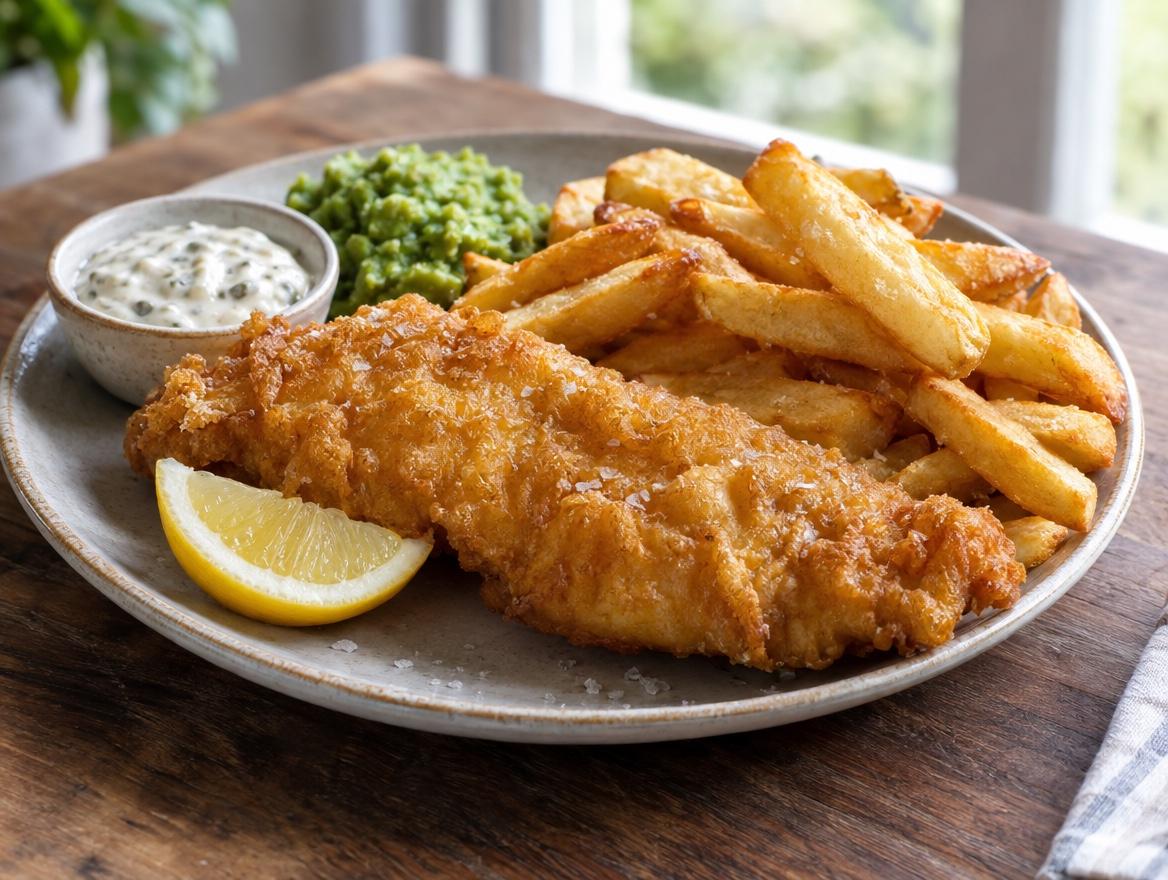
Fish and chips
Beer-battered white fish and twice-cooked chips — a takeaway plate you can do at home if you respect the oil.
United KingdomMedium
- 1 hr 5 min

Shepherd's pie
Lamb mince under mashed potato — cottage pie if it is beef, and we will name the difference.
United KingdomEasy
- 27 min

Scones
A quick British tea bread — cold fat, a light hand, and the jam-or-cream argument we will not settle.
United KingdomEasy
- 3 hr 17 min

Beef and Oyster pie
Beef and Oyster pie from United Kingdom.
United KingdomA bit of work
- 47 min

Apple & Blackberry Crumble
Apple & Blackberry Crumble from United Kingdom.
United KingdomMedium
- 1 hr 23 min

Apple Frangipan Tart
Apple Frangipan Tart from United Kingdom.
United KingdomMedium
- 35 min

Broccoli & Stilton soup
Broccoli & Stilton soup from United Kingdom.
United KingdomMedium
- 1 hr 15 min

Blackberry Fool
Blackberry Fool from United Kingdom.
United KingdomA bit of work
- 1 hr 33 min

Chicken Ham and Leek Pie
Chicken Ham and Leek Pie from United Kingdom.
United KingdomA bit of work
24 of 69