
Jordanian
المطبخ الأردني
Levantine cooking with a Bedouin backbone: lamb, rice, dried yoghurt and bread, served on shared trays to as many people as will come.
Jordanian cuisine joins two ways of life. Bedouin herders cooked meat for guests, preserved milk as ghee and jameed, and baked thin bread over a fire. Highland farmers grew wheat and olives and cooked with bulgur, pulses and greens. Rice arrived in quantity in the 20th century and took over the feast dishes. The growth of Amman brought Palestinian, Syrian, Circassian and Iraqi cooks into the same city, and the national table now holds all of it, with mansaf firmly at the head.
Sour dairy is the signature: jameed, yoghurt and labneh run through sauces, soups and breakfasts. Lamb is preferred over every other meat and is cooked long and plainly, with cardamom, bay and little else. Ghee and olive oil divide the country between them. Dishes are simple, generous and built for sharing, and hospitality has rules: coffee first, meat for guests, and second helpings are not optional.
Countries and regions
Amman · Karak and the south · Northern highlands · Wadi Rum
Dishes 3
- 11 hr

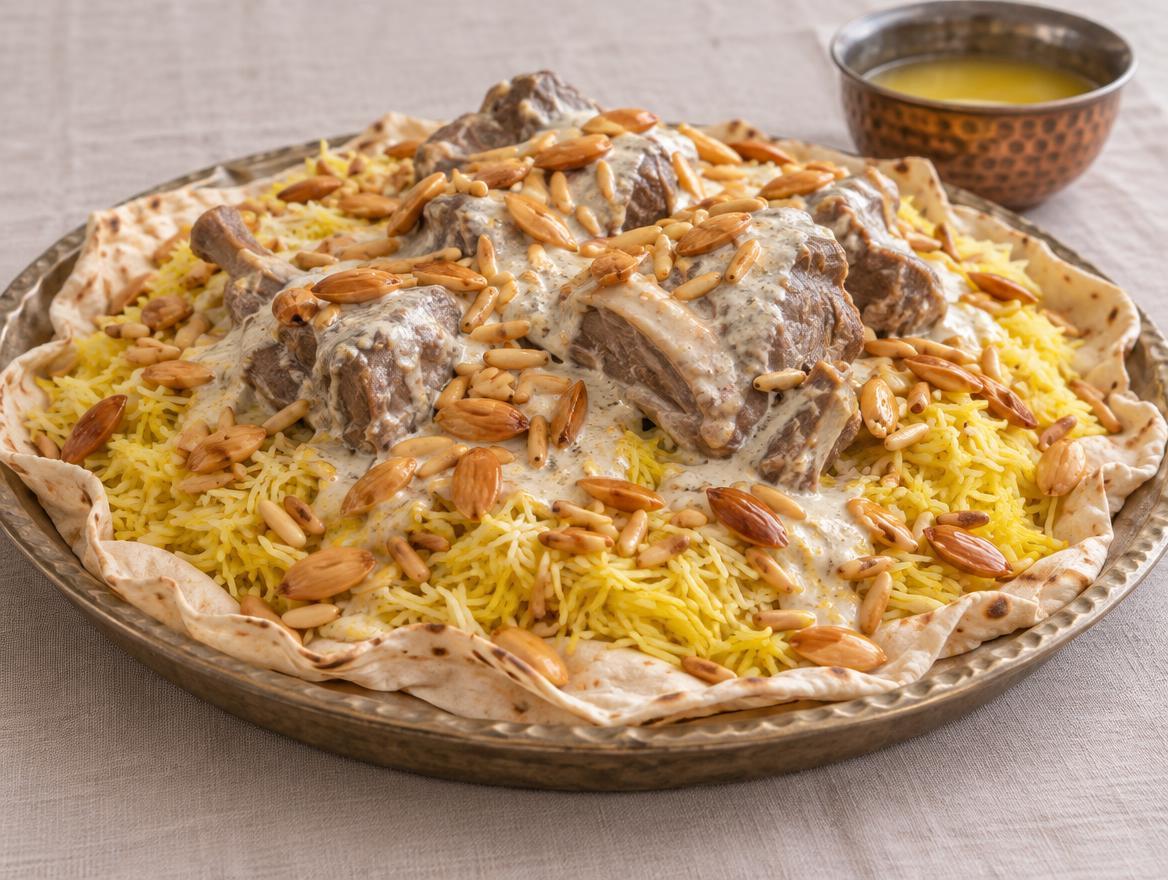
Mansaf
منسف
Lamb simmered in a sour sauce of dried yoghurt, served over thin bread and turmeric rice with fried almonds and pine nuts. Jordan's national dish.
JordanMedium
- 5 hr 50 min

Zarb
زرب
Bedouin pit-cooked lamb, chicken and vegetables, adapted here to a sealed pot in a low oven so the meat steams in its own juices.
JordanEasy
- 35 min

Galayet bandora
قلاية بندورة
Tomatoes fried down in olive oil with garlic and green chilli until thick and jammy, eaten hot from the pan with bread.
JordanVery easyMedium heat