
 Taste Jordan
الأردن
A largely dry country between the Jordan valley and the Arabian desert, where Bedouin hospitality and Levantine village cooking share one table.
Jordan cooks in two registers. The desert and the south give it lamb, rice, clarified butter and jameed, the dried yoghurt that makes mansaf, along with pit-cooked zarb and bread baked on a domed griddle. The greener north around Irbid and Ajloun is olive country, with oil-rich pastries, bulgur, wild greens and stuffed vegetables. Amman adds a full mezze table and the cooking of everyone who has settled there. Daily food is simple: hummus, falafel, fried tomatoes, labneh, flatbread, sweet tea with sage and cardamom coffee.
3 recipes · 1 cuisine
All dishes 3
- 11 hr

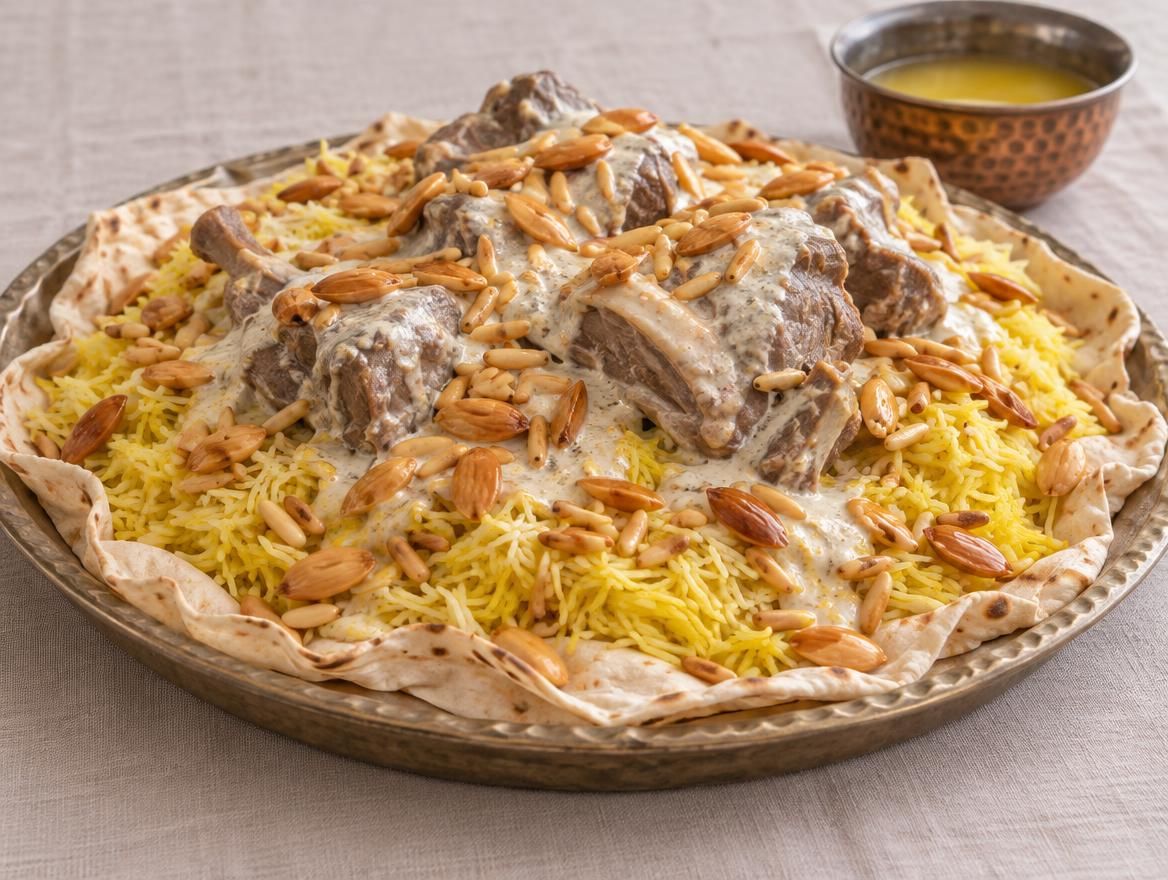
Mansaf
منسف
Lamb simmered in a sour sauce of dried yoghurt, served over thin bread and turmeric rice with fried almonds and pine nuts. Jordan's national dish.
Medium
- 5 hr 50 min

Zarb
زرب
Bedouin pit-cooked lamb, chicken and vegetables, adapted here to a sealed pot in a low oven so the meat steams in its own juices.
Easy
- 35 min

Galayet bandora
قلاية بندورة
Tomatoes fried down in olive oil with garlic and green chilli until thick and jammy, eaten hot from the pan with bread.
Very easyMedium heat
Regional cuisines
Think you know Jordan food?
3 quiz dishes. Optional — Passport stamps still come from cooking.
Take the Jordan food quizFood history
Herding shaped the older cooking. Sheep and goats gave meat for feasts and milk that was churned, clarified and dried to last the year, and a guest's welcome was measured in meat. Settled farming in the highlands supplied wheat, olives and pulses. Rice was a traded luxury until the 20th century, when it replaced bread and bulgur under mansaf. The towns have since absorbed Circassian, Palestinian, Syrian and Iraqi cooks, and the capital's food draws on all of them while keeping the Bedouin dishes for occasions.