
Saudi Arabian
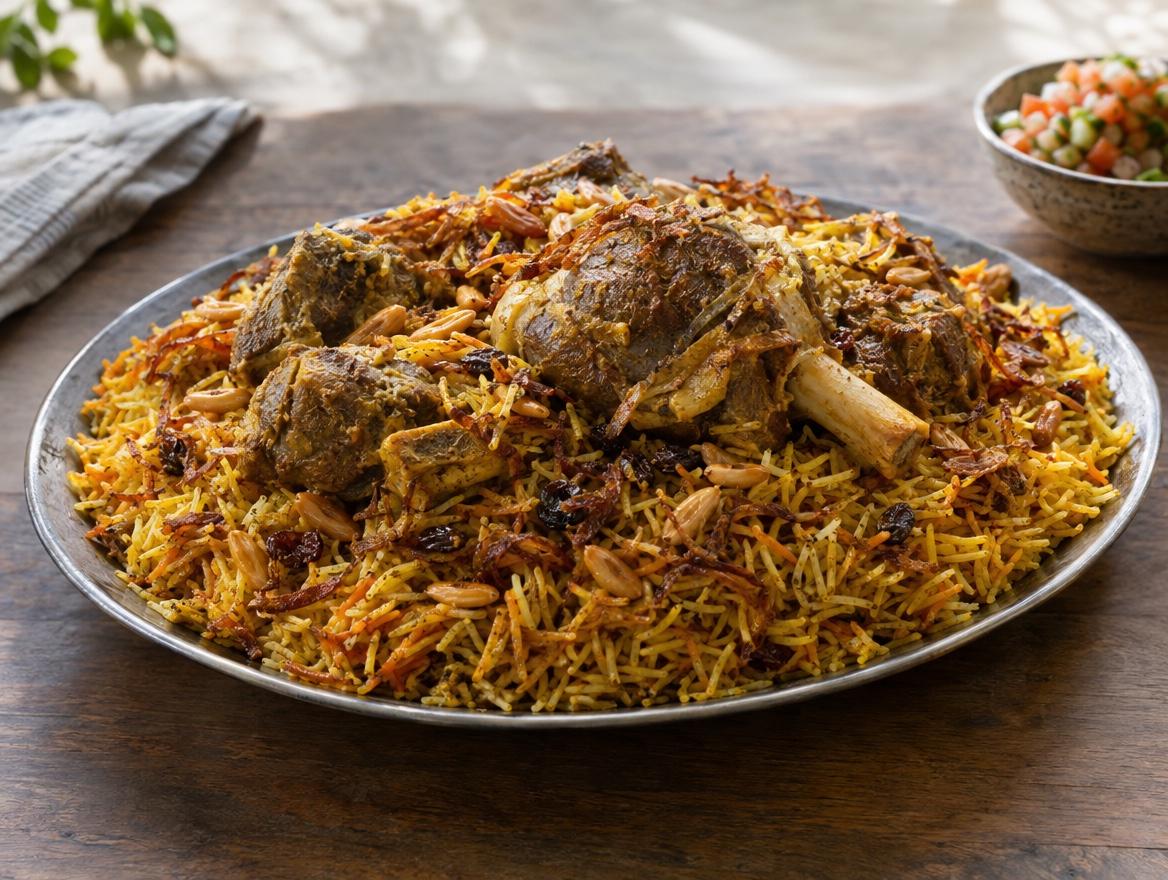
Kabsa is a pot of rice and meat designed to be shared from the centre of the table. Chicken or lamb is cooked with tomato, onion and a warm spice mix — cardamom, cinnamon, clove, black lime, sometimes saffron — then the rice is cooked in that liquid so every grain is stained and scented. Raisins, toasted nuts and a fresh tomato salsa (daqqus) often sit on top or beside. The meat should be tender enough to pull. This is hospitality rice, not a side. Mandi and mathbi are related Peninsula grilled-or-smoked rice plates with different fire and fat.
Rice-and-meat hospitality on the Arabian Peninsula absorbed spices from Indian Ocean trade and tomato from the New World. Kabsa as a named Saudi everyday-and-guest dish is home cooking that restaurants standardised. Bedouin fire cooking and Hejazi and Najdi city pots do not taste identical. The dish overlaps Gulf and Yemeni rice plates. It is not Levantine mezze and not a biryani with the name swapped, even when the spice list looks familiar. Dates, yoghurt and flatbreads sit around the rice. The catalog's single plate is the rice pot, not the whole of Saudi cooking.
Whole spices are bloomed in oil with onion before tomato and meat. The rice must drink the stock without going sludgy. Black lime (loomi) adds a sour funk that generic garam masala will not. Nuts and raisins are a finish, not the main sweetness. Kabsa is eaten with the right hand, rice packed into a bite with meat.
Countries and regions
Saudi Arabian
Dishes 11
- 1 hr 20 min

Kabsa
كبسة
Spiced rice and roasted chicken or lamb — the Saudi and Gulf pot that smells like cardamom and dried lime.
Saudi ArabiaMedium
- 2 hr 45 min

Jareesh
جريش
Crushed wheat simmered slowly in chicken broth until thick and creamy, finished with yoghurt and topped with onions fried in ghee. Najd's winter porridge.
Saudi ArabiaEasy
- 1 hr 30 min

Saleeg
سليق
Short-grain rice cooked in chicken broth and then milk until soft and creamy, topped with browned chicken and ghee. Hejazi comfort food from Taif and Jeddah.
Saudi ArabiaEasy
- 11 hr 13 min

Chicken Shawarma with homemade garlic herb yoghurt sauce
Chicken Shawarma with homemade garlic herb yoghurt sauce from Saudi Arabia.
Saudi ArabiaA bit of work
- 2 hr 20 min

Mamoul (Eid biscuits)
Mamoul
Mamoul (Eid biscuits) from Saudi Arabia.
Saudi ArabiaMedium
- 35 min

Mutabbaq
Mutabbaq from Saudi Arabia.
Saudi ArabiaA bit of work
- 20 min

Shawarma bread
Shawarma bread from Saudi Arabia.
Saudi ArabiaEasy
- 10 hr 25 min

Shawarma chuck roast wrap
Shawarma chuck roast wrap from Saudi Arabia.
Saudi ArabiaMedium
- 48 min

Pistachio Kunafa Chocolate Cake and Cupcakes
Pistachio Kunafa Chocolate Cake and Cupcakes from Saudi Arabia.
Saudi ArabiaA bit of work
- 2 hr 55 min

Beef Mandi
Beef Mandi from Yemen.
YemenA bit of work
- 1 hr 7 min

Chicken Mandi
Chicken Mandi from Yemen.
YemenA bit of work