
Mongolian
Монгол хоол
Herders' cooking from a cold, dry plateau: mutton, flour and dairy, seasoned mainly with salt and cooked in one pot.
Mongolian cuisine developed around the five kinds of livestock herders keep, namely sheep, goats, cattle or yaks, horses and camels, and around the seasons. Summer was for milk and its many products; winter for meat, stored frozen or dried. Wheat flour, tea and the idea of dumplings and noodles came through trade with China, and brick tea became a daily necessity. Soviet influence in the twentieth century added potatoes, cabbage, carrots and bread. What is sold abroad as 'Mongolian barbecue' has nothing to do with any of this.
Plain, fatty and filling. Mutton is boiled, steamed in dough or fried in pastry, with onion and salt and sometimes garlic or caraway. Dairy ranges from sour dried curds to thick cream. Salty milk tea is both drink and soup. Vegetables are limited to those that survive the climate and storage. Little is spiced, nothing is wasted, and dishes are designed to be made on one stove in a ger.
Countries and regions
Mongolian steppe · Gobi · Ulaanbaatar
Dishes 3
- 1 hr 30 min

Khuushuur
Хуушуур
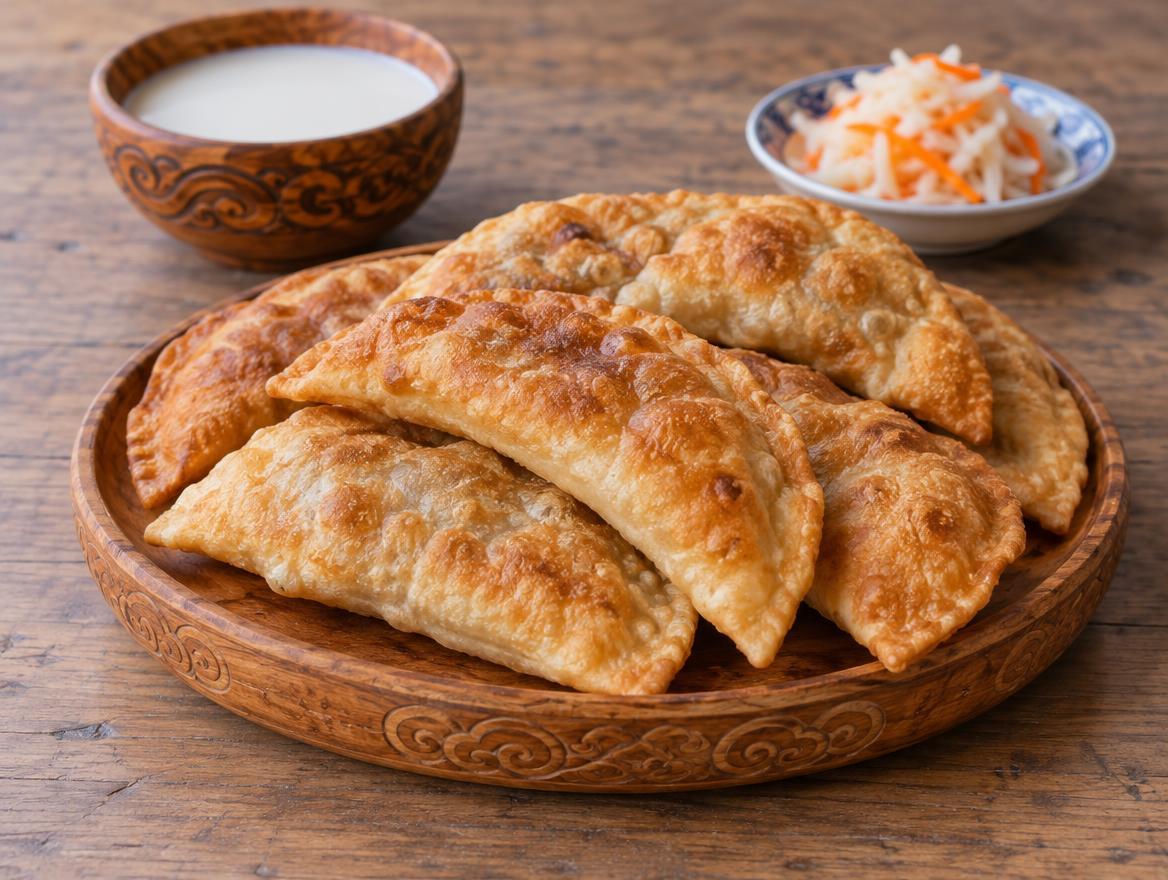
Flat half-moon pastries of plain dough filled with seasoned minced mutton or beef and fried until blistered. The food of the Naadam festival.
MongoliaMedium
- 1 hr 25 min

Tsuivan
Цуйван
Hand-cut noodles steamed on top of frying mutton, carrot and cabbage in one pot, then tossed through so they soak up the fat and juices.
MongoliaMedium
- 2 hr 50 min

Khorkhog
Хорхог
Mutton on the bone cooked with potatoes, carrots and cabbage in a sealed pot until it steams in its own juice. A home-pot take on Mongolia's hot-stone feast.
MongoliaEasy