
Kazakh
Қазақ асханасы
The cuisine of steppe herders: meat boiled on the bone, strong broth, fermented milk and fried dough, served with elaborate hospitality.
Kazakh cooking was formed by nomadic life, in which households moved with horses, sheep, camels and cattle and carried their kitchen with them. Meat was slaughtered in early winter and cured to last; milk was fermented and dried in summer. Flour came by trade and became noodles and fried bread. Settlement in the twentieth century, much of it forced, ended the nomadic economy but not its dishes, which moved into flats and restaurants. Neighbouring Uzbek, Uyghur, Russian and Korean foods are now eaten alongside them.
Meat is the meal, and fat is a sign of quality, not a fault. Horse and mutton are preferred, boiled gently and seasoned with little more than salt, onion and black pepper. Broth is served in bowls with every large dish. Sour and fermented milk products supply the sharpness that vegetables give elsewhere. Dough appears as flat noodles, fried baursak and thin breads. Serving follows rules of age and honour.
Countries and regions
Kazakh steppe · Almaty and the south-east · Western Kazakhstan
Dishes 2
- 4 hr 15 min

Beshbarmak
Бешбармақ
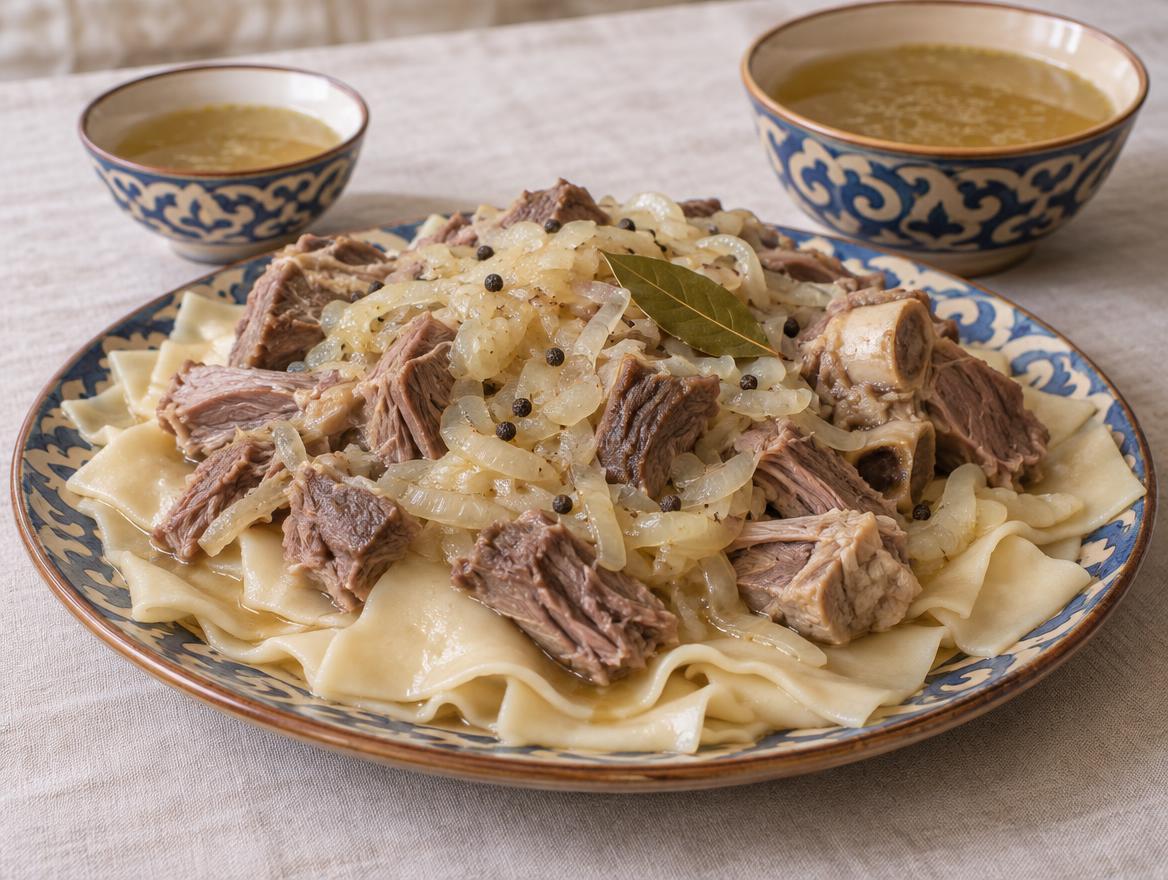
Slow-boiled lamb or beef pulled from the bone, served over wide hand-cut noodle sheets with an onion sauce, and the broth in bowls alongside.
KazakhstanMedium
- 2 hr

Baursak
Бауырсақ
Small pillows of yeast dough fried until puffed, hollow and golden. The bread of the Kazakh guest table, eaten with tea, honey or broth.
KazakhstanEasy