

 Taste Nigeria
Nigeria
Africa's most populous country, where three large culinary traditions and hundreds of smaller ones share a pot of red pepper, palm oil and rice.
Nigerian food is built on soups and swallows: thick, savoury soups of egusi, okra, bitterleaf or ogbono, eaten by hand with pounded yam, eba or amala. Around that core sit jollof and fried rice for parties, pepper soup for beer parlours, suya from the northern grill, and a battery of fried snacks from puff-puff to chin-chin. Heat comes from scotch bonnet, depth from ground crayfish, stockfish and fermented locust bean. Yoruba cooking in the southwest leans on palm oil and pepper; Igbo cooking in the southeast on yam and bitterleaf; Hausa cooking in the north on grains, beef and groundnut.
7 recipes · 1 cuisine
All dishes 7
- 1 hr 20 min

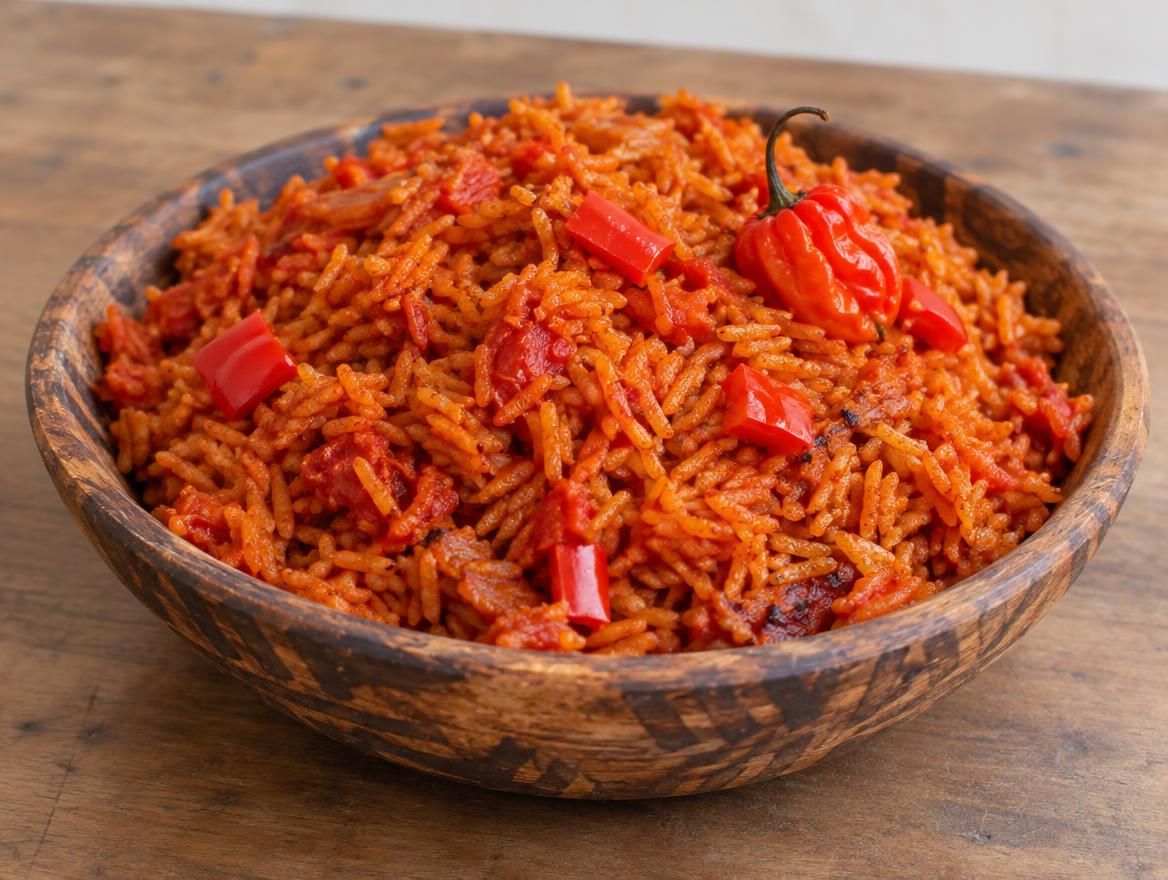
Jollof rice
Nigerian party rice cooked in a fried-down tomato, pepper and scotch bonnet base until the grains stain red and the bottom catches.
MediumMedium heat
- 2 hr

Egusi soup
Nigerian melon-seed soup with palm oil, beef, stockfish, crayfish and greens, eaten with pounded yam.
MediumHot
- 1 hr 40 min

Suya
Northern Nigerian street skewers of thin beef rubbed in yaji, a peanut and chilli spice mix, grilled hot and served with raw onion.
EasyHot
- 1 hr 35 min

Puff-puff
Nigerian yeasted dough balls, deep-fried until golden and chewy, sold hot in paper bags on every corner.
Easy
- 4 hr 30 min

Moi moi
Mọ́ínmọ́ín
Nigerian steamed bean pudding of skinned black-eyed beans blended with peppers, onion and crayfish, set in cups.
MediumMedium heat
- 1 hr 20 min

Chin chin
Crunchy Nigerian fried pastry nibbles of sweet nutmeg dough, cut into small cubes and fried by the bowlful.
Easy
- 1 hr 30 min

Nigerian pepper soup
Pepper soup
Thin, hot, aromatic Nigerian broth of goat meat simmered with scotch bonnet and the camphorous pepper soup spice blend.
EasyExtra hot
Regional cuisines
Think you know Nigeria food?
7 quiz dishes. Optional — Passport stamps still come from cooking.
Take the Nigeria food quizFood history
Yam, cowpea, oil palm and melon seed were domesticated in the region thousands of years ago. Trans-Saharan trade brought rice and spices to the Hausa states; Portuguese ships brought chilli, maize, cassava and tomato from the sixteenth century. Colonial rule added wheat flour, tinned milk, stock cubes and Norwegian stockfish, all now treated as native. Since independence Lagos has become one of the world's great street-food cities, and a large diaspora has carried jollof and suya to London, Houston and Toronto, where the arguments about them continue.
Common ingredients
Techniques
- frying down pepper bases
- pounding yam
- steaming in leaves
- grilling over charcoal
- deep-frying snacks
- slow-simmering soups