

A beginner's guide to Korean cooking
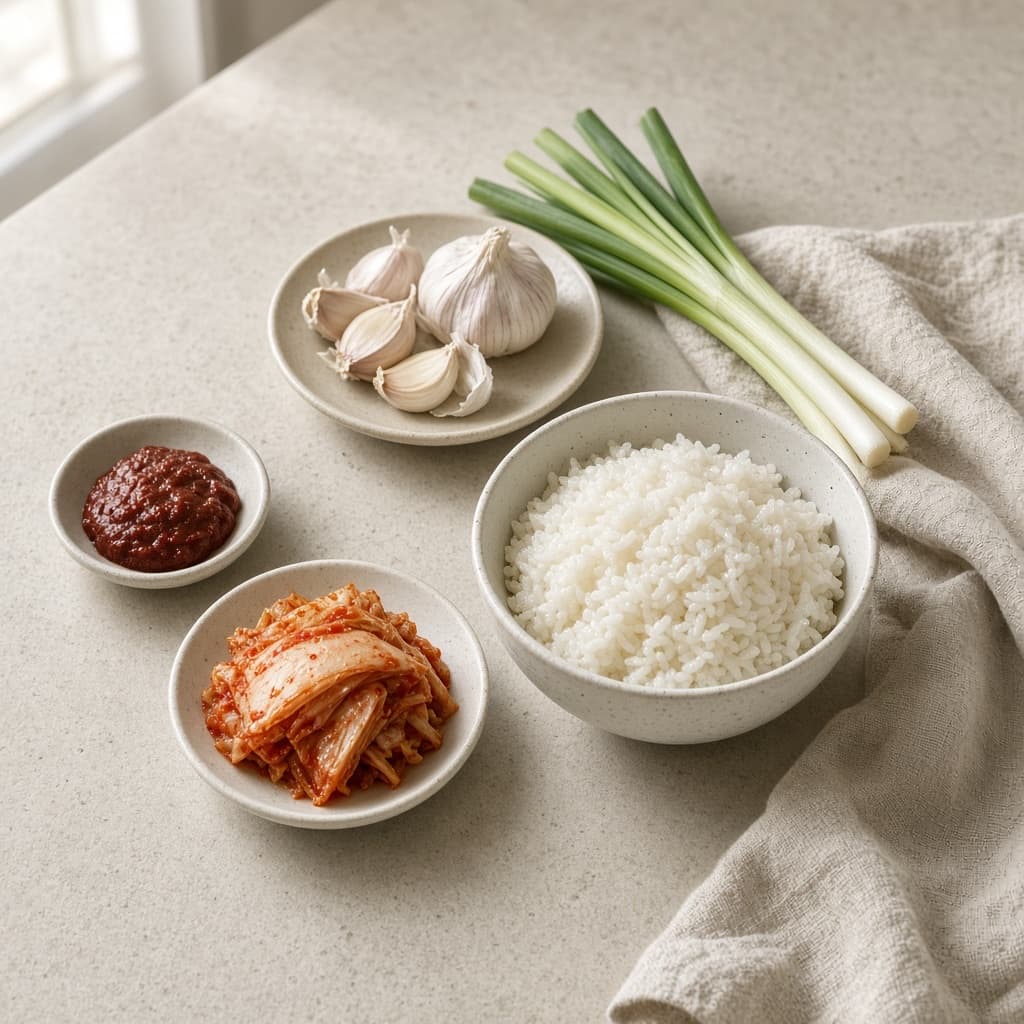
Banchan energy, gochujang, and why rice is not optional.
Korean home cooking is not one chilli paste. It is rice, a soup or stew, a few small sides, and a main that might be as simple as an egg. If you only fry yangnyeom chicken and call it a Korean dinner, you have cooked a snack. The weekday logic is still a bowl of rice you keep returning to.
Start with kimchi jjigae if your kimchi is already sour, or bibimbap if you can stand at the stove long enough to season three vegetables. Both teach the pantry: sesame oil, soy, garlic, gochugaru heat, and the sour-funk of a good ferment. Gochujang is a seasoning you fry with aromatics, not a personality you squeeze onto everything.
Rice is not a side. Short-grain rice that actually sticks is the plate. Banchan can be one cucumber salad and yesterday's spinach on a Tuesday; restaurant spreads with twelve dishes are a different economy. Make namul ahead. Salt greens, squeeze them dry, and dress them so they do not weep into the rice.
Jeolla, Gyeongsang and Jeju do not cook the same dinner. Coastal pots lean on anchovy and seaweed; inland tables often want more pork fat. Temple kitchens drop the meat and sometimes the egg. We will not flatten that into 'K-food'. The recipes on this site are a doorway, named as home versions, not a national sampler platter.
A starter shopping list is smaller than Instagram suggests: short-grain rice, soy sauce, sesame oil, gochujang, gochugaru, a tub of kimchi, garlic, spring onions, tofu, and eggs. Doenjang can wait a week. A stone bowl is optional; a hot skillet will crisp rice if you want that theatre.
What usually goes wrong for beginners is water. Watery gochujang means you did not cook it. Watery stew means you added stock before the kimchi had fried. Watery bibimbap means the namul was not squeezed. Taste for salt after the fermented things go in — they are already seasoned.