

 Taste South Korea
대한민국
Rice, soup and banchan still organise the Korean table, even when dinner is a single bowl eaten over the sink. Fermentation is not a garnish here; it is the pantry.
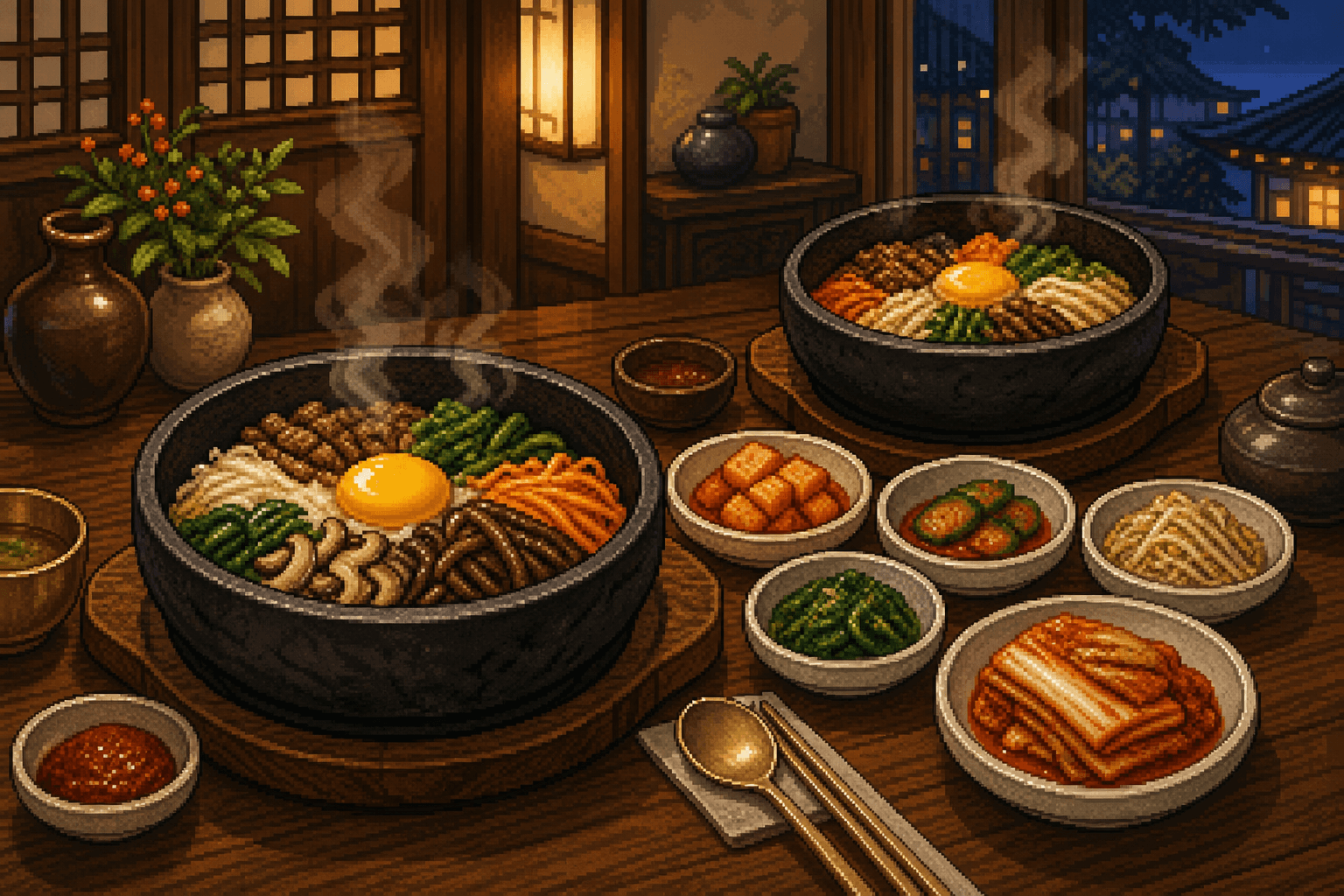
Jeolla cooks lush and generous; Gyeongsang runs saltier and more marine; Jeju keeps pork, seafood and mountain greens that do not care about Seoul trends. Kimchi is a family of preserves, not one red cabbage. Bibimbap is a mixing logic — rice, namul, a fried egg, a gochujang smear — as much as a restaurant bowl. Kimchi jjigae is the sour pot you make when the jar is too ripe to serve as banchan. Tteokbokki started as a street simmer of rice cakes in gochujang; the rose version is a later cream-and-cheese habit, not a court recipe. Bulgogi wants thin beef, pear in the marinade, and a hot pan. Yangnyeom chicken is twice-fried then glazed; gimbap is sesame rice rolled for trains and picnics.
52 recipes · 1 cuisine
Essential dishes
Checking your allergy settings…
Showing 18 of 48. Search all South Korea recipes
More dishes
Further South Korea listings, including shorter editorial recipes and imported methods.
Checking your allergy settings…
Regional cuisines
Think you know South Korea food?
52 quiz dishes. Optional — Passport stamps still come from cooking.
Take the South Korea food quizFood history
Royal court cuisine, Buddhist temple cooking and farmhouse fermentation still sit on the same table without pretending to be the same kitchen. Chilli arrived from the Americas in the early modern period and was adopted so thoroughly that gochugaru now feels ancestral. The twentieth century added wheat noodles, tinned surplus and a global restaurant language, including the fried-chicken shops that made yangnyeom a late-night grammar. What did not change is the logic of rice, a shared stew, and small plates meant to be eaten together.