

How to cook with gochujang
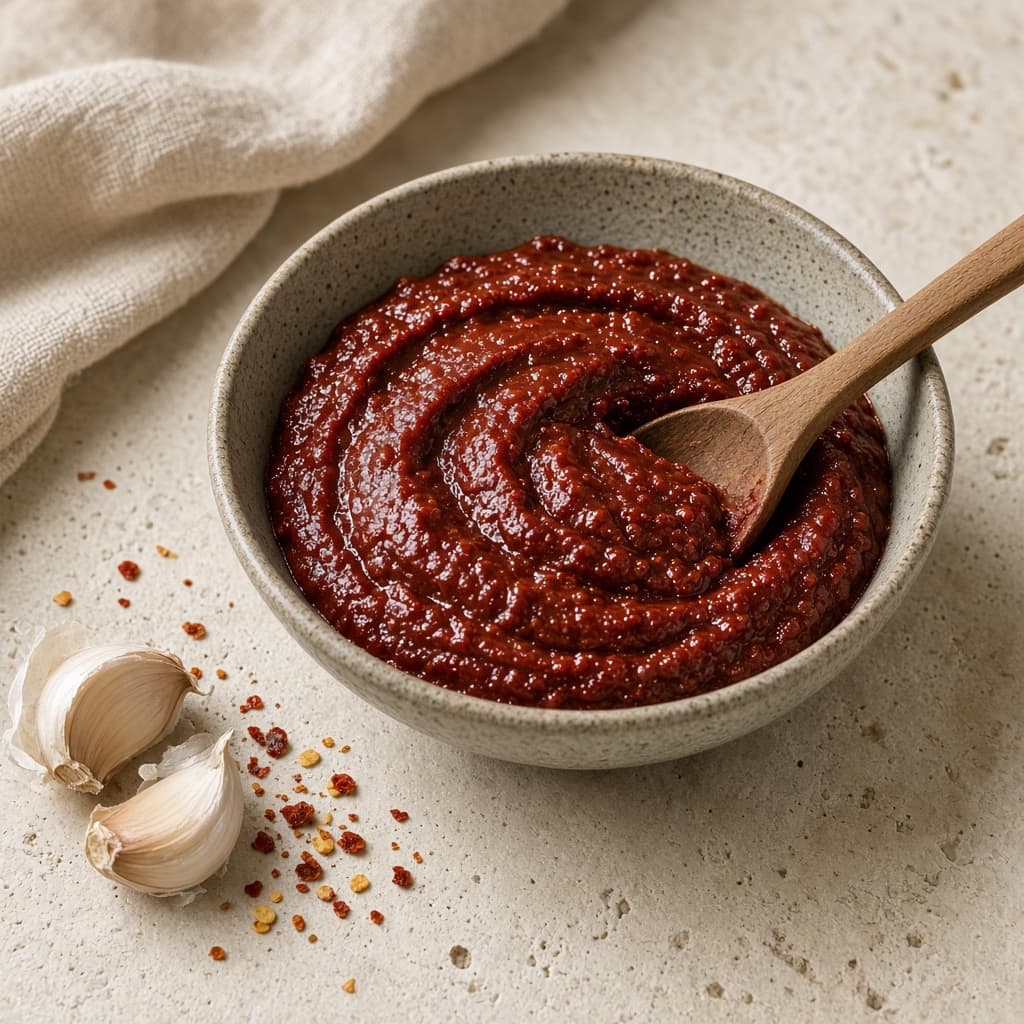
Fermented chilli paste. Heat, sweetness, depth. Not ketchup.
Gochujang is fermented chilli paste: gochugaru, glutinous rice, fermented soybean, salt, time. It tastes sweet, hot, and savoury at once. It is not ketchup, not sriracha, and not a glaze you should paint onto everything because a video did.
It wants time in a pan with aromatics. Fry a spoonful with garlic, sesame oil, and a splash of water or stock until it darkens and smells cooked. A cold squeeze over salad is a choice some people make; it will taste raw and sticky. In bibimbap it is a sauce you mix at the table. In kimchi jjigae or a marinade it is a base you cook.
Read the tub. Many commercial pastes include wheat, barley, or malt — they are not automatically gluten-free. Some are cut with corn syrup until they taste like sweet chilli jam. A good tub is thick, dark, and smells of ferment, not only sugar. You can loosen it; you cannot un-sweeten it.
Heat level varies by brand and by how much you bloom. Gochugaru in the same stew will raise the chilli without adding more paste-sugar. If a sauce is harsh, a pinch of sugar or a knob of butter is less useful than more cooking time and a little stock. If it is flat, you needed salt or soy, not another spoon of paste.
Substitutions are honest when you name them. A mix of miso, chilli flakes and a little honey will get you through a Tuesday; it will not be gochujang. Doenjang is the soybean cousin — saltier, no chilli — and they are not interchangeable. Ssamjang is already mixed for lettuce wraps.
Bibimbap, stews and marinades in this catalog use it as a structured ingredient. We will not invent a gochujang brownie to chase a trend. If you want heat without the ferment, use gochugaru. If you want ferment without heat, use doenjang. If you want both, buy the tub and cook it.