Condiment
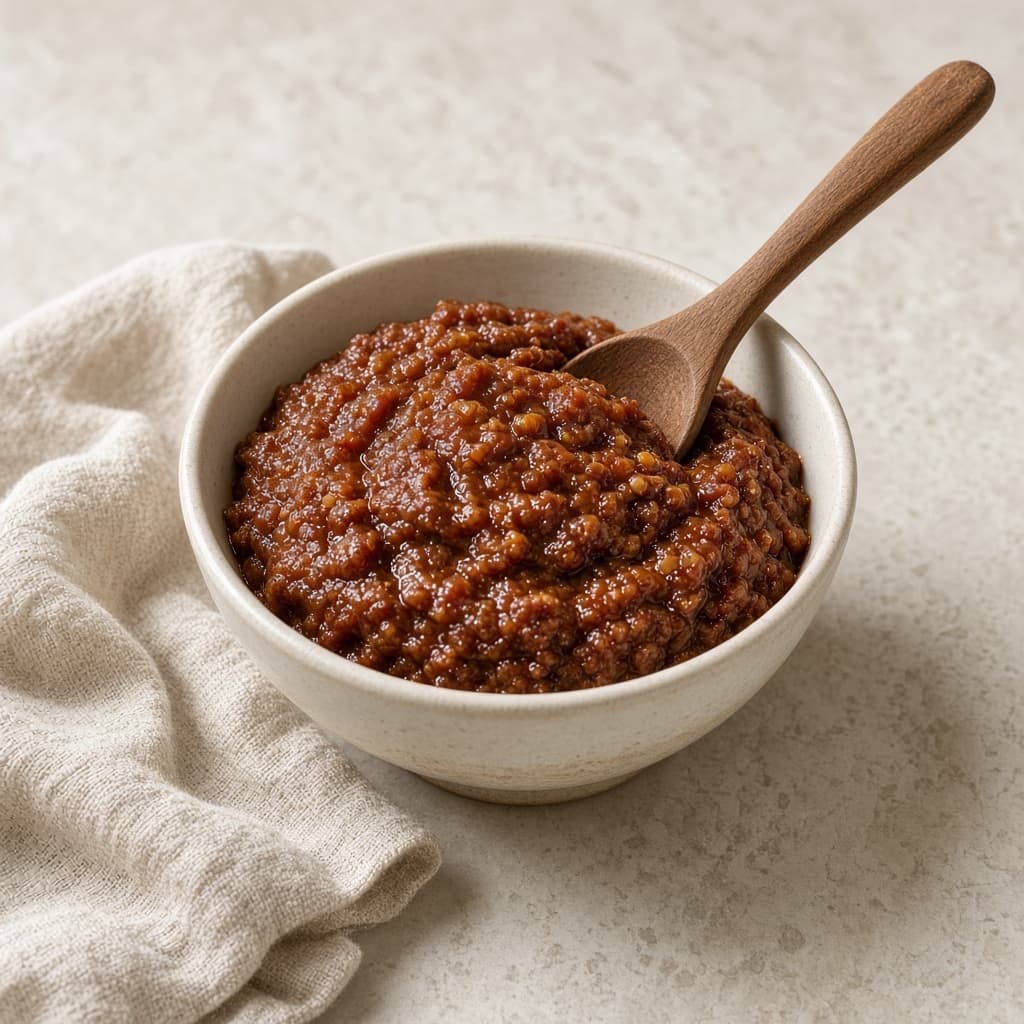
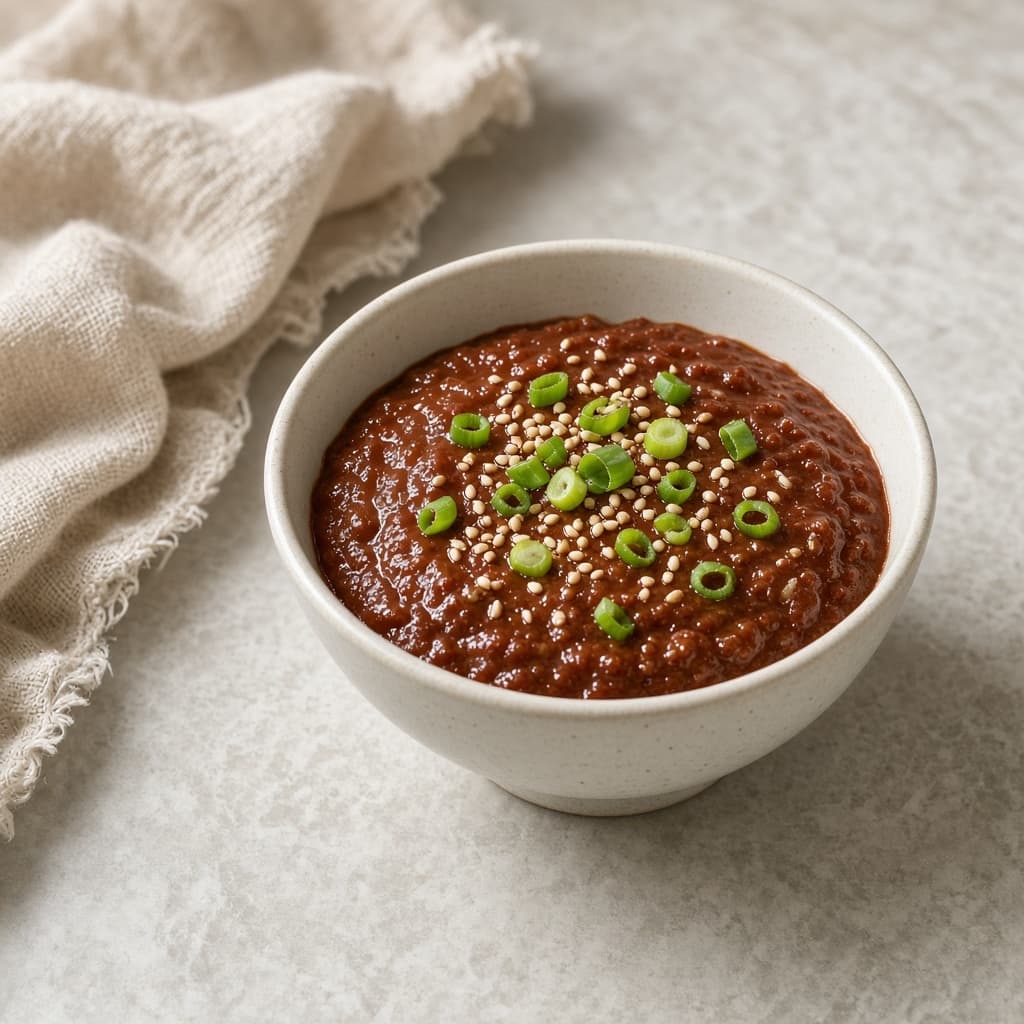
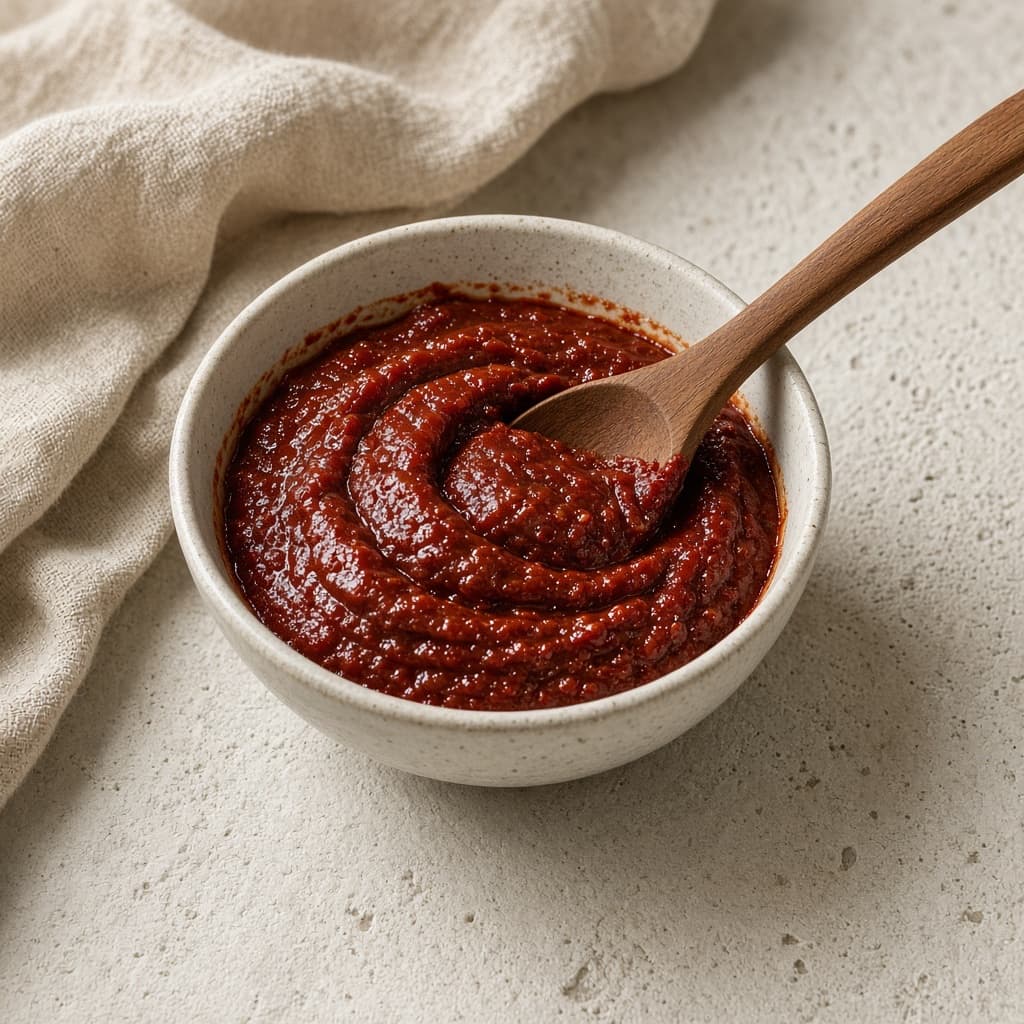
Gochujang
고추장
Also called Korean chilli paste
A thick Korean fermented paste of gochugaru, glutinous rice, fermented soybean (meju) and salt. Sriracha and sambal are not useful cousins.
Origin
It took shape in Korea after New World chilli met an older soybean-and-grain fermentation culture.
Flavour
Savoury and sweet first, heat second, with a fermented, almost meaty depth from the soy. It should not taste of vinegar.
How it is made
Cooked glutinous rice is mixed with powdered meju, salt and Korean chilli flake, then fermented until starches convert to sweetness and the paste goes glossy and dark red.
How to use it
Bloom a spoon in a little oil or thin it with stock before it hits rice or meat, or it sits as a raw, salty lump. In bibimbap it is the dressing, loosened with sesame oil. In tteokbokki, dakgalbi and jeyuk it is the body of the sauce, cooked until the raw edge goes and the oil separates slightly. Doenjang is the soybean sibling without chilli — mix them for stew, do not swap them. Chilli flakes cannot replace the fermented sweetness. If a dish goes too sweet, add vinegar or unsweetened stock, not more paste.
Storage
Fridge after opening, lid wiped clean. It keeps for months. Do not leave a wet spoon in the tub.
Recipes using it
Checking your allergy settings…