


Bibimbap
비빔밥
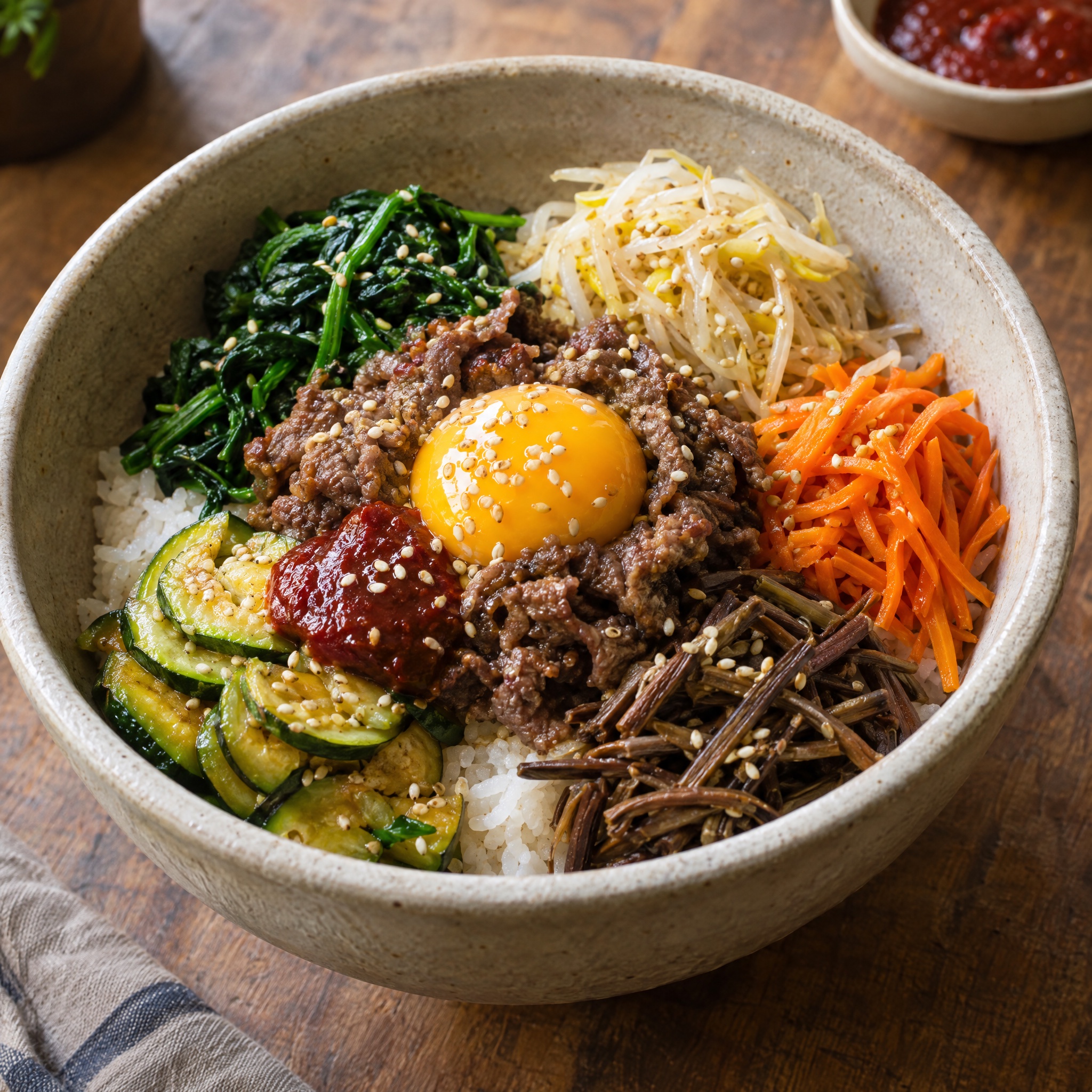
A Korean rice bowl of seasoned vegetables, chilli paste and a runny yolk — mixed at the table until everything is the same red-gold colour.
Recipe by I Want Some Food · Reviewed by the editorial kitchen. Native name preserved: 비빔밥.
1 person cooked this in the public kitchen. Kitchen-tested by I Want Some Food. Not a purchased rating.
- Prep
- 35 min
- Cook
- 25 min
- Rest
- None
- Total
- 1 hr
- Difficulty
- Medium
- Spice
- Medium heat
- Cost
- Weeknight budget$8–16 USD · indicative, not a store price
About
Bibimbap looks composed until the moment you ruin it on purpose. The dish is a landscape: rice, namul vegetables, a little meat if you want it, gochujang, sesame, and an egg. The mixing is the recipe. This is a home version you can cook on a weeknight without a stone bowl, though a hot pan at the end for a crispy rice base is worth the extra minute. Buy short-grain rice that actually sticks, and namul greens you can salt and squeeze until they stop weeping into the bowl. Keep the gochujang off the rice until the vegetables are arranged; a watery paste means you under-reduced it or used a cheap tub cut with syrup. The egg is done when the white is set and the yolk still runs into the chilli, not when you have made a dry omelette on top. If the rice is sodden from a closed cooker, spread it for a minute so the grains can take the sauce.
Ingredients
Rice
- Rice, uncooked short-grain, then cooked300 g
Namul
- Spinach, washed150 g
- Bean sprouts150 g
- Carrot, julienned1 medium
Meat
- Beef, thin strips (optional) - Swap for mushrooms if you want a vegetarian bowl150 g
Egg
- Egg2 large
Sauce
- Gochujang30 ml
Seasoning
- Toasted sesame oil30 ml
- Soy sauce15 ml
- Garlic, minced2 clove
- Salt1 pinch
Finish
- Sesame seed4.9 ml
- Spring onion, thinly sliced2
Scaling multiplies the written quantities. Baking still prefers a scale.
Steps
Step 1
Cook the rice so it is ready and steaming. Short-grain rice should be sticky enough to clump on a spoon, not porridge.
20 minStep 2
Blanch the spinach in salted water until just collapsed, 30–45 seconds. Shock in cold water, squeeze hard, then season with a pinch of salt, a little minced garlic and a few drops of sesame oil.
5 minTip: Squeeze like you mean it. Watery namul makes sad rice.
Step 3
Blanch the bean sprouts 1–2 minutes until they lose their raw edge but stay crunchy. Drain, season the same way as the spinach.
4 minStep 4
Sauté the carrot in a lightly oiled pan with a pinch of salt until just tender, 2 minutes. You want colour, not mush.
3 minStep 5
If using beef, season with soy sauce, garlic and a drop of sesame oil. Sear quickly over high heat until just cooked.
4 minStep 6
Fry the eggs sunny-side up so the whites set and the yolks stay runny. A lid for 30 seconds helps the tops set without flipping.
4 minStep 7
Divide rice into two bowls. Arrange vegetables and beef in sections. Add gochujang, a drizzle of sesame oil, sesame seeds and spring onion. Crown with the egg.
3 minTip: Leave it pretty for five seconds. Then mix thoroughly so every grain is seasoned.
Adapt this recipe
The canonical recipe stays intact. Personal versions are labelled. Serving changes are maths, not AI.
Adaptations · 0 / 15 used. Resets 10 October.
Substitutions
Beef → Shiitake or oyster mushrooms
Sauté with soy and garlic. The bowl becomes vegetarian if you also skip fish sauce in any kimchi on the side.
Gochujang → A mix of miso and chilli flakes
You will lose fermented sweetness. Add a pinch of sugar.
Tips
- Make the namul in the morning. Bibimbap is a leftover-vegetable sport.
- If you have a heavy pan, heat it until nearly smoking, add a film of oil, press rice in, and you get a crispy base without a dolsot.
- Gochujang brands vary in sweetness. Taste before you dump.
History & culture
The name simply means mixed rice. It is eaten at home, in mountain temples (sometimes without meat), and in restaurants that still serve it unmixed so you can see the work. Jeonju is famous for a luxurious version; this one is closer to a Seoul weeknight bowl. Banchan logic applies: the vegetables can be made ahead and eaten separately tomorrow. Office cafeterias plate it already mixed; sit-down rooms still leave the colours visible so the cook gets credit. Dolsot versions belong to lunch shops with a gas ring under every table, not to every flat. Jeolla namul lists run longer and oilier than a Seoul weekday bowl; temple kitchens drop the beef and sometimes the egg. Packed leftover namul the next day is normal, not a failure of planning.
Mixed rice with leftovers is older than any restaurant brand. Some historians connect it to rural offerings and to using namul from the season. The gochujang-red bowl many people picture now is modern home cooking, not a frozen royal ritual. We are not claiming a single authentic plate — only a carefully seasoned one. The unmixed restaurant presentation — each vegetable in its own arc — is largely twentieth-century shop practice, designed to be seen before it is eaten. Jeonju's richer bowl was later sold as a regional brand through inns and tourism boards. Nothing here reconstructs a Joseon court service. Home mixed rice with seasonal greens is the older habit; the scarlet gochujang coat is the later, photographable one.
Regional variation — A stone dolsot is traditional for crispy rice. This version uses a hot skillet. Beef is common but not mandatory; a mushroom sauté is a fair vegetarian swap.
Provenance: Editorial adaptation. Original editorial adaptation for I Want Some Food. Not copied from another recipe site. Photograph: I Want Some Food generated editorial photography (Editorial supply).
Questions about this recipe
Answers taken from this dish's times, amounts, swaps and tips — not a chatbot.
How long does Bibimbap take?
1 hr all in — 35 min prep, 25 min cook. Cook and rest follow the method. Leftover storage and optional extra waits are not included.
How many does it serve?
The recipe is written for 2 bowls. Scale the ingredient list on the page if you are cooking for a different number.
How hard is it?
Medium.
How spicy is it?
Medium heat.
What allergens should I watch?
This recipe is labelled for Eggs, Sesame, Soy, Wheat. Labels are informational — check the packets in your kitchen. This is not medical advice.
Does it fit a diet?
The published recipe is labelled Dairy-free, Nut-free.
What does it cost to cook?
Weeknight budget — about $8–16 USD, as a grocery budget for this recipe, not a restaurant price.
What equipment do I need?
Saucepan, Frying pan, Mixing bowl, Chef's knife.
How much salt do I put in?
The recipe lists Salt at 1 pinch.
How much gochujang?
2 tbsp of Gochujang.
How much toasted sesame oil?
2 tbsp of Toasted sesame oil.
How much soy sauce?
1 tbsp of Soy sauce.
What can I use instead?
Beef → Shiitake or oyster mushrooms. Sauté with soy and garlic. The bowl becomes vegetarian if you also skip fish sauce in any kimchi on the side. Gochujang → A mix of miso and chilli flakes. You will lose fermented sweetness. Add a pinch of sugar.
Any tips from this recipe?
Make the namul in the morning. Bibimbap is a leftover-vegetable sport. If you have a heavy pan, heat it until nearly smoking, add a film of oil, press rice in, and you get a crispy base without a dolsot. Gochujang brands vary in sweetness. Taste before you dump.
Can I prepare this ahead?
Make the namul in the morning. Bibimbap is a leftover-vegetable sport.
Can I use an air fryer?
This method is not written for an air fryer. The core technique on the page still applies.
Similar dishes
Checking your allergy settings…