Grain
Bulgur
برغل
Also called burghul, cracked wheat
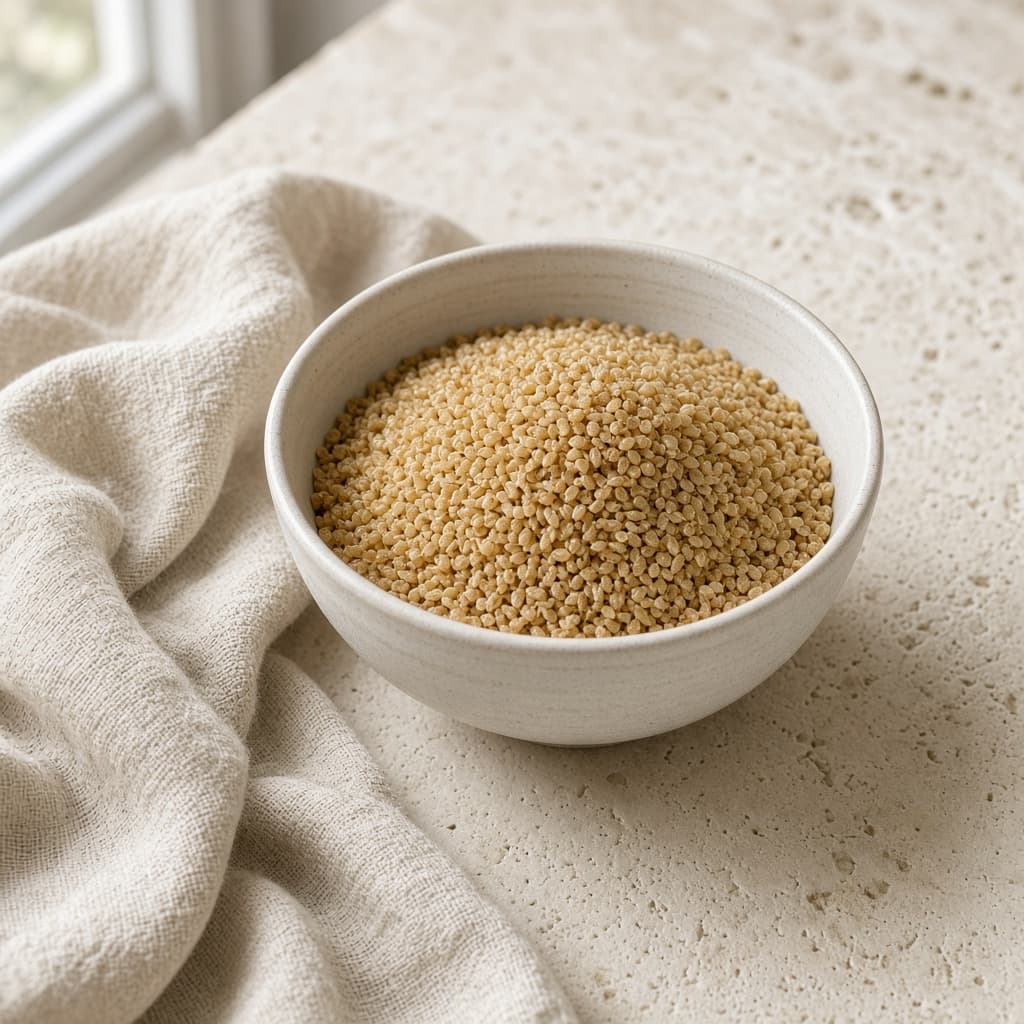
Wheat that has been parboiled, dried and cracked. Fine bulgur is the grain of tabbouleh and kibbeh; coarse bulgur is for pilaf.
Origin
The Levant and Anatolia, where parboiling wheat made it keep and cook fast. Tabbouleh and kibbeh are the dishes that exported the fine grind.
Flavour
Nutty wheat, a little toast, more flavour than steamed white rice. Fine bulgur tastes milder; coarse has more chew and bran.
How it is made
Whole wheat is steamed or boiled, dried, then cracked and sieved into grades. The parboil is why fine bulgur only needs a soak. Raw cracked wheat still has a raw starch centre.
How to use it
For tabbouleh, rinse fine bulgur, then soak in just enough water or lemon to swell — it should be moist, not porridge, and the parsley should still win. For kibbeh, soak and squeeze dry so the paste binds with the mince. Coarse bulgur is simmered like rice, about 1:1.5 by volume, then rested. Toast coarse bulgur in fat first if you want a pilaf. It is not couscous. If the grain stays hard, give it a brief simmer.
Storage
Dry pantry, airtight, away from moths. Cooked bulgur lasts a few days refrigerated; fluff with a fork when you reheat.
Recipes using it
Checking your allergy settings…