Seafood
Dried shrimp
Also called hae bee, udang kering, ebi, xia mi, tôm khô
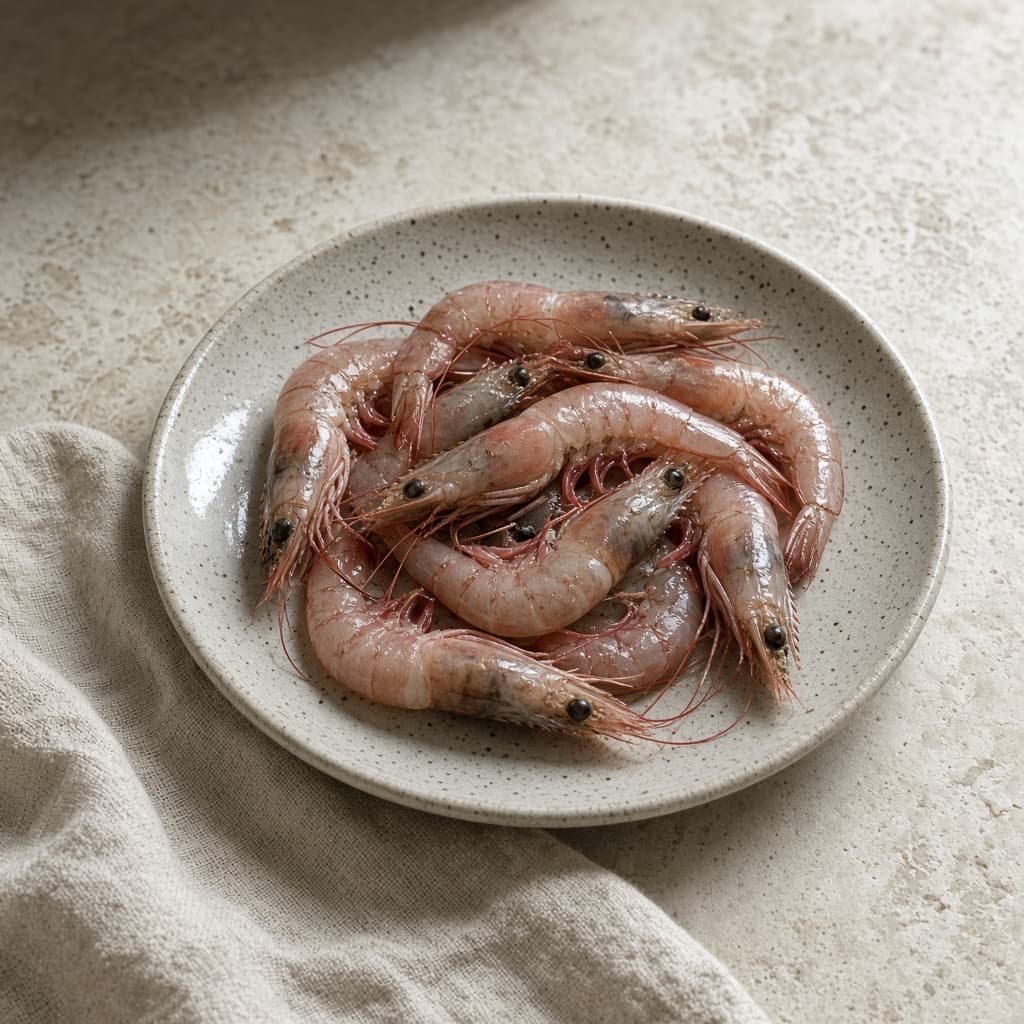
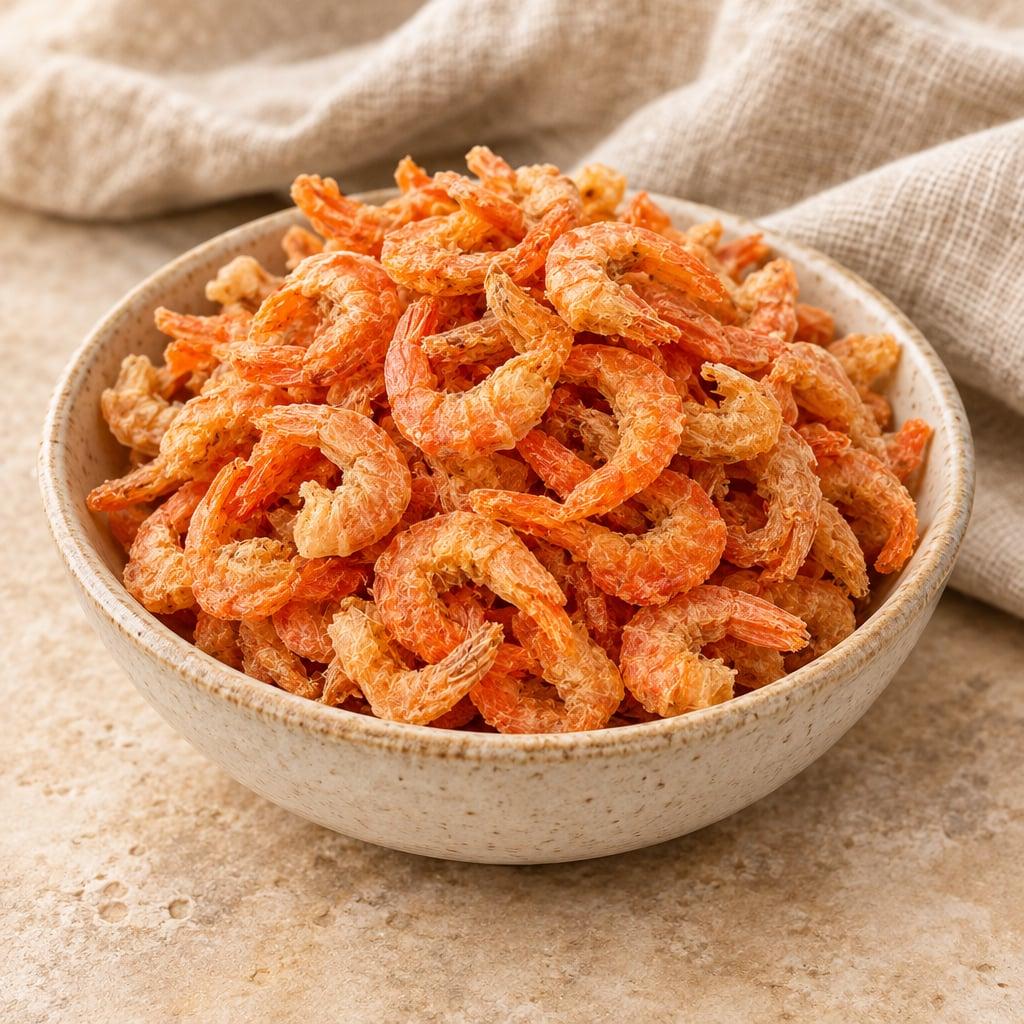
Small shrimp boiled in brine and dried in the sun until hard, curled and orange-pink. They range from tiny, almost papery ones to thumbnail-sized. A handful is a seasoning rather than a protein: it gives sambals, gravies, fillings and stir-fries a deep, sweet-salty sea flavour.
Origin
Made along the coasts of southern China and all of South-East Asia, and also in Mexico, Brazil and West Africa. Most packs in Asian grocers come from China, Thailand, Malaysia or Indonesia.
Flavour
Concentrated, sweet, salty and savoury, with a briny smell that mellows once they are soaked and fried. Good ones taste of shrimp, not of ammonia.
How to use it
Rinse them, then soak in warm water for 10 to 15 minutes until pliable. Drain, keep the soaking water for the pot if it is clean, and chop, pound or blend them. Frying the soaked shrimp in oil first brings out their aroma. Ground fine, they help thicken gravies such as mee rebus.
Storage
Keep them airtight in the fridge for several months, or in the freezer for longer. Choose bright, dry, pink-orange shrimp that smell clean, and avoid any that look unnaturally red, which can mean dye.
Recipes using it

Mee rebus
Yellow noodles in a thick, sweet, spiced gravy of sweet potato, dried shrimp and fermented soybean, topped with egg, fried tofu, bean sprouts, green chilli and lime.
Medium

Popiah
薄饼
Singapore fresh spring rolls: soft wheat skins spread with sweet sauce, chilli and garlic, rolled round braised jicama and carrot, egg, prawns, lettuce, sprouts and crushed peanuts.
Medium