Seafood
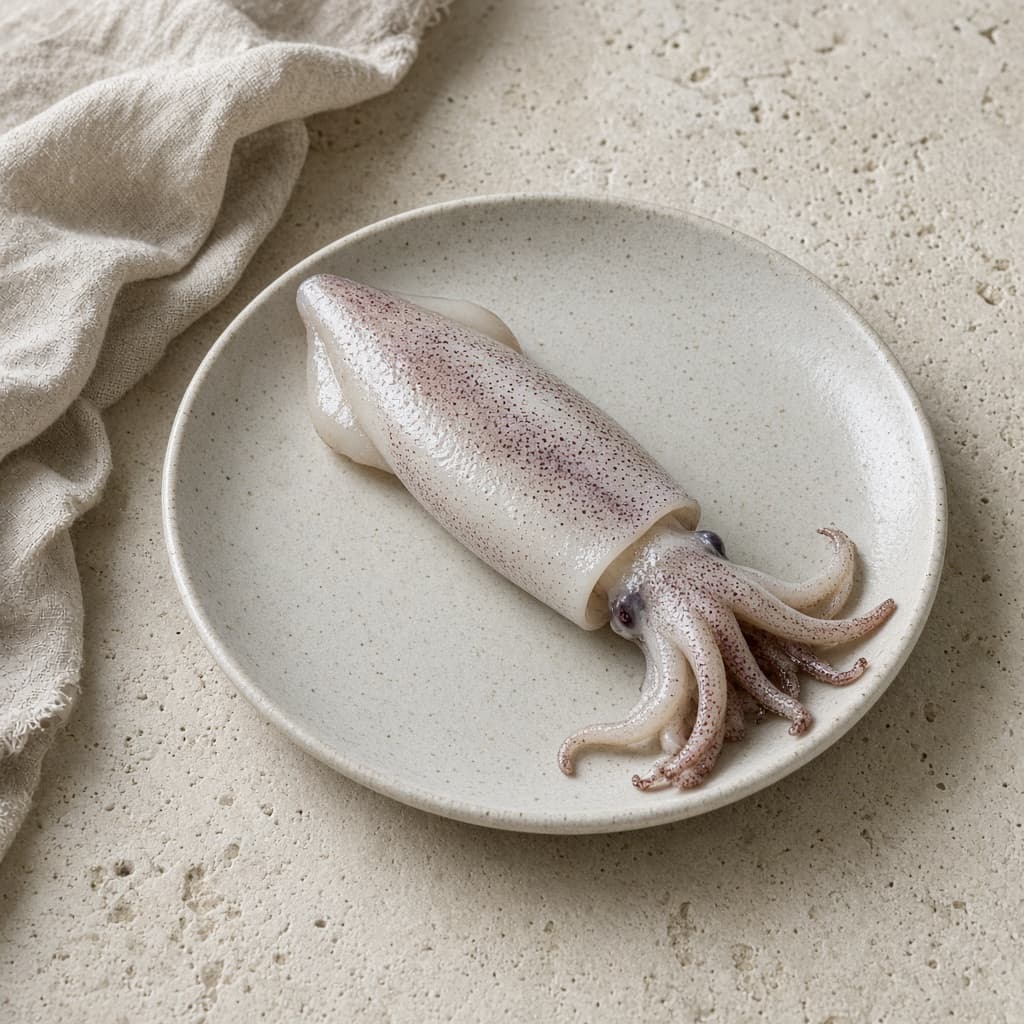
Squid
Also called ojingeo, calamari
A fast-cooking cephalopod sold whole, as tubes, or cut into rings. Korean cooking uses it in haemul-pajeon, spicy stir-fries and jjamppong. Frozen squid is honest if it was frozen well.
Origin
Global seas; every coastal kitchen has a version. The Korean name is ojingeo. Freshness matters more than the flag on the boat.
Flavour
Sweet ocean when it is fresh, with a clean snap. Overcooked squid is rubber; old squid smells of ammonia and no recipe saves it.
How to use it
Clean if whole: pull the head, discard the quill and guts, peel the speckled skin if you want it pale, and keep the tentacles. Score the tube in a diamond pattern so it curls and cooks evenly. For a pancake or a stir-fry, cook hot and brief — a minute or two — or simmer gently in batter so it does not seize. In jjamppong it goes in late, after the broth is already spicy. Pat it dry or it will steam. Salt just before the pan. If you only have frozen rings, thaw in the fridge and dry them. Long braises need a different, stewing-size squid.
Storage
Fridge, on ice if you can, and cook the same day. Freeze extra, well wrapped.
Recipes using it
Checking your allergy settings…