Dairy
Feta
Also called Greek feta
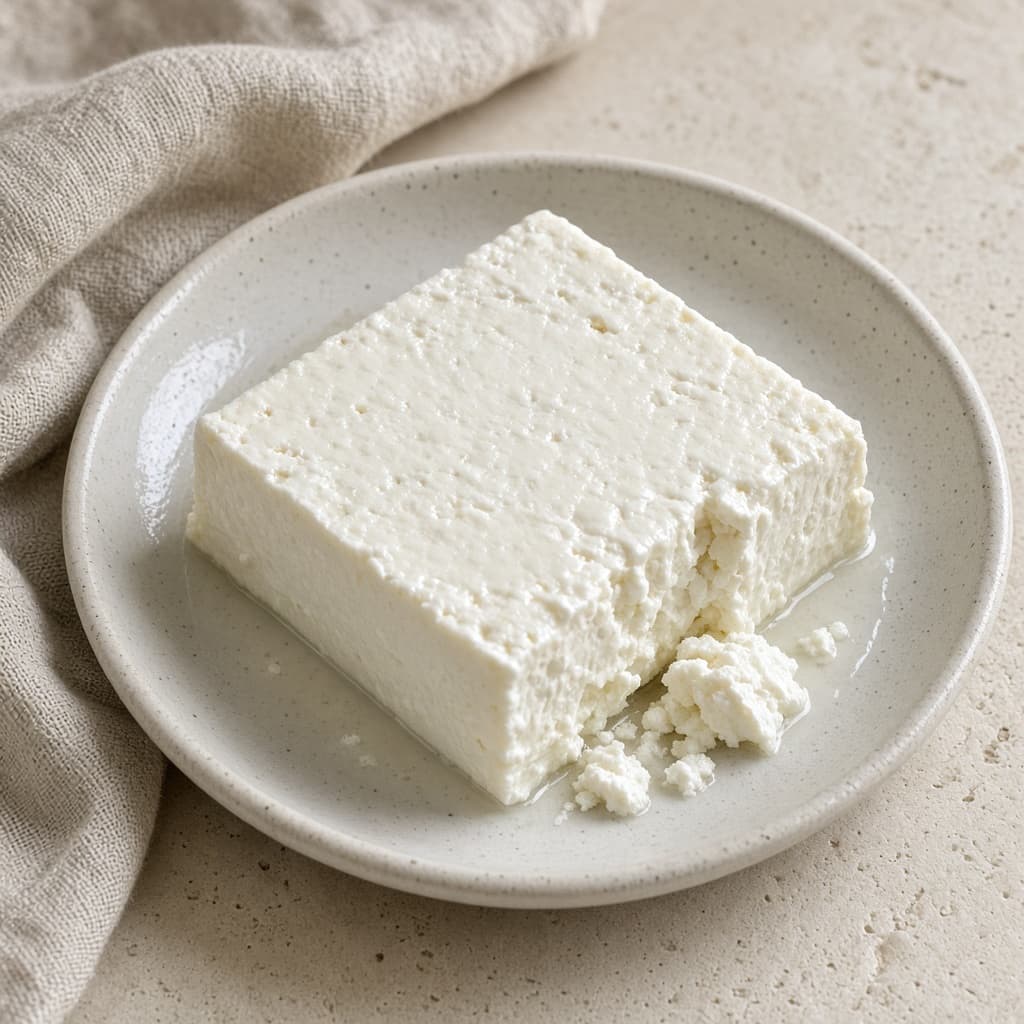
A brined cheese, crumbly and salty, traditionally sheep's milk or a sheep-goat mix. It is a slab ingredient, not garnish dust.
Origin
Brined cheeses grew up in the eastern Mediterranean, where salt kept milk protein without an alpine cave.
Flavour
Tangy, salty, lactic, with a sheepy edge on proper Greek pieces. Cow's-milk versions are milder, sometimes squeaky. The brine should taste clean, not yeasty.
How it is made
Milk is set with culture and rennet, cut, drained, salted and matured in brine. A dry, pre-crumbled tub has already lost that protection.
How to use it
Serve in slabs or large crumbles so you get a creamy centre and a salty edge in one bite. Olive oil, oregano and a ripe tomato are a meal. In shakshuka, tuck chunks in at the end so they warm and soften but do not melt into the eggs. Do not cook feta hard — it does not stretch like mozzarella; it dries. If it is very salty, rinse or soak a few minutes in cold water, then pat dry. Taste before you salt the plate.
Storage
Keep it submerged in brine in the fridge. Do not freeze — it turns to wet gravel.
Recipes using it
Checking your allergy settings…