Grain
Kataifi
Kadayıf
Also called kadayıf, tel kadayıf, knafeh dough, kunafa pastry, shredded filo
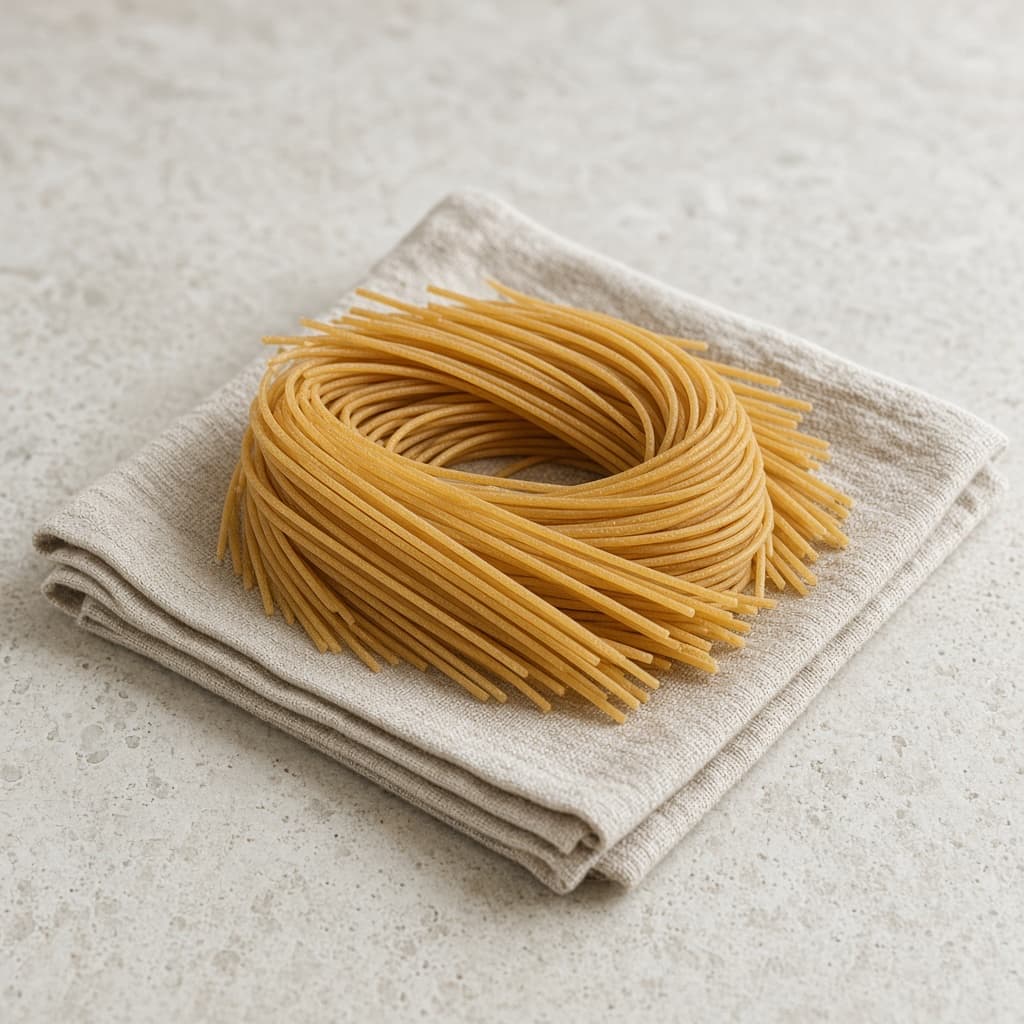
Fine strands of raw wheat-flour batter, set into threads like vermicelli and sold in tangled bundles. It is the shredded pastry used for künefe, knafeh, kataifi rolls and the crisp nests of many Middle Eastern sweets.
Origin
The Ottoman and Arab worlds, from Turkey and Syria to Egypt and Greece. Turkish and Middle Eastern grocers sell it fresh in the chiller; supermarkets abroad usually sell it frozen in 400 to 500 g packs.
Flavour
Plain and wheaty on its own. Its job is texture: rubbed with butter and baked or fried, it turns crisp, glassy and nutty.
How it is made
A thin batter of flour, water and a little starch is drizzled through fine nozzles onto a rotating heated plate, which sets it into threads in seconds before they are gathered up.
How to use it
Tease the bundle apart with your fingers, chop it shorter for künefe, and rub melted butter or ghee through every strand before cooking. Strands left dry cook unevenly, scorching in places and staying pale in others. Pour cool syrup over it straight from the heat.
Storage
Fresh kataifi keeps about a week in the fridge, well wrapped, and dries out fast in open air. Frozen, it keeps for months; thaw it overnight in the fridge in its packet so it does not turn brittle.