Seaweed
Miyeok
미역
Also called wakame, sea mustard
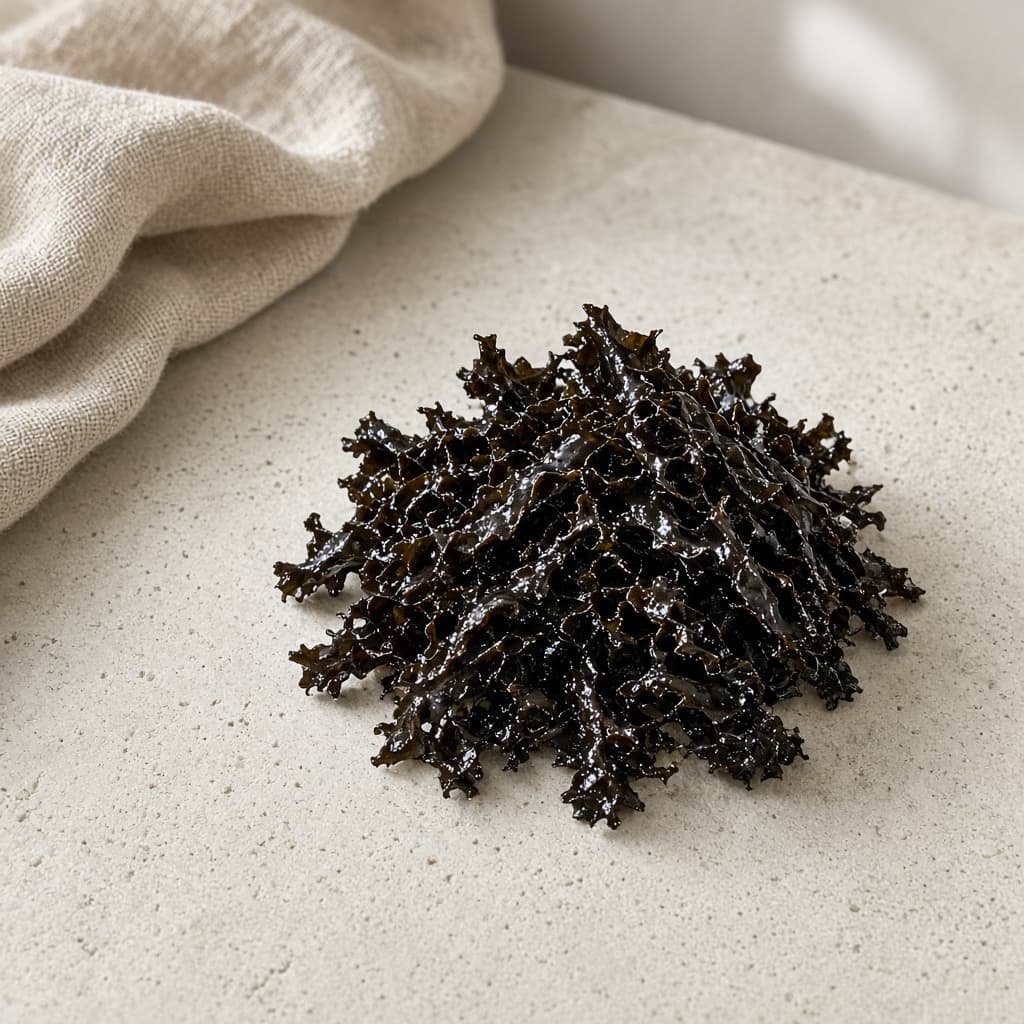
A tender brown seaweed, cousin to Japanese wakame, and the body of miyeok-guk — the birthday and postpartum soup. Dried, it looks like black twigs; soaked, it becomes slippery green ribbons.
Origin
Korean and Japanese coasts. The Korean kitchen treats it as a soup vegetable more than a salad garnish, though it can do both.
Flavour
Mild ocean, a little iodine, more about slip and body than a strong taste. Over-soaked miyeok tastes watery; scorched miyeok tastes of the beach in a bad way.
How it is made
The seaweed is harvested, blanched or dried, and packed. Most grocery miyeok is dried and expands many times over.
How to use it
Soak dried miyeok in cold water until it is fully expanded and olive-green, then squeeze and slice. It grows a lot — start with a small handful. For soup, sauté the squeezed seaweed in a little sesame oil, then add beef or mussel stock and simmer until silky. Do not add it dry to a boiling pot. A brief soak is enough; hours in water leach flavour.
Storage
Dried miyeok in an airtight pantry jar. Soaked seaweed belongs in the fridge and should be cooked within a day.
Recipes using it
Checking your allergy settings…