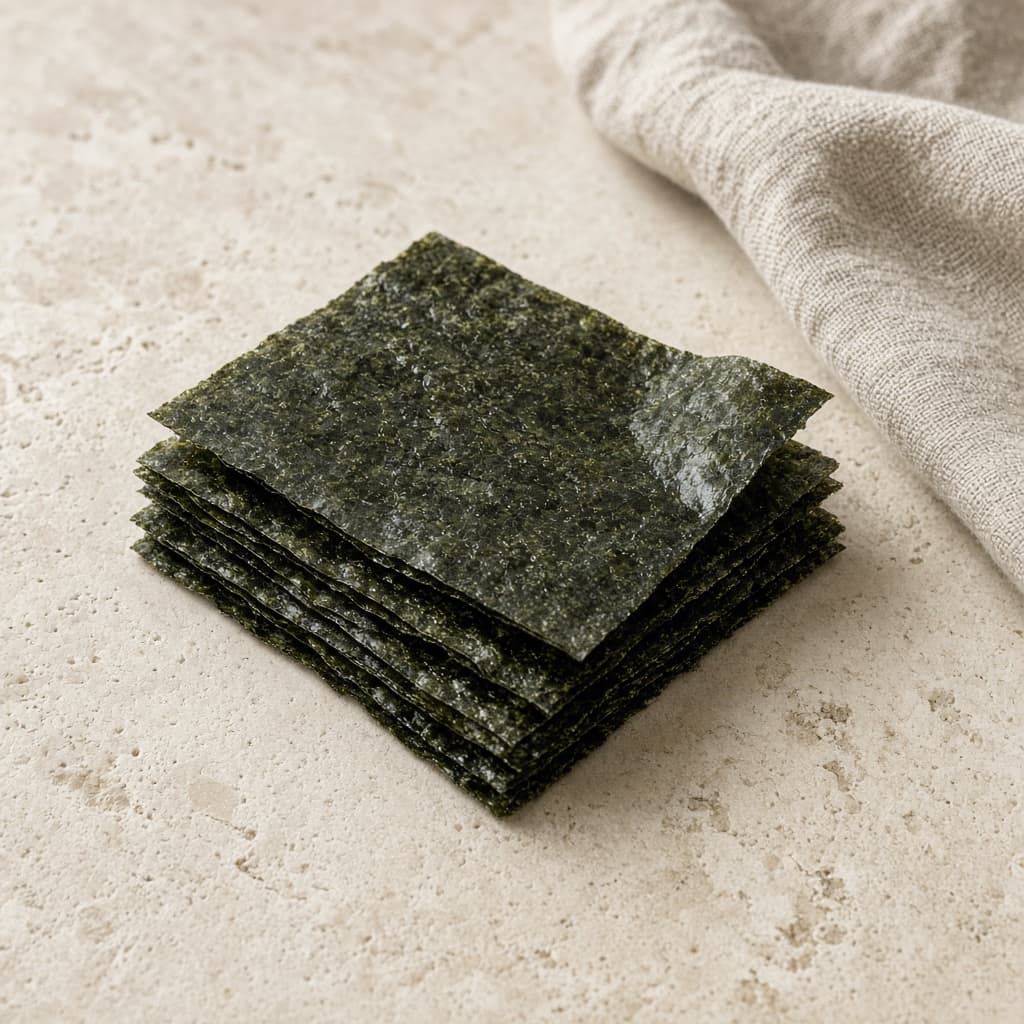
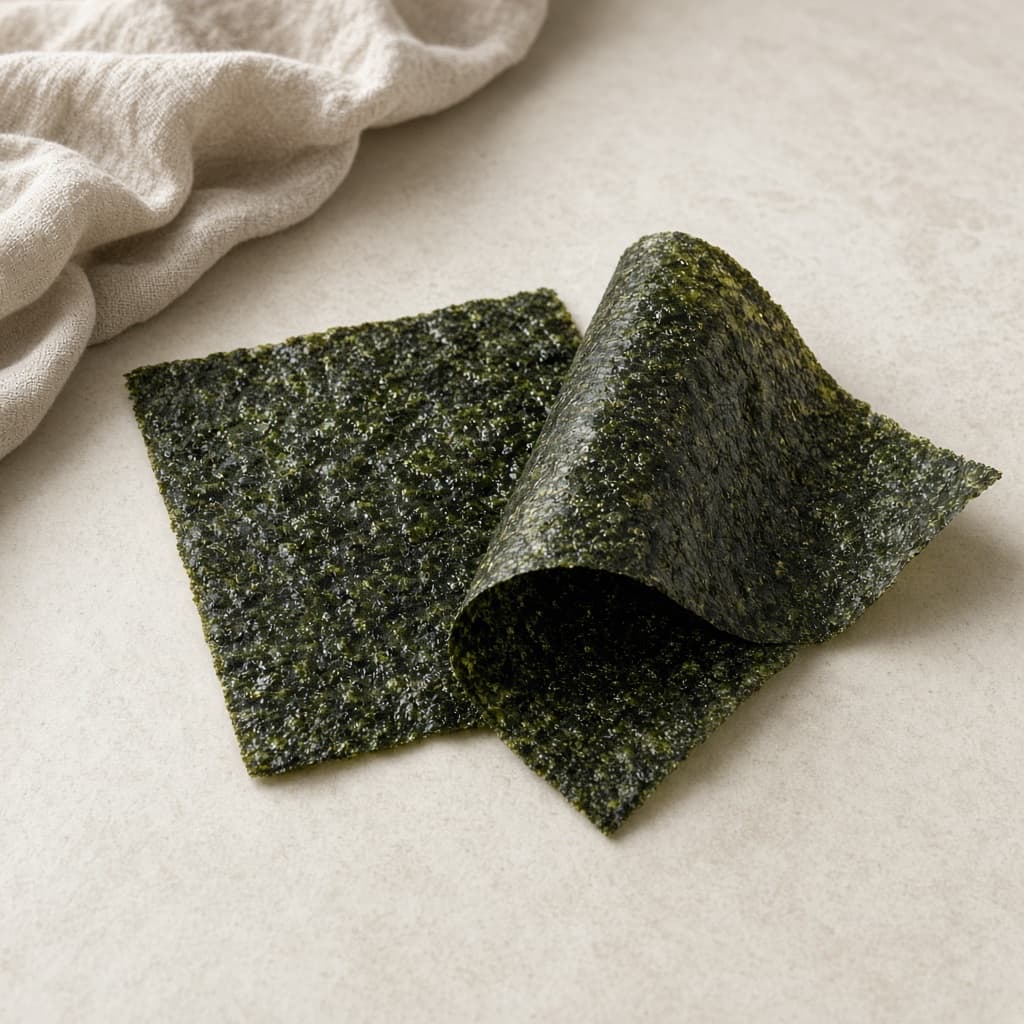
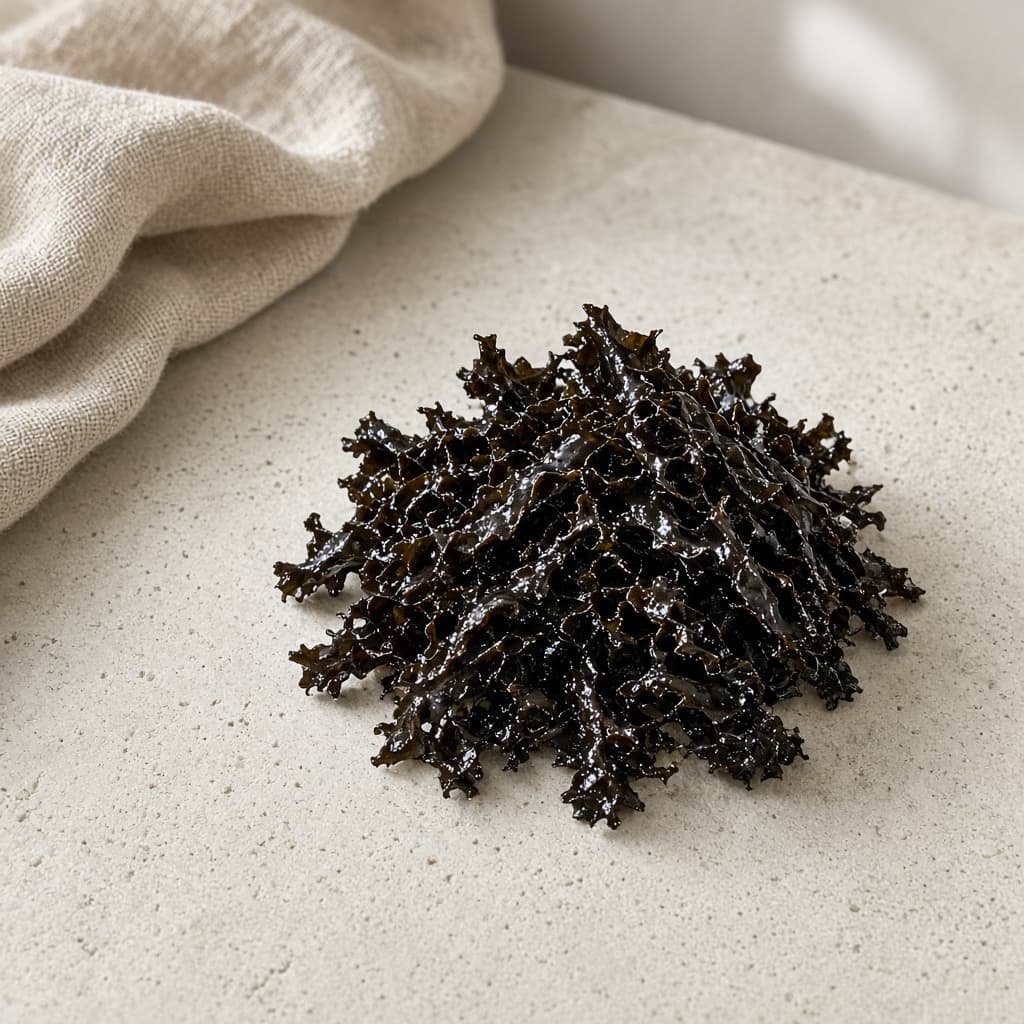
Seaweed
Dashima
다시마
Also called dasima, kombu, dried kelp
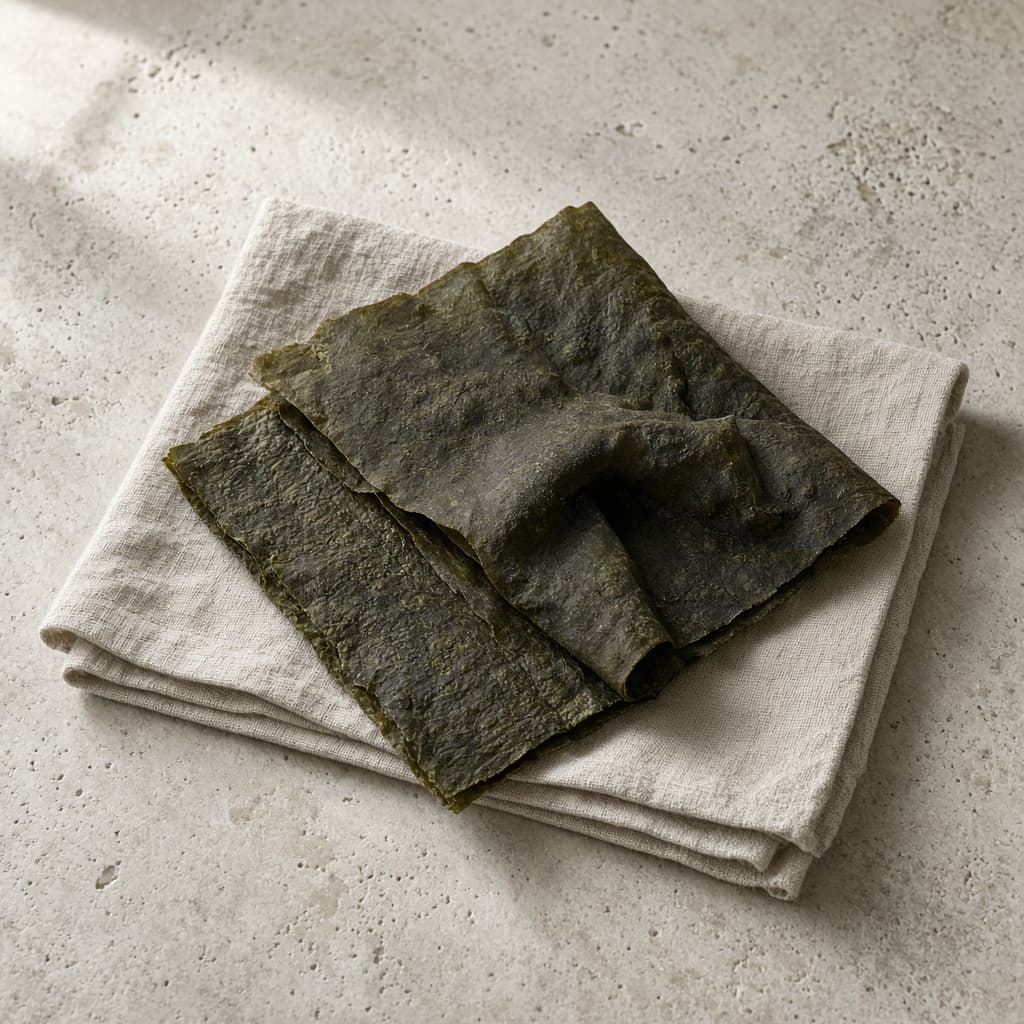
Dried kelp used with anchovies to make Korean soup stock. It is the same idea as Japanese kombu: a sheet of glutamates, not a salad seaweed. Thick pale-green boards are what you want for broth.
Origin
Cold Korean and Japanese coasts. The Korean name is dashima; Japanese kitchens call the close relative kombu. The two swap in a home pot without much drama.
Flavour
Ocean, iodine and a deep savoury roundness rather than fishiness. Overcooked dashima turns slimy and bitter.
How it is made
Kelp is harvested, sun-dried and sometimes briefly aged so the white mannitol powder shows on the surface. That powder is flavour, not mould.
How to use it
Wipe dust off; do not scrub the white bloom away. Cover with cold water, bring up slowly, and simmer 15–20 minutes with dried anchovies, then lift the kelp out before the liquid goes viscous. A hard boil extracts harshness. The spent sheet can be sliced into a stir-fry or simmered again for a weaker second stock. For a vegetarian pot, dashima alone is enough if you give it time. Snack chips of roasted kelp are a different product. A postcard-sized piece seasons about a litre.
Storage
Airtight, dry and dark. Humidity makes it sticky and it can mould.
Recipes using it
Checking your allergy settings…