Seaweed
Nori
Also called seaweed sheet
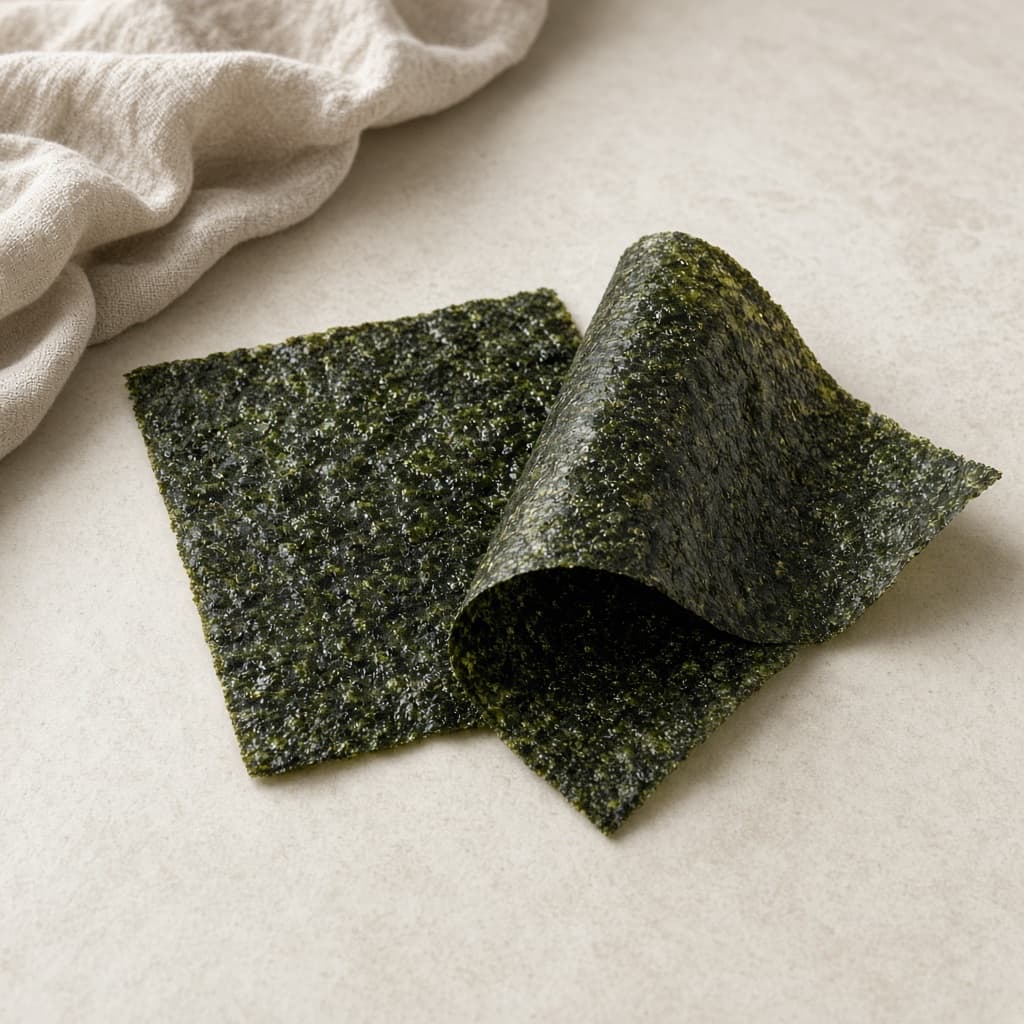
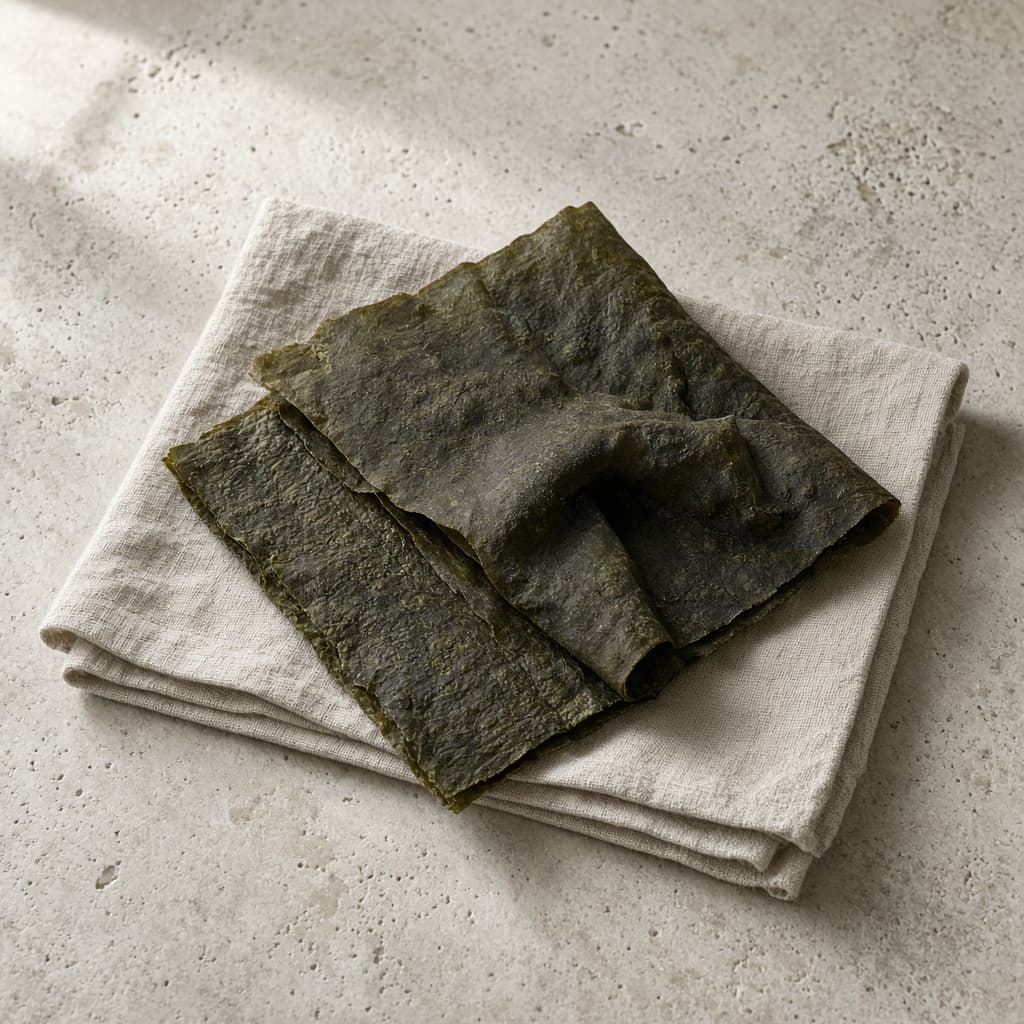
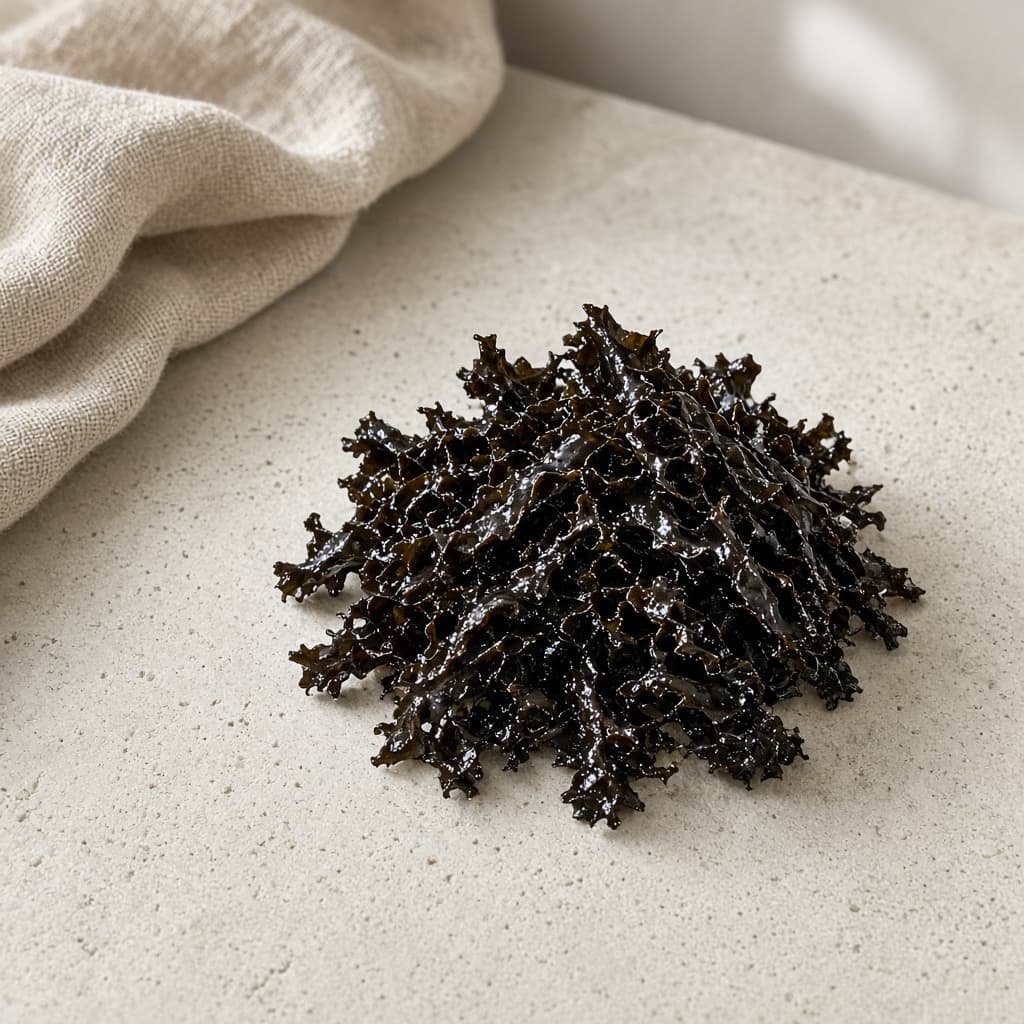
Dried sheets of laver, the dark wrapping of gimbap and onigiri and the crisp strip on a ramen bowl. It is a seaweed sheet, not a vegetable you cook from fresh, and it is not kombu.
Origin
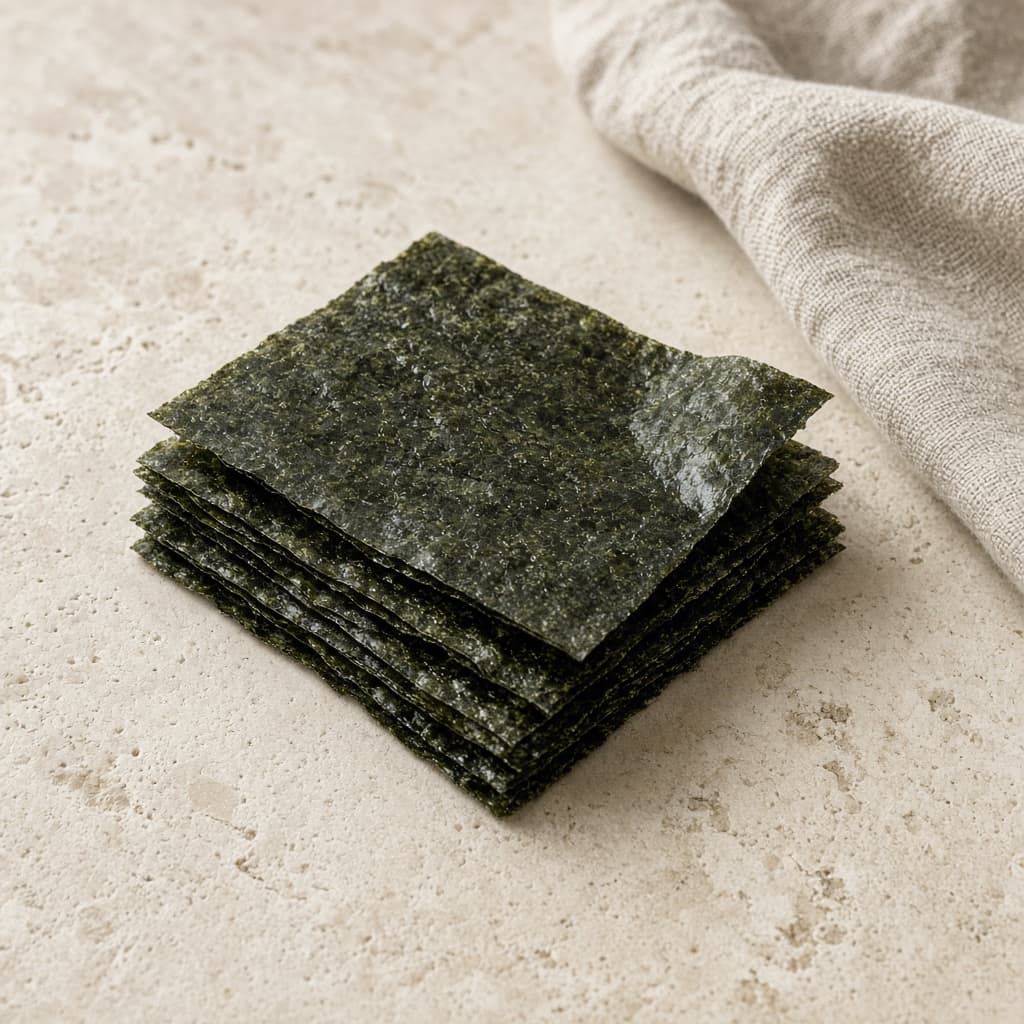
Japanese nori farming and Korean gim are parallel coastal traditions. That format made sushi rolls and gimbap possible as portable food.
Flavour
Ocean, toast, soy-sauce umami, a little nuttiness when the sheet is fresh and crisp. Seasoned gim is saltier and oilier than plain sushi nori.
How it is made
Cultivated laver is washed, chopped, spread on screens and dried into standard sheets. Cheap sheets are thinner, paler, and tear into holes.
How to use it
Keep it dry until the last moment. For gimbap, a slightly less crisp sheet can be easier to roll; for onigiri, a crisp strip should go on just before eating or it steams limp. Toast a limp sheet over a low flame or in a dry pan for a few seconds. Cut with scissors, not a wet knife. Kombu is the wrong substitute for wrapping; seasoned gim can stand in for nori if you adjust salt.
Storage
Airtight, with the desiccant sachet if it came with one, away from the kettle's steam.
Recipes using it
Checking your allergy settings…