Grain
Moghrabieh
مغربية
Also called mograbieh, maghrebiyeh, Lebanese couscous, giant couscous
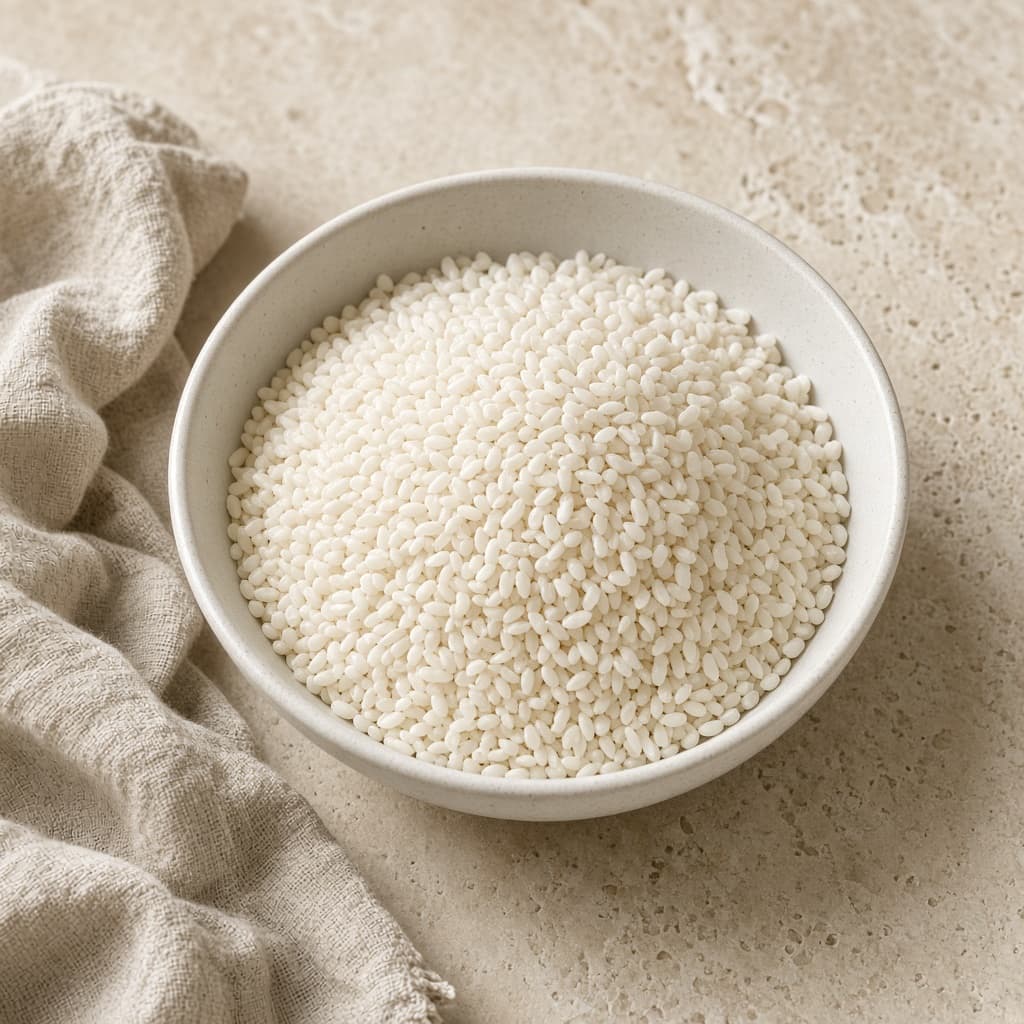
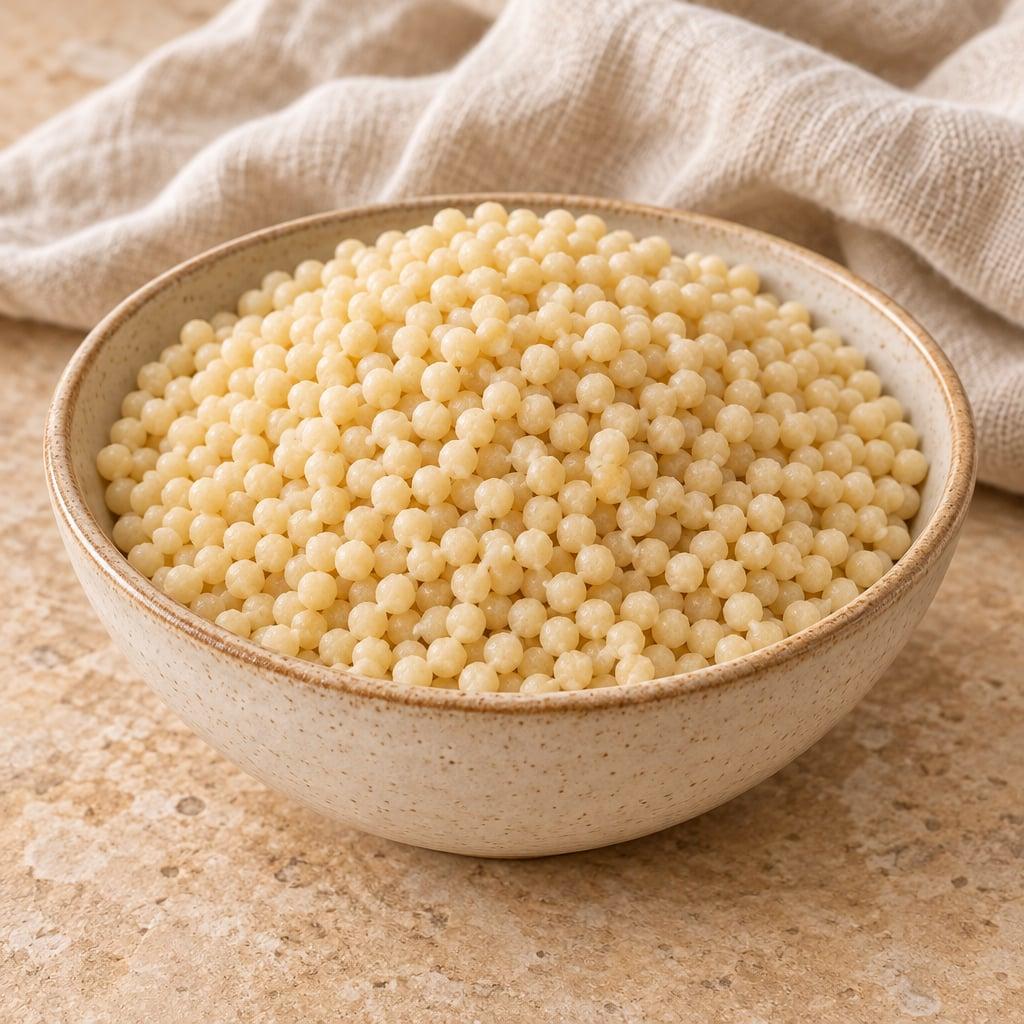
Pea-sized balls of semolina, rolled much larger than couscous and sold dried or fresh in Lebanon and Syria. Cooked, they are chewy and slightly slippery, like a small round pasta, and they soak up stock without falling apart. The same name covers the chicken stew made with them.
Origin
The name means 'from the Maghreb', which says where the idea came from: couscous, rolled bigger. Lebanese and Syrian cooks rolled it by hand from semolina and a little flour and dried it in batches; most is now made by machine. Palestinian maftoul is smaller and usually made with bulgur. Israeli ptitim, sold as pearl couscous, is a different thing, an extruded and toasted pasta.
Flavour
Mild and wheaty, a little nutty if it is fried in butter before the stock goes in. It tastes mostly of what it is cooked in, which is the point.
How it is made
Semolina is sprinkled with water and rolled with flour into small balls, sieved for size, then steamed or parboiled and dried. Fresh moghrabieh skips the drying.
How to use it
Fry the dry pearls in butter or ghee for a few minutes, then cook them in hot stock, adding it a ladle at a time and stirring, until tender with a slight bite, about 20 minutes for dried. Season with caraway, cinnamon and allspice for the Lebanese dish. Fresh moghrabieh cooks in about half the time. Ptitim or Sardinian fregola are the nearest stand-ins.
Storage
Dried, it keeps for a year in a sealed jar in a dry cupboard. Fresh moghrabieh goes in the fridge and should be used within a few days, or frozen. Cooked, it keeps three days in the fridge and thickens as it sits; loosen it with stock when reheating.