Pulse
Mung beans
녹두
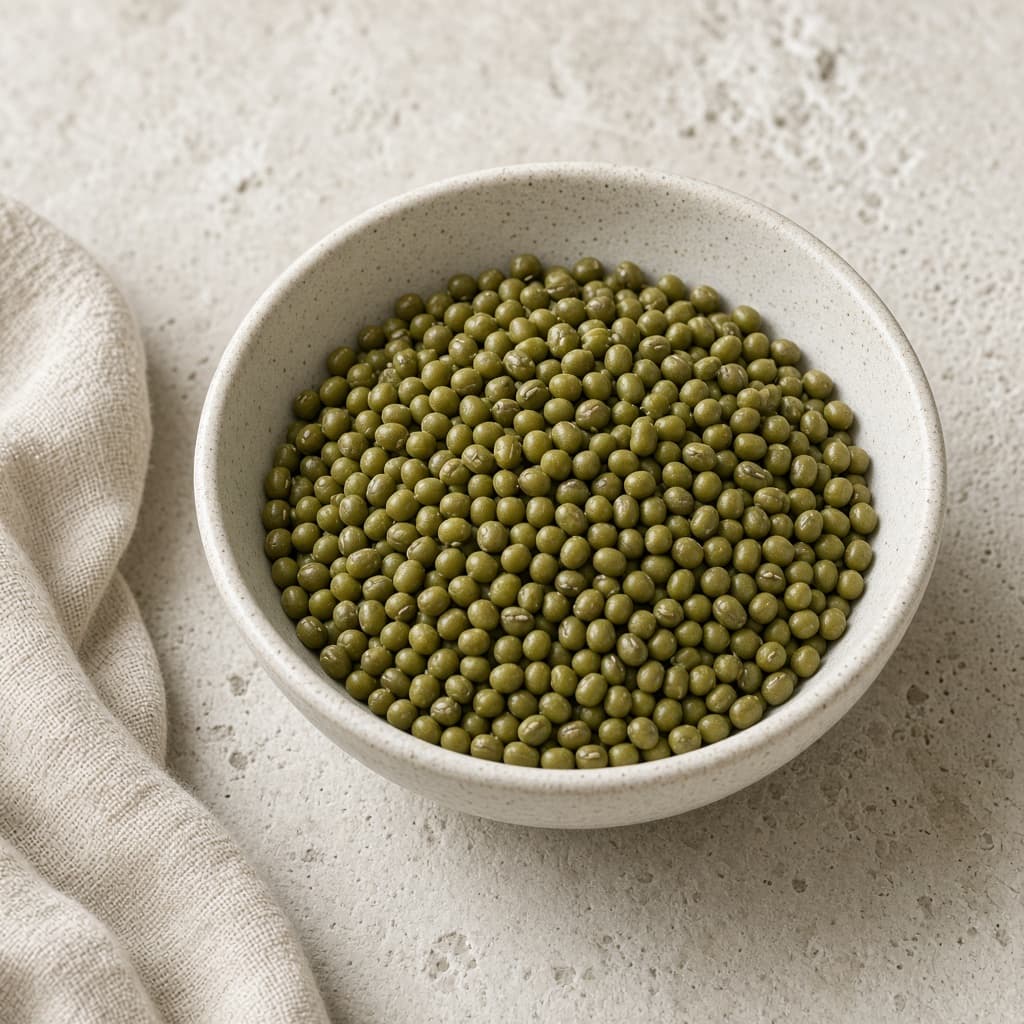
Also called nokdu, skinned mung beans
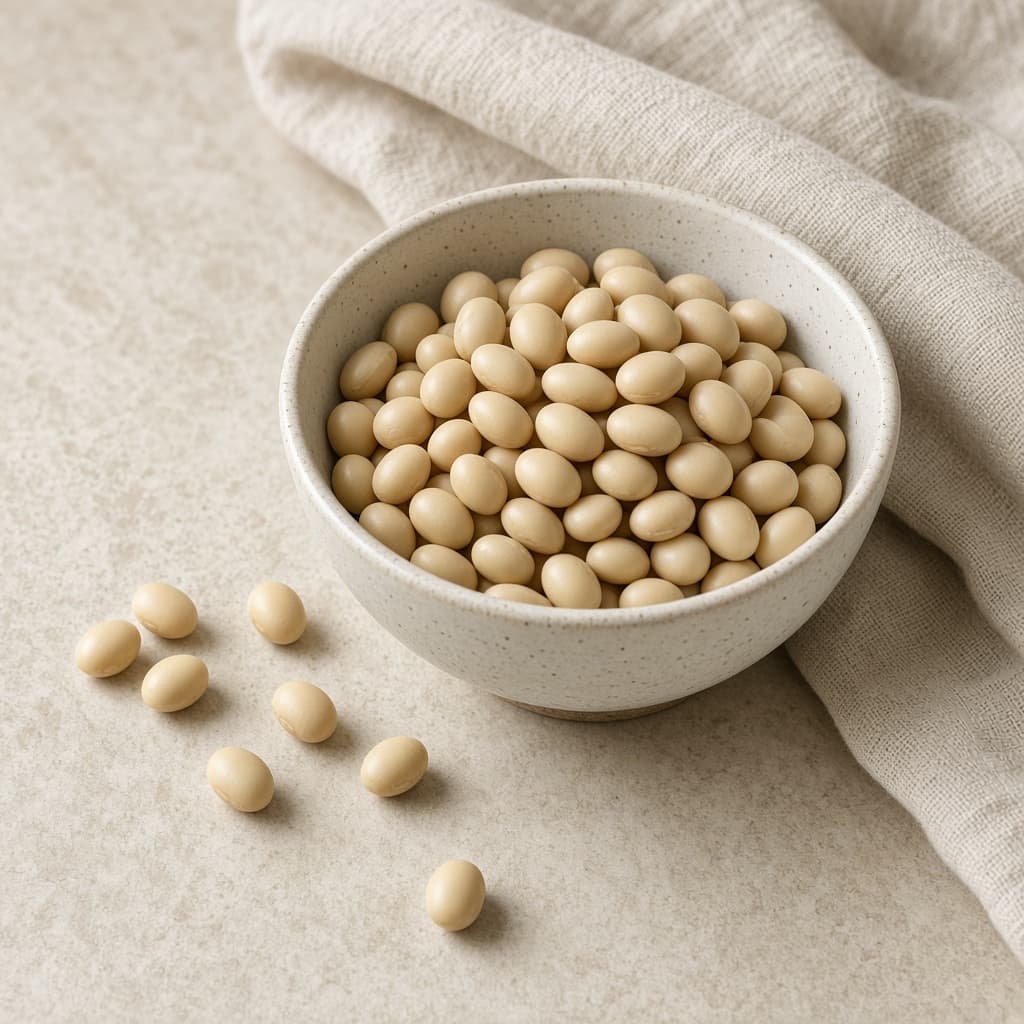
Small green pulses, or the split yellow interiors (nokdu) used for bindae-tteok. Whole beans sprout; hulled splits grind into a thick earthy batter without wheat.
Origin
South and East Asia. Korean mung-bean pancakes, Vietnamese chè and many Indian dals all start from the same bean at different stages of skinning and splitting.
Flavour
Earthy, beany, a little sweet. Hulled yellow splits taste milder than whole green beans. A grassy raw note means the batter was not soaked long enough.
How to use it
For bindae-tteok, soak hulled mung beans 4–8 hours, drain well, and grind with only a splash of water to a thick, slightly gritty batter. Fold in kimchi, mung-bean sprouts or minced pork, then fry in a generous film of oil until the edges crisp. Whole beans for a stew need a soak and a simmer until they burst. Sprouts are a different ingredient — rinse them well. Do not treat split mung beans like red lentils and walk away for an hour; they go from tender to sludge. A too-wet grind makes pancakes that steam and break when you flip them. Salt the batter, not only the filling.
Storage
Dried beans in a pantry jar. They keep a year.
Recipes using it
Checking your allergy settings…