Pulse
Soybeans
메주콩
Also called dried soybeans, baektae
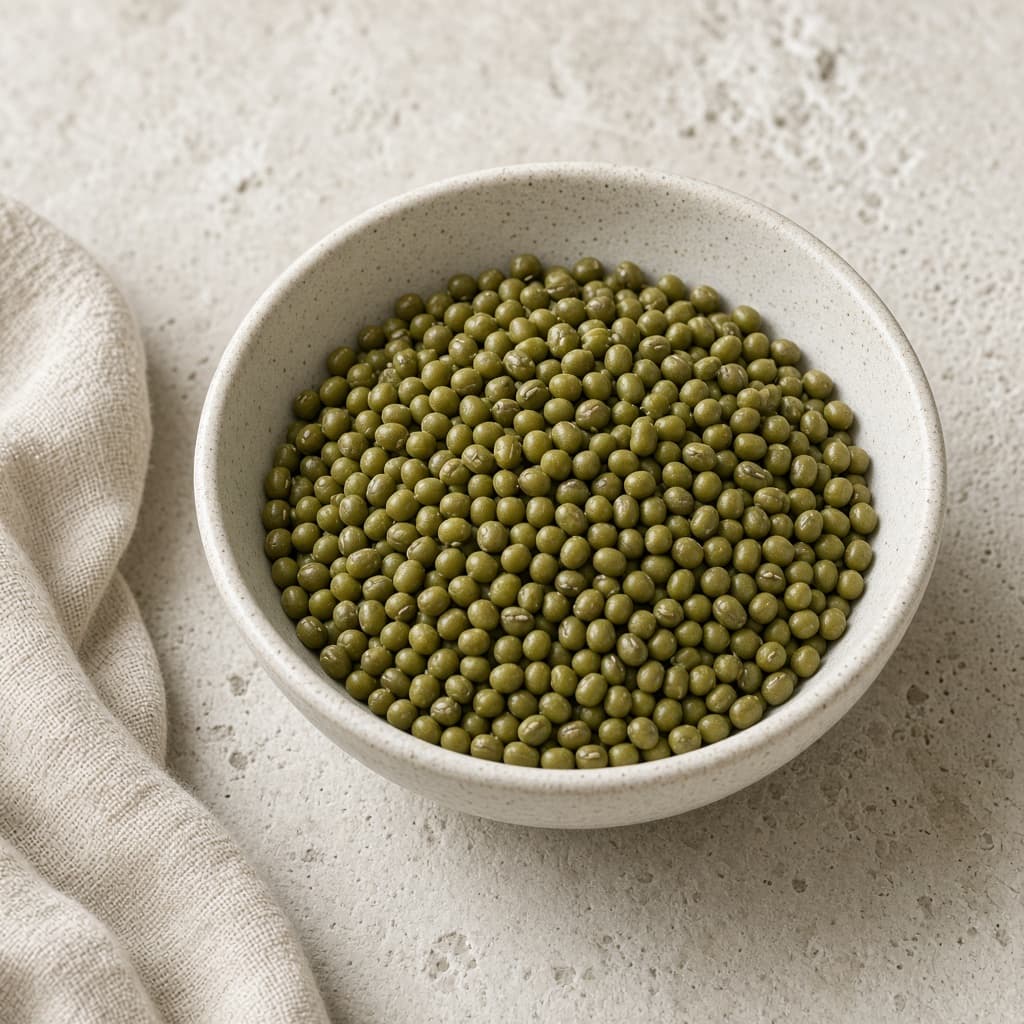
Dried beige soybeans, baektae, the raw pulse behind tofu, doenjang and, when soaked, boiled and blended, the milky broth of kongguksu. They are firmer and oilier than most kitchen beans.

Origin
East Asia, where the plant was domesticated and then processed into almost every savoury staple. Dried whole beans are less common on Western lists than the foods made from them.
Flavour
Beany, nutty and creamy once blended. Undercooked soybeans taste grassy and are hard on the stomach. The milk should taste clean, not sour or raw.
How to use it
Soak overnight in plenty of water — they swell. Boil in fresh water until a bean mashes easily, skimming foam. For kongguksu, blend the hot beans with cold water, then strain through a cloth, squeezing out a white milk; chill it thoroughly and season with salt just before serving over noodles. Do not under-boil and trust the blender to fix raw beans. Fresh green edamame are the same species at another stage and do not substitute here. If you are cooking soybeans as a pot bean, give them time and salt late.
Storage
Dry pantry, airtight. Old soybeans take hours and may stay chalky.
Recipes using it
Checking your allergy settings…