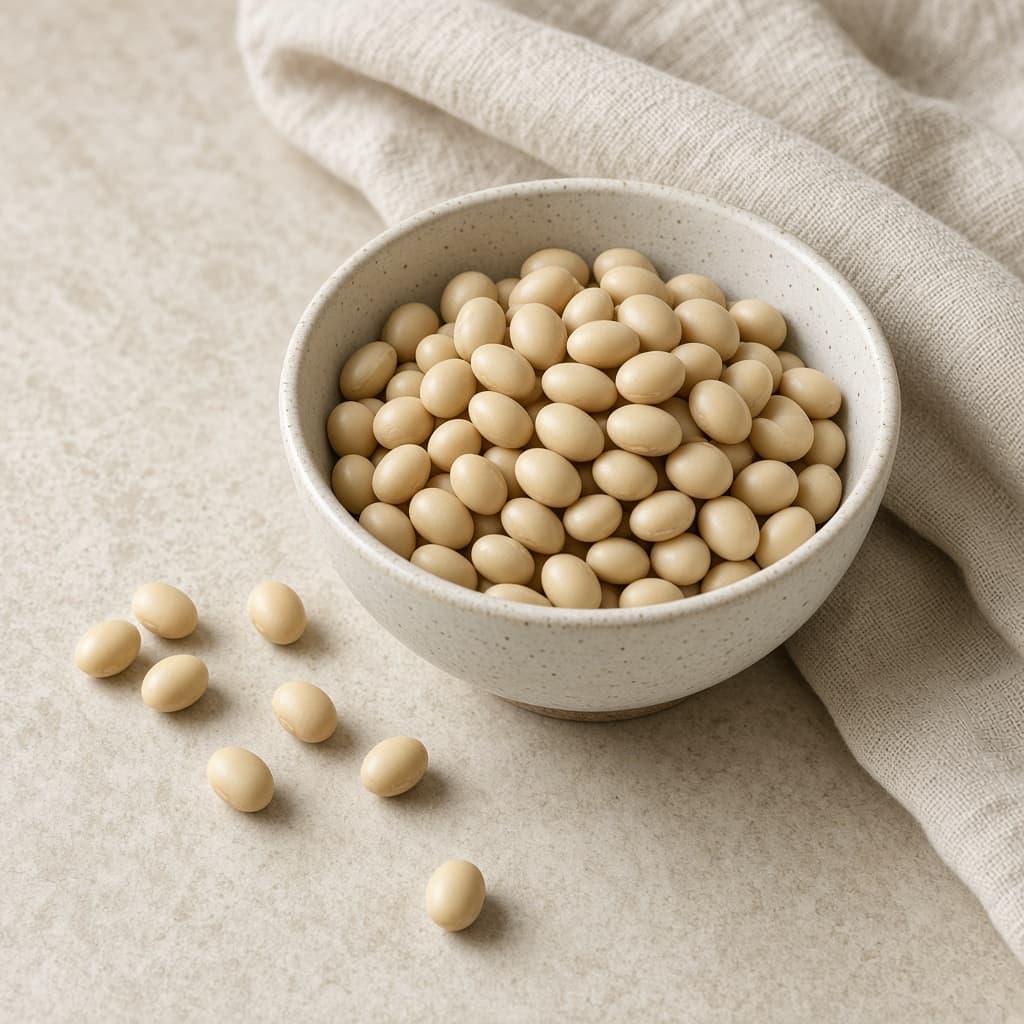
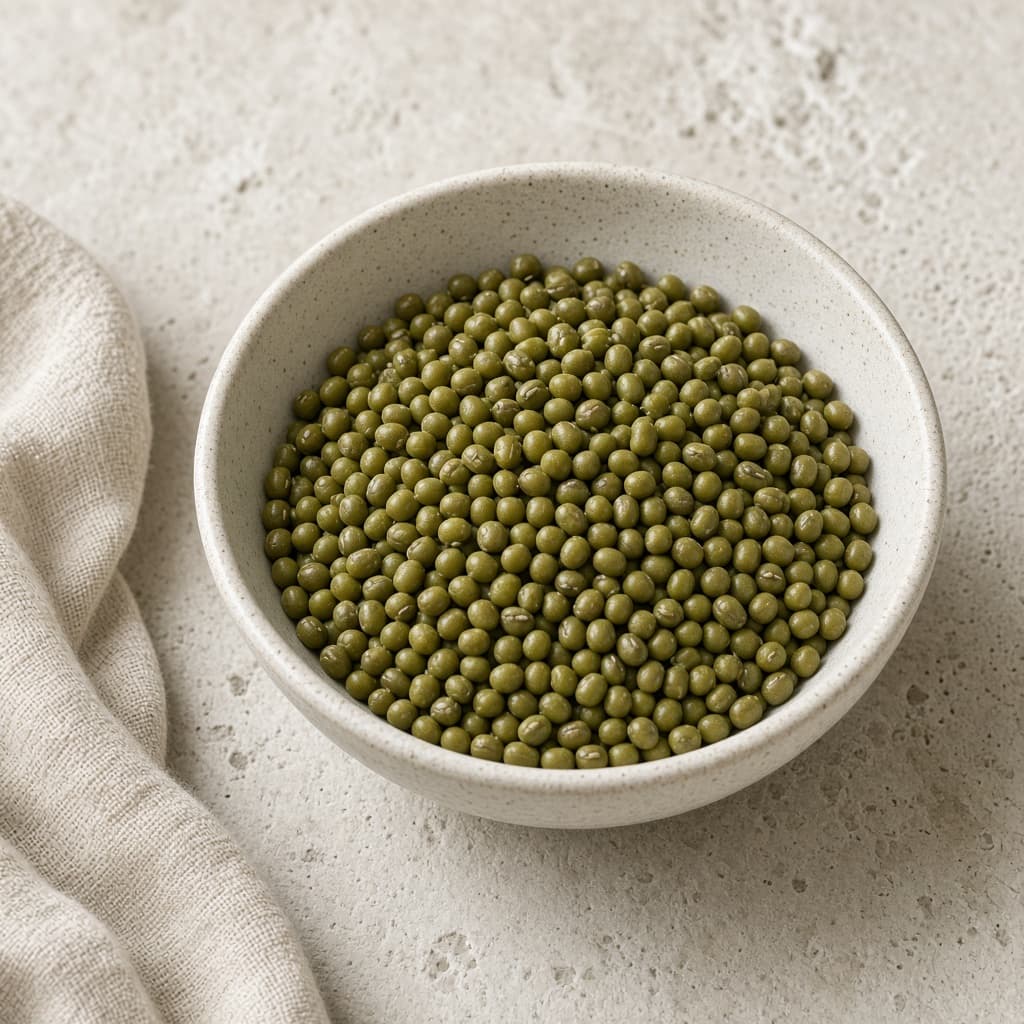
Pulse
Sweet red beans
팥
Also called azuki, adzuki, pat, red bean paste, danpat
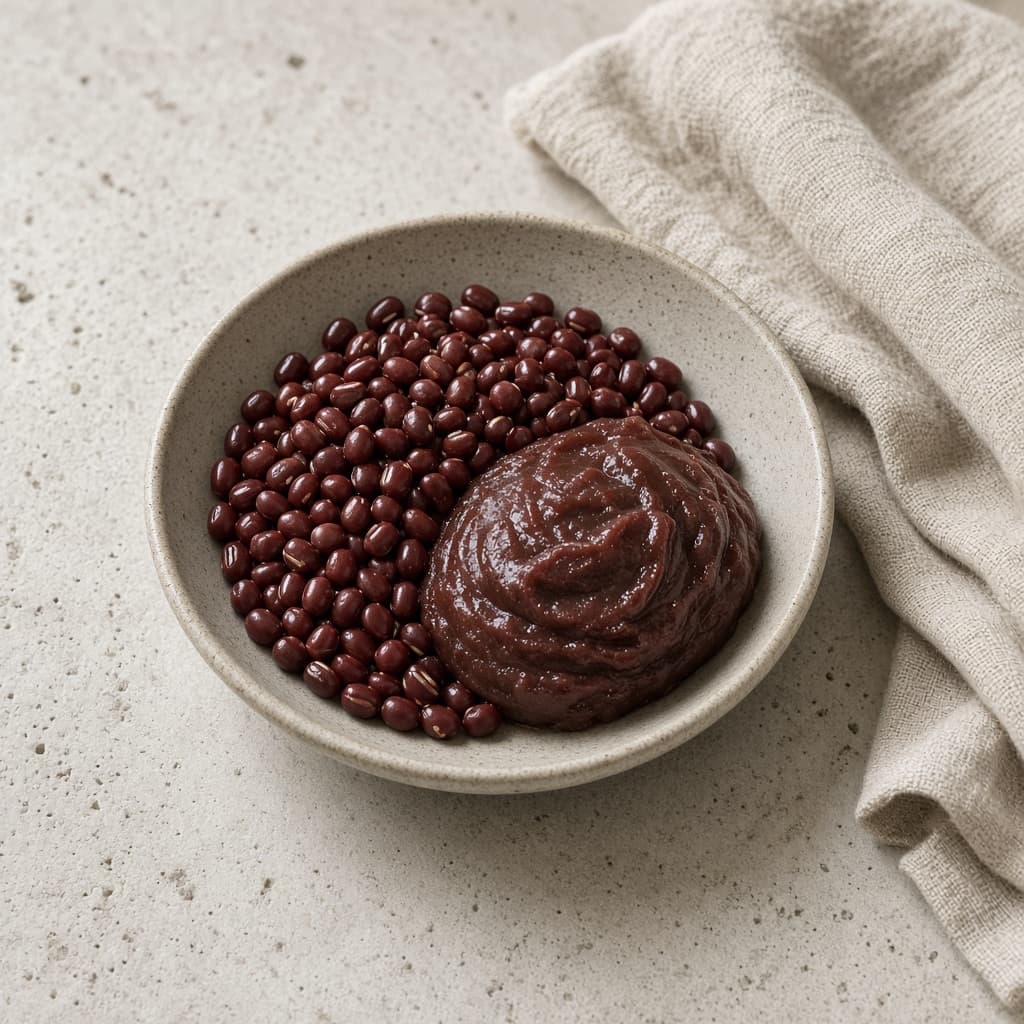
Azuki beans, pat, cooked sweet for patbingsu, rice cakes and buns. You meet them as whole sweet beans or as a coarse paste (danpat). They are a dessert pulse, not a chilli-bean pot.
Origin
East Asia. Japanese anko, Korean pat and Chinese red-bean pastes are regional sweets from the same small red bean.
Flavour
Earthy and chestnut-sweet once sugared. Unsweetened boiled azuki taste like a mild brown bean. A metallic tin can hide under the sugar if you do not warm the paste.
How it is made
Beans are soaked, simmered until soft, then sweetened. For paste they are mashed or sieved; chunky danpat leaves some beans whole. Canned sweet red beans are already cooked and sugared.
How to use it
Soak dried beans, boil until they mash, then add sugar in stages and cook off excess water so the paste is glossy. A pinch of salt makes the sweetness read as chestnut rather than jam. For patbingsu, canned sweet beans are an honest shortcut — chill them. Sweeten after the beans are tender or they can stay hard. Warm paste fills rice cakes; cold paste scoops onto shaved ice.
Storage
Dried beans in the pantry. Cooked sweet beans keep several days refrigerated, or freeze in portions.
Recipes using it

Patbingsu
팥빙수
Shaved ice with sweet red beans, milk and a few chewy toppings — summer dessert that is not a smoothie bowl.
Easy

Daifuku mochi
大福
Soft, stretchy mochi made from shiratamako or glutinous rice flour, wrapped around sweet red bean paste and dusted with starch. Best eaten the day you make it.
Medium

Dorayaki
どら焼き
Two small honey-sweet pancakes, browned evenly and soft as sponge, sandwiched around chunky red bean paste. A Japanese tea-time classic.
Easy

Cendol
Shaved ice with green pandan jelly strands, salted coconut milk and dark gula melaka syrup, with red beans. The Malaysian street dessert for a hot afternoon.
Medium